

My knee flares up on the stairs, my Achilles tendinitis acts up after a run, and my return to training keeps getting postponed. When the discomfort lasts for weeks, the promise of faster recovery sounds tempting. That’s one reason why, when looking for a solution, names such as BPC-157, TB-500 or the GLOW and KLOW blends crop up. But what exactly are they?
Research into some of these substances has yielded interesting results in studies involving cells and animals. In humans, however, the evidence for healing the musculoskeletal system is considerably weaker. To understand this, we need to distinguish between three things: how the substance might work, what was actually measured in the study, and what this means for a person in pain.
The most important point right at the outset Pain relief does not yet prove cartilage regeneration or tendon healing. With peptides, results are often combined from different tissues, types of experiments and forms of the substance. A promising laboratory result is a reason to continue research, not a ready-made treatment guide. |
What actually heals? Tendons, ligaments and cartilage are not the same thing
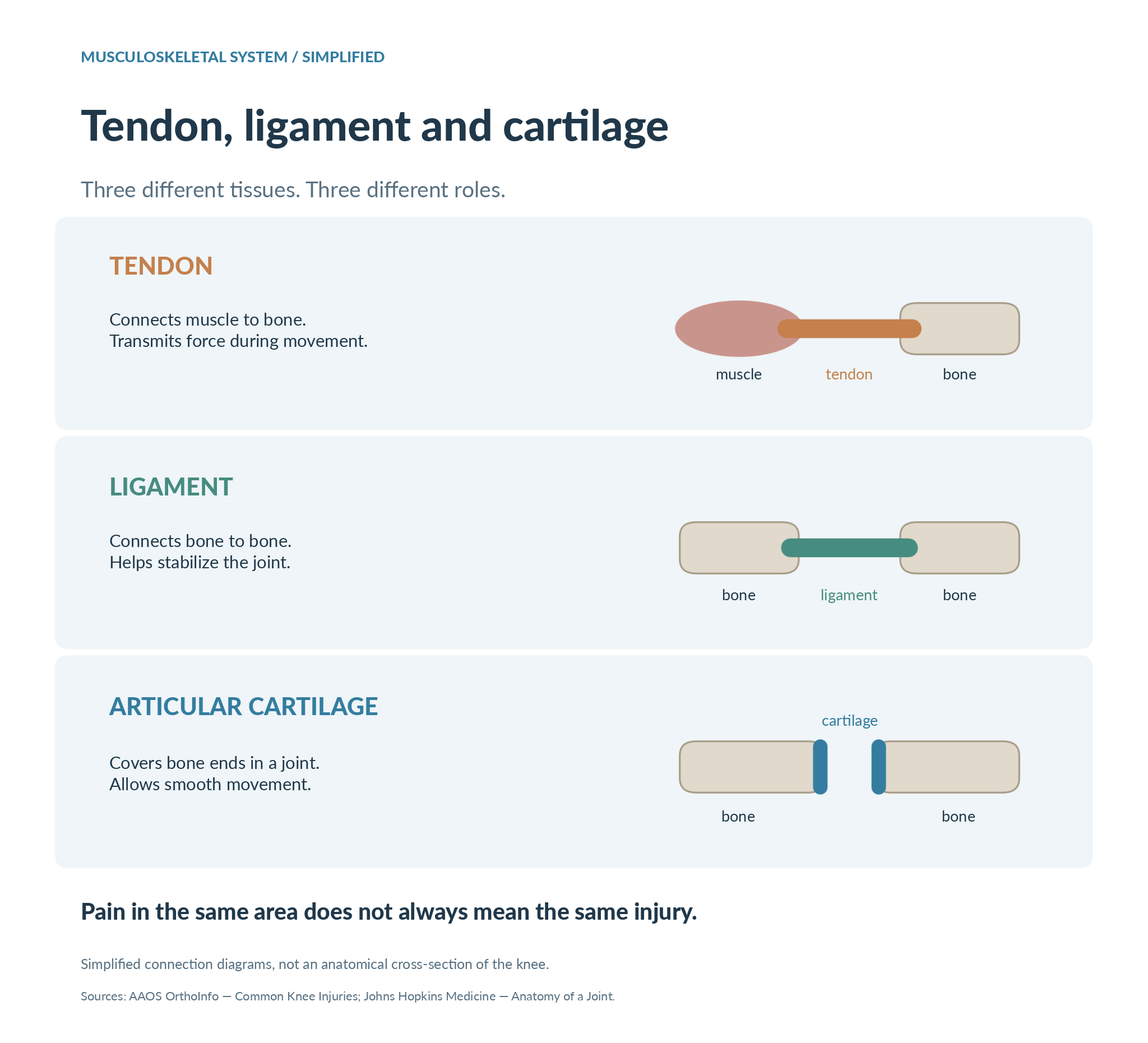
Tendons connect muscles to bones and transmit force, much like strong ropes. Ligaments connect bones to one another and help stabilise the joint. Articular cartilage creates a smooth surface over which the ends of the bones move with minimal friction. Damage to any of these structures therefore presents a slightly different problem.
When tendon tissue heals, the arrangement of the collagen fibres must also be restored so that it can once again withstand the load. Cartilage, on the other hand, has a limited capacity for self-repair. What promotes the healing of a skin wound may not, therefore, restore a damaged knee surface. Similarly, a fresh tear should not be confused with long-term problems caused by overuse.
Knee pain is a symptom, not a diagnosis. It may be related to a tendon, meniscus, ligaments, osteoarthritis or other causes. When assessing treatment, it is therefore important to know what was damaged and what has improved: the sensation of pain, mobility, strength or the actual structure of the tissue.
BPC-157: why scientists are studying it
BPC-157 is a synthetically produced peptide composed of fifteen amino acids. Amino acids are small building blocks from which the body also forms proteins. Scientists are investigating whether BPC-157 can influence processes related to the repair of damaged tissues, such as the formation of new blood vessels.
One of the areas under investigation is angiogenesis, i.e. the formation of new blood vessels. In cell and animal experiments, the effects of BPC-157 have been linked to the VEGFR2 receptor. This can be thought of as a receptor for signals related to blood vessel growth. Scientists also observed improved restoration of blood flow in ischaemic muscle in rats. However, this in itself does not indicate how the human knee will respond.
In a further experiment, the researchers examined cells from the rat Achilles tendon, which help to form and maintain its tissue. Following treatment with BPC-157, more ‘receptors’ for growth hormone appeared on the cells. When the researchers added growth hormone, the cells multiplied more rapidly. However, this does not mean that BPC-157 increases the amount of growth hormone in the human body.
In an earlier experiment from 2003, following Achilles tendon rupture in rats, several indicators of healing improved, including mechanical strength. This is a biologically interesting result. However, translating this into clinical practice requires verification in humans with specific injuries, appropriate comparisons and safety monitoring.
What a small study in humans showed
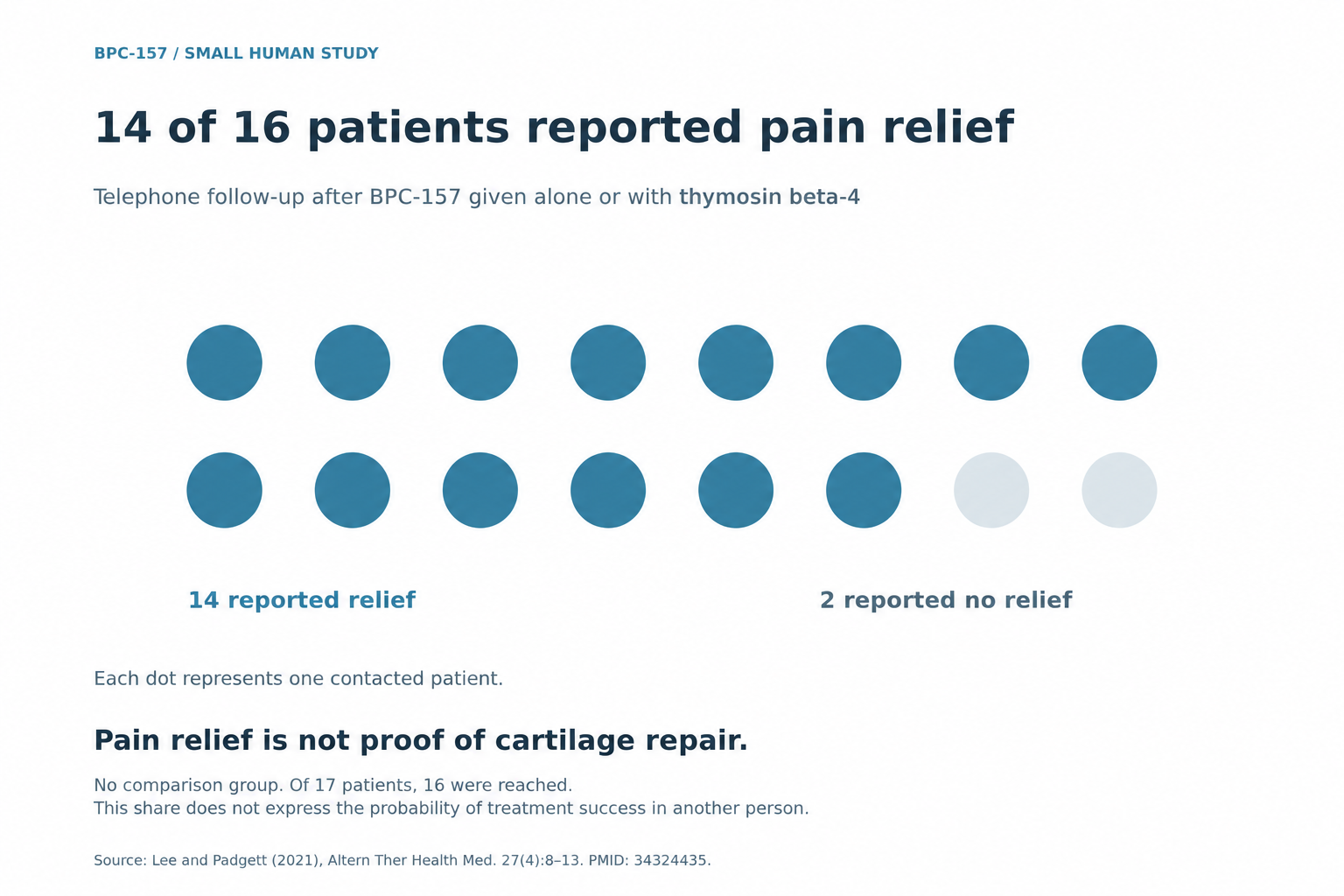
A frequently cited 2021 study retrospectively assessed patients following administration of BPC-157 to the knee, either alone or in combination with thymosin beta-4. Of the 17 patients, 16 were successfully contacted by telephone. Of these, 12 had received BPC-157 alone and four had received the combination. Relief was reported by 11 out of 12 in the first group and three out of four in the second, totalling 14 out of 16.
The result is interesting, but it has several limitations. There was no control group that did not receive BPC-157. The patients had different causes of pain, and the researchers did not use a standardised method to measure changes in knee function. Furthermore, cartilage regeneration was not verified by follow-up imaging scans. We cannot therefore reliably determine from this small study to what extent the substance itself helped, nor whether the combination was more effective.
Further research is illustrated by a registered clinical trial of BPC-157 for injuries to the back of the thigh. It plans to enrol 120 participants and compare the substance with a placebo whilst participants undergo the same rehabilitation programme. The registration of the study does not in itself constitute a result – it does not confirm either efficacy or safety.
TB-500 and thymosin beta-4: similar names, an important difference
Thymosin beta-4, also known as Tβ4, is a natural peptide consisting of 43 amino acids. It is associated with actin, a protein that forms part of the internal scaffolding of cells and enables them to change shape or move. It is precisely the movement of cells to the site of damage that is one of the key processes in healing.
However, the name TB-500 is not always used unambiguously. The FDA uses it to refer to a short fragment of thymosin beta-4 with the sequence LKKTETQ, i.e. a seven-amino-acid segment. In commercial materials and some research papers, the names are used interchangeably. The results for the entire 43-amino acid peptide cannot therefore be automatically attributed to a product labelled TB-500.
The full thymosin beta-4 has also been studied in humans, for example in a trial involving 73 patients with poorly healing wounds on the lower leg caused by venous problems. The preparation was applied directly to the wound. Patients were randomly assigned to groups, and neither they nor the assessors knew who was receiving which treatment being tested. The results suggested a possible benefit from one of the concentrations tested. However, skin wound healing is not the same as the regeneration of tendons or cartilage.
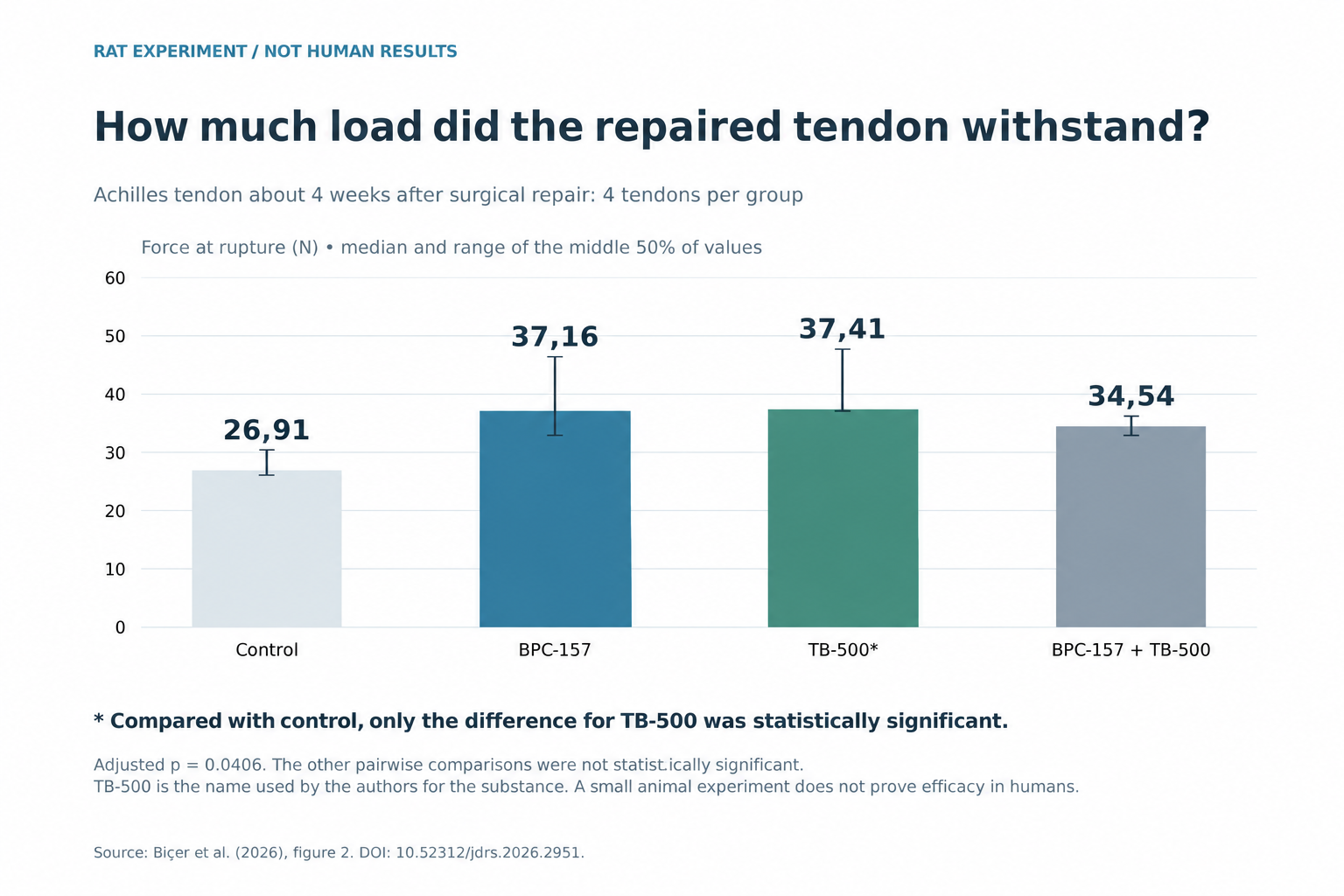
A more recent study from 2026 followed 32 rats after surgical severing and repair of the Achilles tendon. It compared a control group, BPC-157, a substance labelled by the authors as TB-500, and a combination of the two. After four weeks, the tendons in the group treated with the substance labelled TB-500 withstood a greater load before rupturing than those in the control group. The difference was statistically significant. The combination of substances in this experiment did not yield any further improvement compared with the individual substances. However, this experiment did not evaluate the treatment of human injuries either.
KPV: research into intestinal inflammation, not evidence of joint regeneration
KPV consists of three amino acids: lysine, proline and valine. A well-known study from 2008 investigated it in human cell lines and in two models of colonic inflammation in mice. The use of human cells in the laboratory does not, however, constitute a clinical trial on patients.
In laboratory experiments, KPV was delivered into the cells using the PepT1 protein, which transports small peptides across the cell surface. We can think of it as a gateway. Once inside the cells, the researchers observed that certain signals promoting inflammation had weakened and the cells were producing fewer substances that fuel the inflammatory response.
In experiments on mice, some symptoms of intestinal inflammation were also alleviated. However, these results do not yet mean that KPV can treat inflammation in humans or aid in the healing of cartilage.
After all, reducing inflammation does not necessarily mean that damaged tissue is repaired. Nor does simply adding KPV to a mixture in itself prove that the mixture helps to regenerate cartilage.
GLOW stack and KLOW stack: what they contain and what we know about their combination
The word stack simply means a mixture of several substances. Peptide mixtures are sold under the names GLOW and KLOW, but their composition may not be the same for every manufacturer. The name alone is therefore not enough – one must also look at what the specific product contains.
A specific example is provided by the manufacturer Condor Research: its GLOW contains GHK-Cu, BPC-157 and TB-500; KLOW adds KPV to these. In these mixtures, the manufacturer lists a short fragment of thymosin beta-4 under the designation TB-500, not the entire peptide. This is a description of the composition of specific products, not a recommendation for their use. The results of research into the full thymosin beta-4 cannot therefore be automatically attributed to this shorter fragment or to the mixture containing it.
What does the name GHK-Cu refer to? GHK is a small peptide consisting of three amino acids: glycine, histidine and lysine. The designation Cu stands for copper, which is bound to this peptide. |
In cell experiments, scientists have investigated, for example, its effect on the production of collagen, a protein that helps tissues maintain their strength. However, the results of research into a single component do not yet prove that the entire mixture is capable of regenerating cartilage in humans.
What to check | Why it matters |
The exact substances and their forms | Full-length thymosin beta-4 and its short fragment are not identical. |
The amount of each ingredient | The total quantity in the pack does not reveal the ratio of the substances. |
Route of administration and quality data | The results from the topical preparation cannot be extrapolated to the injection. |
Research into the specific combination | A study of a single ingredient does not prove the efficacy or safety of the entire mixture. |
The rationale for combining ingredients may seem logical on paper: one substance is studied for its healing properties, another for its anti-inflammatory effects. However, synergy implies a proven mutual enhancement of effects. To confirm this, both the individual ingredients and the combination must be compared. The results of a rat experiment from 2026 serve as a reminder that more substances do not necessarily yield greater benefits.
A certificate of purity is not a clinical trial A laboratory analysis can help verify which substances a sample actually contains. It does not, in itself, show whether the mixture heals an injury, how it acts with long-term use, or whether it is suitable for a particular person. The quality of the sample and the effectiveness of the treatment are two separate issues. |
Safety: what we cannot deduce from the available data
With experimental peptides, it is not simply a question of whether they work. We also need to know what side effects they may have, what they may interact with, and what happens with repeated use. A small, short-term study may not capture rare or long-term issues.
The US FDA, in relation to BPC-157, the TB-500 fragment and injectable GHK-Cu, highlights limited safety data and potential issues with impurities or the triggering of an immune response. With regard to KPV, it notes a lack of data on administration to humans. These are US regulatory documents, not an assessment of a specific Slovak product. The designation ‘research use only’ means intended for research, not a confirmation of suitability for self-medication.
The Slovak context is further clarified by a warning from the State Institute for Drug Control (ŠÚKL) dated 8 July 2025, which lists BPC-157 amongst the unregistered substances in Slovakia and highlights the lack of clinically verified safety and efficacy. This is not an assessment of every product labelled as a peptide.
A practical perspective from strength sports
In the worlds of athletics, arm wrestling and strength sports, there are anecdotal reports in which athletes associate the use of BPC-157 and TB-500 with perceived improvements in recovery and a lower incidence of injuries during training. Such observations provide a basis for further research, but do not yet allow us to reliably determine what proportion of the improvement was due to the peptides themselves and what proportion was due to rehabilitation, adjustments to training or other factors.
Anti-doping status is also important for competitors: the WADA Prohibited List for 2026 bans both BPC-157 and thymosin beta-4 and its derivatives, including TB-500, both in-competition and out-of-competition. Use in a sporting context therefore does not constitute confirmation of efficacy, safety or authorised use.
What helps with long-term pain and a return to sport
The first useful step is to identify the cause of the problem. A fresh ligament injury requires a different approach to an overloaded tendon, which in turn differs from osteoarthritis. Rehabilitation should therefore not merely consist of a list of generic exercises, but rather a plan tailored to the individual’s diagnosis, abilities and goals.
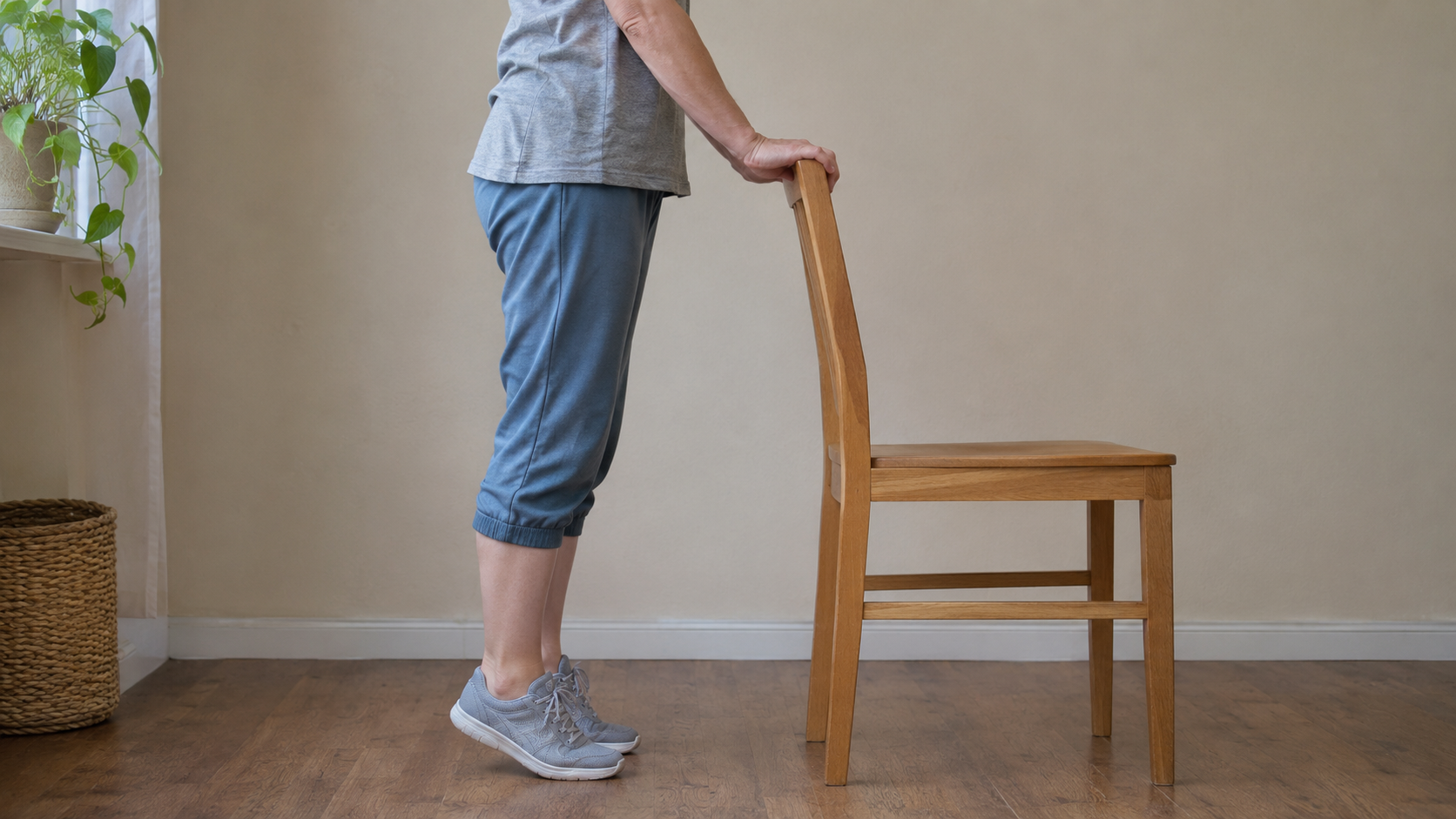
For long-term problems in the middle section of the Achilles tendon, known as tendinopathy, expert guidelines recommend gradual loading through exercise; complete rest is generally not the solution. In the case of knee osteoarthritis, appropriate strengthening and exercise are among the fundamental options; for those who are overweight, support for weight loss is also recommended. These recommendations cannot be applied to every painful knee without a medical examination.
Nor should painkillers be described as an automatic barrier to healing. For example, NICE recommends, depending on the circumstances, a topical anti-inflammatory medication for knee osteoarthritis, such as a gel. The suitability of such treatment depends on the diagnosis, risks, form and duration of use. Pain relief can help with mobility; however, it does not in itself confirm tissue repair.
Prepare four questions for your consultation What is the likely source of the pain, and is further investigation needed? What level of activity is currently appropriate, and how can I gradually increase it? How will we monitor progress – pain, strength, movement or functional tests? When should I come for a follow-up, and what will we do if my condition does not improve? |
Frequently asked questions
1. Does BPC-157 regenerate cartilage?
The available human evidence does not support this conclusion. The results of cell and animal studies, nor the reported pain relief, are insufficient to confirm cartilage regeneration in humans.
2. Is pain relief evidence of healing?
It is an important improvement, but only part of the picture. A return to sport also depends on strength, stability and the type of injury. It is also important to consider what level of exertion a person can manage without their symptoms worsening.
3. Is BPC-157 or TB-500 better?
We do not have a high-quality direct comparison in humans that would determine a winner for a specific injury. Furthermore, with TB-500, it is first necessary to know which molecule is being referred to.
4. Is KLOW more effective than GLOW, given that it has more ingredients?
The number of ingredients alone does not determine effectiveness. Data on the exact combination, its benefits and risks are required. The name of the mixture does not replace this information.
If pain is keeping you from your favourite physical activity, the aim is a safe and sustainable return to it. Peptides for recovery are the subject of ongoing research; diagnosis and a care plan remain the basis for decision-making. When evaluating claims, it is worth asking: has the same substance been studied for the same problem and in humans?
This article is for information purposes only and is not a substitute for an individual examination or treatment. Research peptides are not a guide to self-medication.
References
Lee and Padgett (2021): BPC-157 for knee pain; a retrospective study. PMID 34324435.
Staresinic et al. (2003): Healing of a severed Achilles tendon in rats. PMID 14554208.
Chang et al. (2014): Growth hormone receptors in rat tendon fibroblasts. PMID 25415472.
Hsieh et al. (2017): BPC-157, angiogenesis and VEGFR2 signalling. PMID 27847966.
ClinicalTrials.gov: registered study of BPC-157 in hamstring injuries, NCT07437547; study record, no evidence of efficacy.
Guarnera et al. (2010): full-length thymosin beta-4 in venous ulcers; 73 patients. PMID 20536470.
Biçer et al. (2026): BPC-157, TB-500 and their combination in tendon healing in rats. PMID 42542926.
Maquart et al. (1988): GHK-Cu and collagen synthesis in cell cultures. PMID 3169264.
McCormack et al. (1999): Actin and thymosin beta-4 in migrating cells. PMID 9950774.
FDA: Safety precautions for selected substances used in the compounding of medicines.
JOSPT / AOPT (2024): Guidelines for mid-Achilles tendinopathy.
NICE NG226: Diagnosis and treatment of osteoarthritis in adults.
AAOS OrthoInfo: damage to and options for the repair of articular cartilage.
AAOS OrthoInfo: injuries to tendons, ligaments and other soft tissues.
ŠÚKL (8 July 2025): warning regarding unregistered peptide products, including BPC-157, in Slovakia.