


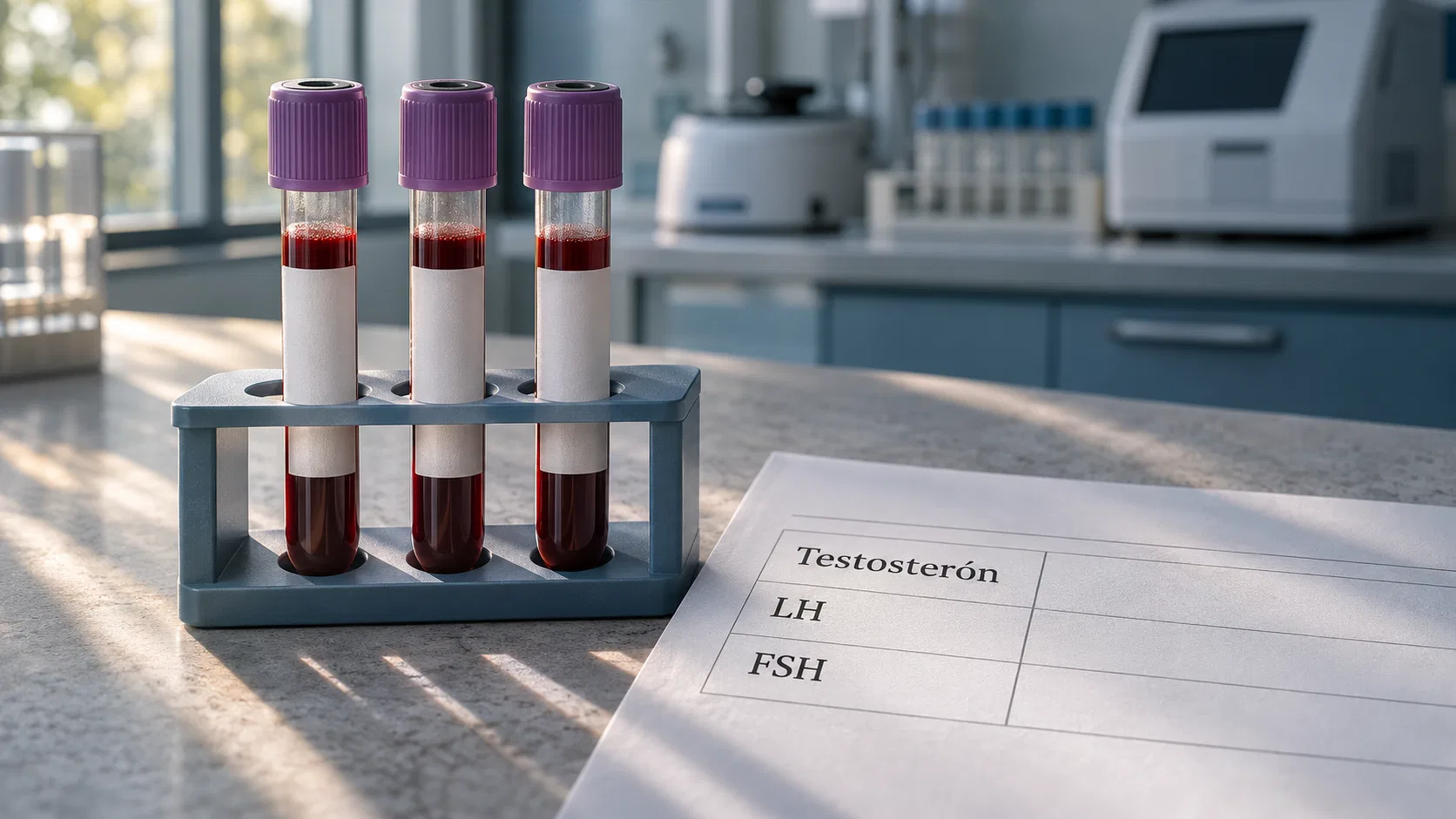
Suddenly, training isn’t going as well as it used to; you’re lacking energy and your sex drive has waned. After coming off anabolic steroids, you might also find yourself wondering: ‘Will my body return to normal?’ On forums, the answer is usually quick: PCT is all you need. But the hormonal system doesn’t have a reset button, and the same approach may not work for two different people.
PCT after steroids – short for post-cycle therapy – refers to the procedures people use to support hormonal recovery after stopping use. What do studies actually support? And how can one distinguish between the return of testosterone and the return of fertility? It is precisely in this distinction that a large part of the answer lies.
The most important point right at the start PCT is not a mandatory safeguard after every cycle, nor is there a single proven formula that works for everyone. The body’s own hormone production can recover even without medication, though the rate varies. Testosterone levels, symptoms and sperm production must be assessed separately. The need for treatment is determined by medical tests and the individual’s circumstances. |
What do steroids suppress?
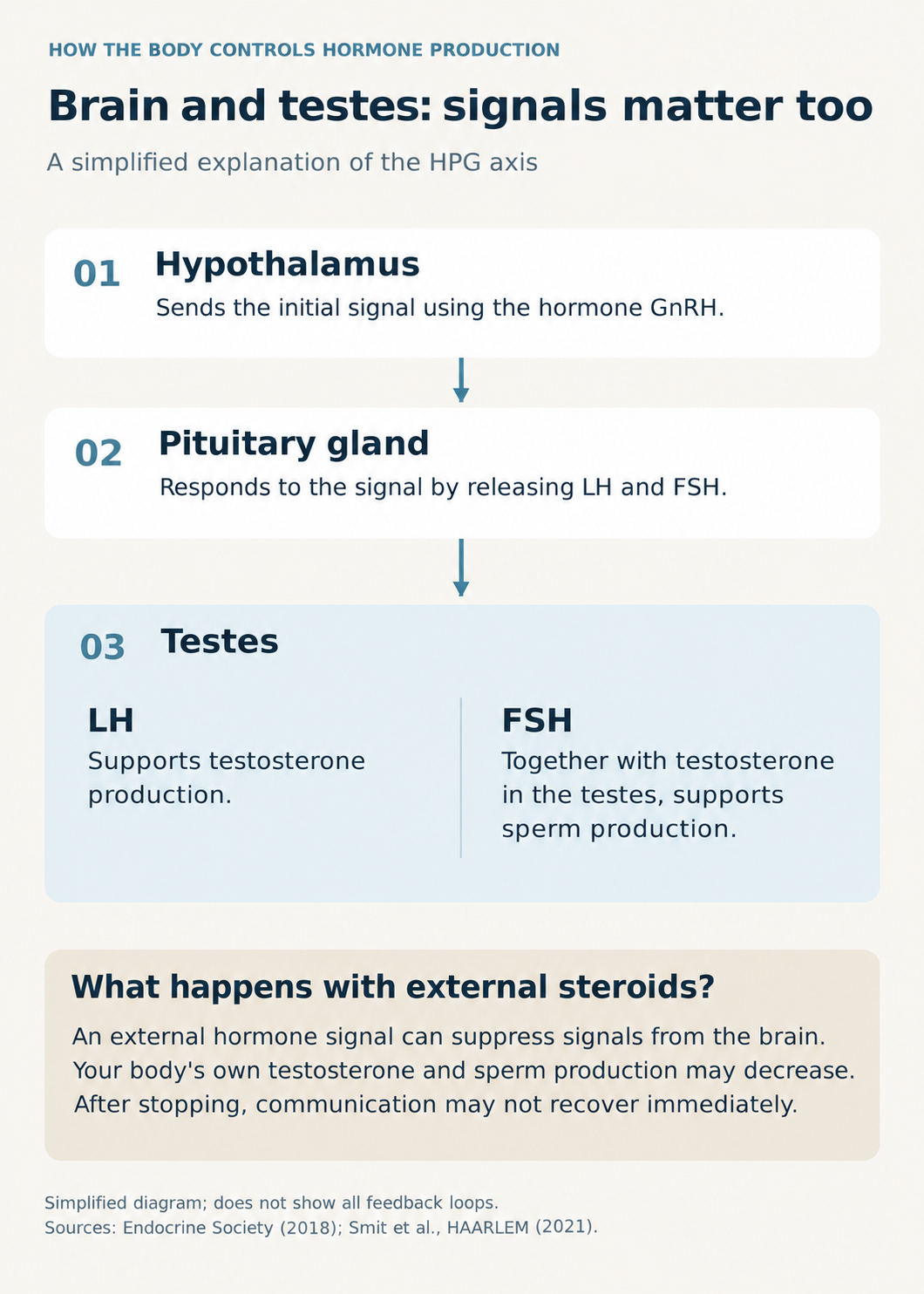
Think of testosterone production as a communication between the brain and the testicles. The hypothalamus sends a signal to the pituitary gland, a small gland beneath the brain, which in turn releases two important hormones. LH, or luteinising hormone, promotes testosterone production. FSH, or follicle-stimulating hormone, helps regulate sperm production. This process is technically known as spermatogenesis. The entire system is referred to as the HPG axis; in men, you may also come across the term HPTA.
When the body receives anabolic-androgenic steroids (AAS) from an external source, the brain interprets this as a signal that there is sufficient androgen and suppresses its own production. Consequently, whilst testosterone levels in the blood may be high during use, the testicles reduce their own production of testosterone and sperm. After stopping the supplements, the external supply decreases, but the original communication may not be restored immediately.
This can result in hypogonadism: a condition in which the testicles do not produce enough testosterone and/or sperm. After steroid use, the problem may well begin with these suppressed signals from the brain. However, fatigue, low libido or erectile dysfunction do not in themselves confirm this diagnosis. Similar difficulties may also be influenced by sleep, mental health or other medical conditions.
This article focuses primarily on men who have used AAS for non-medical purposes, as these were the subjects of the studies mentioned. It is not a guide to discontinuing prescribed hormone therapy. Any changes to such treatment must be discussed with your doctor.
How does the body recover after stopping treatment?
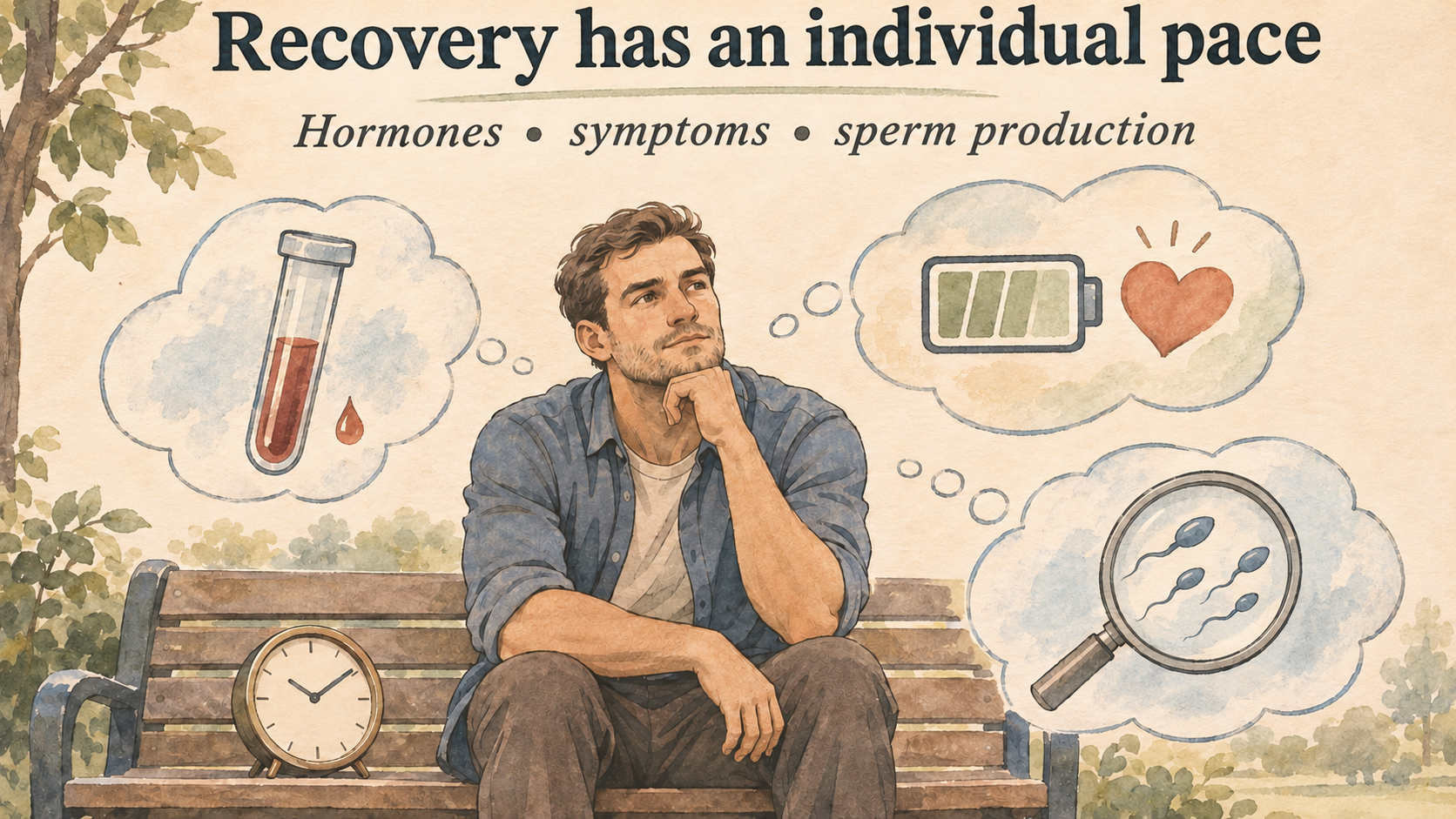
There is no single timeframe for testosterone levels to return to normal after steroid use. The condition prior to use, previous cycles and the specific substances taken are all important factors. However, it is not possible to reliably calculate the exact day when everything will return to normal based on the cycle length alone. Even within the same individual, hormones and sperm may recover at different rates.
In the 2021 HAARLEM study, researchers monitored 100 male amateur athletes before, during and after androgen use. In the majority of those with normal baseline function, testosterone levels returned to normal within approximately three months. The recovery of sperm production took longer; the authors estimated this to be approximately one year. The follow-up ended one year from the start of the cycle, not one year after its completion.
These figures describe the study group as a whole, not a timeframe for any individual. Not everyone’s results returned to normal. This is precisely why it is also useful to know the condition prior to use: without this information, it is more difficult to distinguish a new problem from one that already existed.
Interesting fact: higher levels of testosterone in the blood do not necessarily mean more sperm The testicles require their own hormonal environment and signals from the brain to produce sperm. Externally administered testosterone can suppress these signals, even though the blood test result looks good. This is one reason why expert guidelines do not recommend starting testosterone treatment for men who are planning to have a baby in the near future. |
What might happen to your muscles and strength after a cycle?
A dumbbell that used to feel light may suddenly feel heavier. After stopping steroids, both muscle mass and strength may decline, particularly if the body’s own testosterone production remains suppressed. Expert guidelines list muscle and strength loss amongst the possible signs of testosterone deficiency. However, a reduction in training intensity alone does not confirm a hormonal problem.
Nor does a drop in the number on the scales mean that the same amount of muscle has been lost. Body weight also includes water and fat; the ‘lean body mass’ referred to in studies is not pure muscle either. In a small study by Hartgens and colleagues involving 35 strength athletes, some of the changes in body composition persisted even six weeks after discontinuing AAS. However, this was not evidence of long-term muscle or strength retention, nor was it a test of PCT’s effectiveness.
It is therefore impossible to promise, in percentage terms, how much muscle a particular individual will retain. Similarly, it is not possible to conclude from the aforementioned studies on hormones and sperm that PCT will preserve all training gains. It is advisable to discuss persistent weakness, fatigue or a significant drop in performance with a doctor.
When can one consider starting another cycle?
The fear of losing fitness can tempt you to return to steroids too quickly. However, there is no proven universal timeframe after which another cycle would be safe. Neither a completed PCT nor normal testosterone levels are a ‘green light’: they do not, in themselves, indicate the restoration of fertility or the condition of the heart, blood vessels or liver.
Another course of AAS may once again suppress the body’s own hormone production. Medical examinations therefore serve to assess recovery and any potential consequences, not to set a date for the next cycle. It is also important to determine whether the improvement persists without substances that temporarily influence the results.
PCT: what groups of medicines are used and why?
The abbreviation PCT covers a range of medicines and combinations. Their common aim is usually to influence the body’s own hormone production, though they intervene at different stages of the process. Understanding the mechanism helps to make sense of the discussion; however, this alone does not determine the appropriate treatment.
Several groups of medicines may be encountered in studies and clinical practice. These include, for example:
SERMs, such as clomiphene and tamoxifen, alter the way the body perceives the oestrogen signal. In regulating hormones, they can thereby release some of the ‘brakes’ and promote the release of LH and FSH. This does not involve the external administration of testosterone.
hCG, human chorionic gonadotrophin, acts on the same receptor in the testicles as LH. Put simply, it mimics one of the signals for testosterone production. However, an increase in the hormone whilst it is being administered does not yet prove that the entire system has recovered on its own.
Aromatase inhibitors limit the conversion of androgens into oestrogens. They therefore have a different mechanism of action to both SERMs and hCG; they must not be confused simply because they feature in discussions about PCT.
Clomiphene versus enclomiphene: similar names, but not the same substance
Clomiphene contains two enantiomers of the same molecule: enclomiphene and zuklomiphene. Research into enclomiphene alone cannot therefore be automatically attributed to clomiphene, or vice versa. In a 2014 phase II randomised trial involving 124 men with secondary hypogonadism, enclomifene increased testosterone levels and maintained sperm count compared with testosterone gel. However, this was not a universal post-cycle therapy (PCT) study.
Higher testosterone levels are not the whole story. In its assessment of the drug EnCyzix, containing enclomifene, the EMA noted that the studies had not demonstrated an improvement in key symptoms, such as libido. It also took into account the risk of blood clots; marketing authorisation was refused in 2018. The claim that this is automatically a better and safer PCT therefore runs ahead of the evidence.
What does ‘off-label’ mean?
It means using a medicine outside its approved indications, for example, for a different diagnosis. The Slovak summary of product characteristics for Clostilbegyt lists disorders of ovulation and the menstrual cycle; TAMOXIFEN Sandoz has oncological indications. PCT following AAS is not listed among them. Both are available on prescription. Nor are they harmless supplements: for clomiphene, for example, warnings are given regarding visual disturbances, whilst for tamoxifen, warnings include blood clots and drug interactions. The risks are assessed on a case-by-case basis.
What have studies on PCT shown?
Some studies monitor blood test results, others sperm counts or how a person feels. These are not the same objectives. The review also highlights a fundamental difference between monitoring people over time and retrospectively evaluating their records.
Study | What it looked at | What it shows – and what it doesn’t |
HAARLEM, a prospective study of 100 men | Hormones and semen analysis before, during and after treatment. | Testosterone levels usually returned to normal before sperm counts did. The benefits of the PCT used were not demonstrated in the control group; this was not a trial of a single prescribed protocol. |
Grant et al., 641 men, retrospective analysis | One-off hormone results after discontinuation, with or without PCT. | PCT was associated with faster normalisation of certain hormones in a subset of the group. However, this association alone does not prove that PCT was the cause of the improvement. |
Al Hashimi, 520 patients, prospective single-centre follow-up | Symptoms, hormones and semen analysis; some men who did not show early improvement received treatment. | Treated men showed faster improvement in some outcomes. Although the title mentions randomisation, the methods describe allocation based on patient choice. This weakens the comparison. |
İbis et al., 79 men, retrospective study at two centres | Results following short-term use of AAS in men with normal baseline values. | Some treatment groups showed more rapid changes in hormonal and semen analysis results. The study was not a randomised comparison of a standardised protocol. |
HAARLEM found no association in the control group between PCT and improved testosterone levels or total sperm count. However, participants sourced their own medication and did not follow a standardised treatment regimen. The finding therefore does not represent a test of all possible approaches in all patients.
In 2023, Grant and colleagues conducted a retrospective analysis of records from 641 men. Among those who had stopped taking steroids no more than three months previously, reported use of PCT was associated with a more frequent return of testosterone, LH and FSH to reference ranges. However, each participant had only one blood sample taken at varying times after discontinuation. The authors did not rule out the possibility of a lingering effect of PCT medication on the results. The association therefore does not yet prove that the recovery is permanent and treatment-induced.
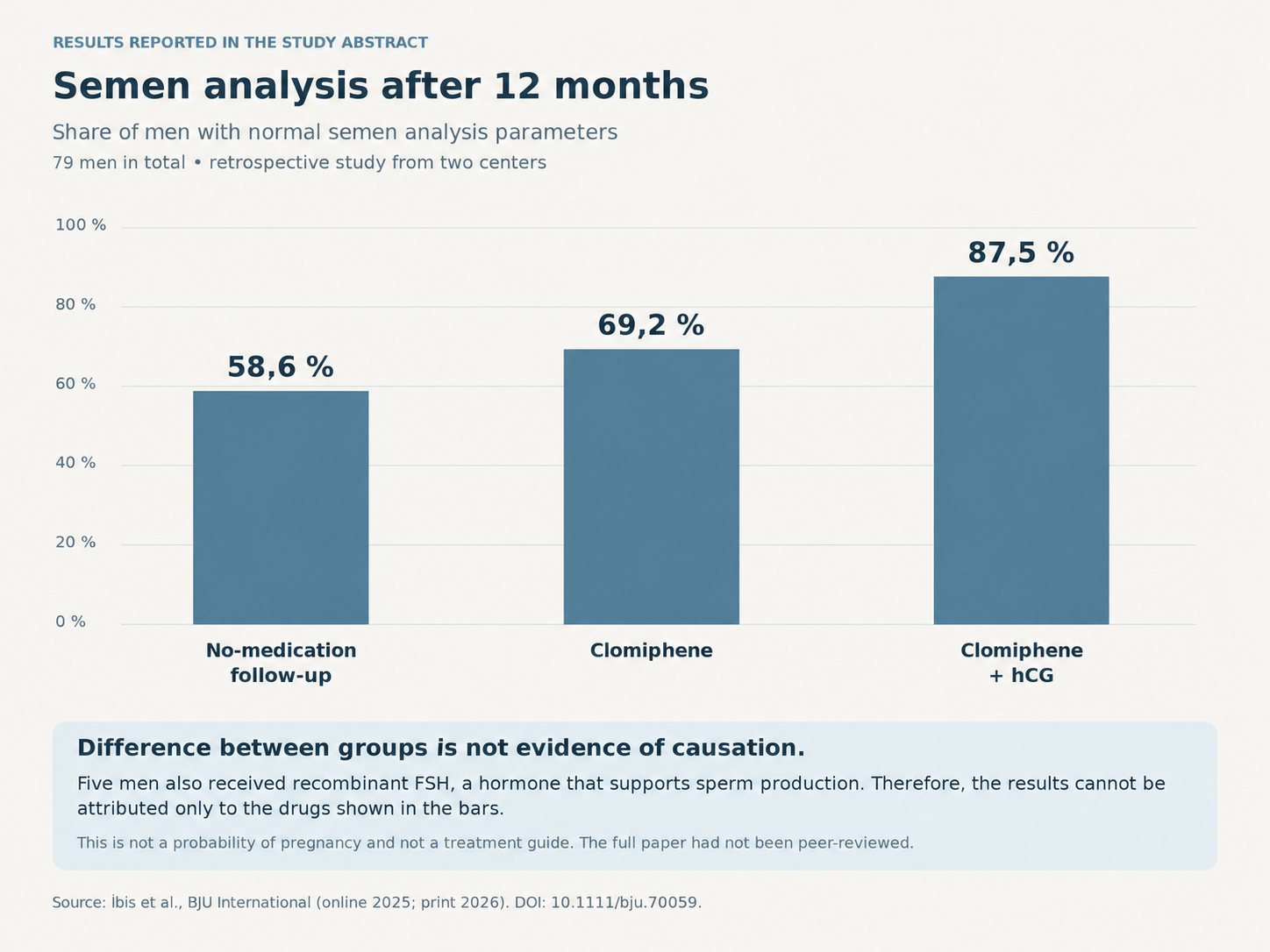
A more recent study by İbis and colleagues, published online in 2025, included 79 men from two centres following up to six months of AAS use. Prior to the cycle, they had documented normal hormone levels and a normal semen analysis. With clomiphene, either alone or in combination with hCG, some parameters normalised more rapidly than in the group receiving no medication. Hormone levels normalised by the sixth month in all groups.
After one year, 87.5 per cent of men in the clomiphene plus hCG group had normal semen analysis parameters, compared with 69.2 per cent in the clomiphene-only group and 58.6 per cent in the group without medication. In addition, five men also received another hormone to support sperm production – recombinant FSH. This additional treatment must also be taken into account when evaluating the results. An interesting result, but this is still a small retrospective analysis without randomised treatment allocation. The percentages do not constitute a personal prognosis, and a normal semen analysis is not proof of a successful pregnancy.
Studies cannot therefore be dismissed as easily as it might seem. They differ in terms of participants, treatment and the timing of the assessment. PCT cannot be declared either a mandatory procedure after every cycle or a procedure that can never help. However, there is insufficient evidence to support a single standard approach that can be applied without further investigation.
Testosterone, symptoms and fertility are distinct factors
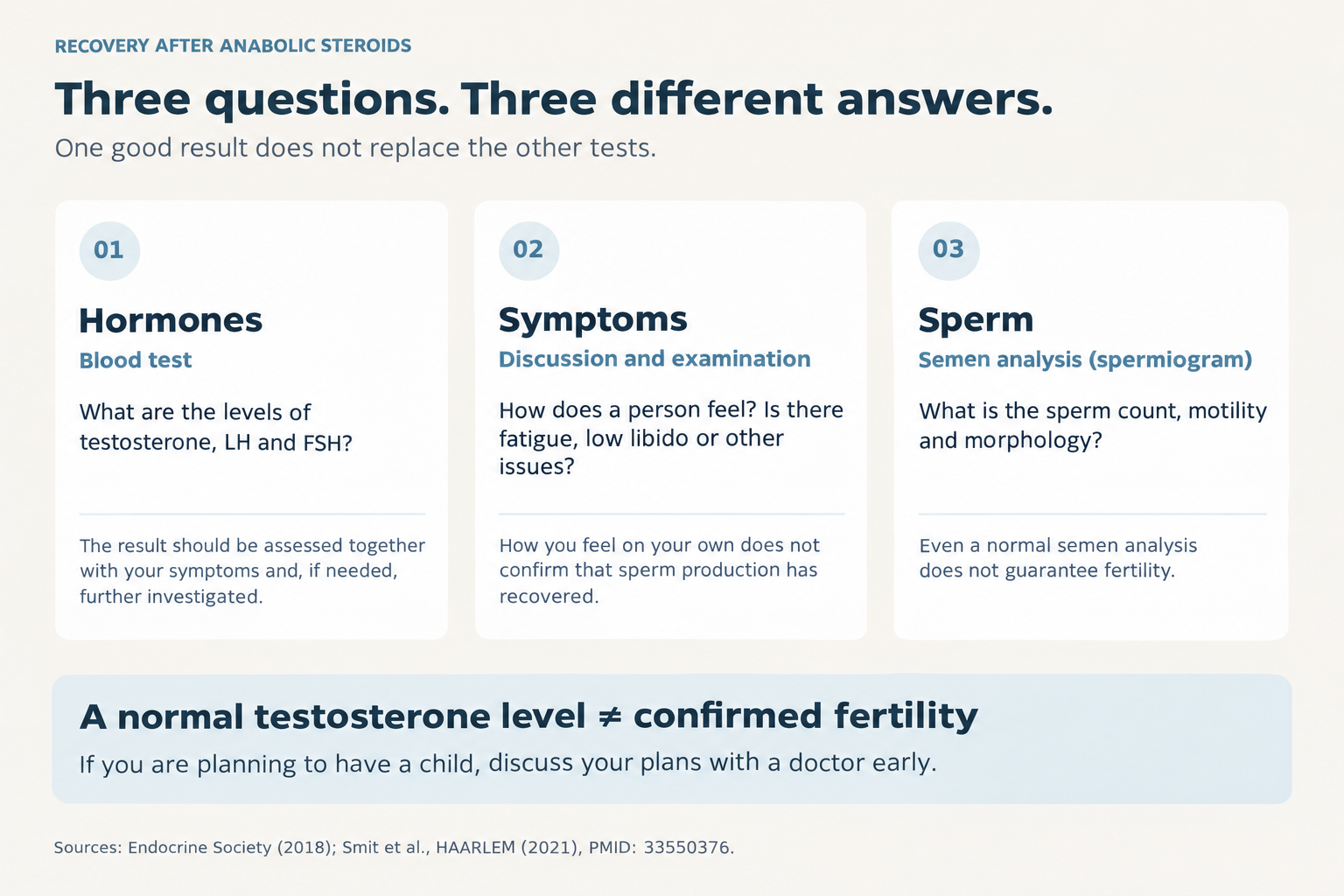
If you are planning to have a baby, tell your doctor straight away. Testosterone levels alone do not confirm fertility, nor is a semen analysis a guarantee of conception. When experiencing difficulties conceiving, the situation of both partners is assessed. An andrologist, who specialises in male reproductive health, may be the appropriate specialist to consult.
Nor does the disappearance of fatigue or the return of sexual desire confirm that sperm production has resumed. A 2023 survey of 470 men linked the use of PCT to subjectively fewer difficulties after stopping treatment. However, it was based on participants’ responses, not on randomised treatment allocation or evidence of restored fertility. Personal experience is important, but it answers a different question to that posed by laboratory tests.
In cases of persistent fatigue, worsening mood or sexual difficulties, a specialist examination is important. There is no need to wait for a random appointment suggested on a forum. Furthermore, the results of studies on men cannot be extrapolated to women without further data.
What should you bring to your endocrinologist or andrologist?
Accurate and open information will help the specialist. This is not a ‘confession’ nor is it about moralising; without it, the test results are more difficult to interpret. If you do not know the exact name of the substance, you can bring a photograph of the label or packaging.

For your consultation, please prepare the following:
what you have been taking, for how long and when you stopped – if you’re not sure, say so,
a list of other medicines and supplements,
your symptoms and roughly when they started,
previous blood test or semen analysis results,
information on whether current or future fertility is important to you.
According to the recommendations of the Endocrine Society, testosterone deficiency is diagnosed on the basis of corresponding symptoms and repeatedly low levels. A low result is verified by a further morning blood sample taken on an empty stomach. LH and FSH help to distinguish whether the problem is related more to the testicles or to their regulation. Depending on the situation, the doctor will order further tests; there is no standard set of tests that is mandatory for everyone.
Useful questions to ask include: What might be causing my symptoms? When is a follow-up blood test advisable? Do I need a semen analysis? What will we consider an improvement, and how will we verify that it persists even without supportive medication? Such a plan is more useful than simply striving to achieve a single ‘good’ figure.
If you’re interested in the broader context, have a look at the article Side effects of steroids: what can they do to the body?
Products from the PCT category: what should you look out for?
In our PCT products category, you’ll find a number of different formulations. To help you find your way around, here are the main ingredients and the focus of three of them:
Super PCT III, for example, combines tribulus, ashwagandha and Mucuna pruriens with NAC, milk thistle and coenzyme Q10. The product is classified as a complex for male vitality and hormonal support.
Estrogen X, for example, contains celery extract, indole-3-carbinol, resveratrol, zinc and vitamin B6. It is marketed with a focus on hormonal balance in men, particularly in relation to oestrogens. However, it is not a substitute for medication used to regulate oestrogen levels.
NAC + Silybum has a simpler composition: N-acetylcysteine and milk thistle extract standardised to silymarin. It is a dietary supplement designed to support liver health, not a treatment for post-steroid hormonal suppression.
You can purchase Super PCT III and Estrogen X separately or together in the PCT TESTO POWER pack. Detailed ingredients and warnings can be found with each individual product.
However, the term ‘PCT’ is not the same as the treatment investigated in the studies mentioned. Their results cannot be applied to these products, nor can they be used to guarantee the restoration of testosterone levels, fertility or muscle retention. Please discuss your choice of supplements for post-AAS difficulties with your doctor.
Frequently asked questions about PCT after steroid use
Is PCT necessary after every cycle?
It has not been proven that everyone needs it. The next steps depend on the course of recovery, symptoms, results and plans regarding parenthood.
Can testosterone levels recover without PCT?
Yes. Spontaneous recovery has been observed in studies, but the speed and completeness of this recovery vary. Monitoring without medication should involve agreed check-ups, not simply ignoring any difficulties.
How long does it take for testosterone levels to recover?
There is no fixed timeframe. In the HAARLEM study, testosterone levels returned to normal in most men with normal function within approximately three months of discontinuing treatment. However, not everyone’s levels returned to normal. This figure is therefore not a guarantee for any individual, and the recovery of sperm production may take longer.
Does a normal testosterone level mean normal fertility?
No. A blood test result does not directly indicate sperm count or quality. When planning to have a baby, fertility needs to be addressed separately.
Does continuing on a lower dose of testosterone mean that the body’s own production has resumed?
No. A continued external supply may further suppress the body’s own signals. Testosterone replacement therapy (TRT) and the return of natural production are different goals; however, do not change your prescribed treatment without consulting a doctor.
Key takeaways from the article
The aim of recovery is not to tick off PCT or compare results with a friend. It’s about how you feel, whether your hormones are recovering, and whether fertility is being addressed, if that’s important to you. The first step is to openly discuss your medication use and agree with a specialist on what to monitor and when.
This article is for educational purposes only and is not a substitute for an individual assessment or treatment plan.