


Imagine you’ve lost ten kilos. Your trousers are looser around the waist and walking uphill feels a bit easier. Then you read that a quarter of the weight you’ve lost is supposedly muscle. So have you lost two and a half kilos of muscle? Such a conclusion would be premature. In the study from which this well-known ratio originates, the researchers included not only muscle but also other tissues – including the water they contain – in the same category.
Research into semaglutide, tirzepatide and retatrutide shows that significant weight loss involves a reduction mainly in fat, but also in what is known as lean body mass. But can you still get up from a low chair, climb the stairs or carry your shopping? That is why scientists distinguish between muscle mass and muscle strength.
GLP-1 and weight loss: how the three substances under comparison work
Even during lunch, the gut and pancreas exchange messages via hormones. Three of these are also important for understanding the substances being compared.
Hormones in plain language GLP-1 stands for glucagon-like peptide-1. After a meal, this gut hormone promotes the release of insulin when blood sugar levels rise and contributes to the feeling of fullness. GIP stands for glucose-dependent insulinotropic polypeptide. This intestinal hormone also helps the pancreas to release insulin in response to food. Glucagon is a hormone produced by the pancreas which, for example, instructs the liver to release sugar into the blood between meals. Despite the similar name, it is not the same as GLP-1. |
A cell detects a hormonal signal via a receptor. You can think of it as a receiver tuned to a specific message. All three substances are capable of activating the GLP-1 receptor. Tirzepatide also acts on the GIP receptor, whilst retatrutide adds a third receptor to these: the glucagon receptor.
Substance | Which receptors it acts on | Use in adults in the EU |
|---|---|---|
Semaglutide | GLP-1 | |
Tirzepatide | GLP-1 and GIP | Mounjaro for type 2 diabetes and for weight management. |
Retatrutide | GLP-1, GIP and glucagon | Currently being investigated in clinical trials. As of 11 November 2026, it is not authorised for treatment in the EU. |
With both semaglutide and tirzepatide, a person may feel full sooner and be satisfied with a smaller portion. Semaglutide may slow gastric emptying, although this effect may diminish with prolonged use. GIP also plays a role in the energy metabolism of adipose tissue. In a trial involving six healthy individuals with elevated insulin levels, it promoted blood flow to subcutaneous fat and the uptake of fats from the blood. However, this small experiment alone does not explain tirzepatide’s effect on weight loss.
With retatrutide, the outcome depends on the combined action of all three signals. Researchers have demonstrated an increase in energy expenditure associated with the glucagon component in obese mice. It is not possible to determine from such an experiment by how much an individual’s energy expenditure will increase.
They also investigated liver steatosis associated with metabolic dysfunction, known as MASLD, separately. In a phase II randomised trial involving 98 people, retatrutide reduced the amount of fat in the liver after 24 weeks compared with placebo. This result alone does not demonstrate an improvement in liver scarring, nor does it determine what proportion of the effect was caused specifically by the glucagon receptor.
When the aim is to lower blood sugar levels
In type 2 diabetes, muscles and other tissues often respond less effectively to insulin. We call this insulin resistance. As a result, blood sugar levels may remain elevated even without any noticeable symptoms. The doctor also monitors HbA1c, known as the long-term blood sugar level: an approximate picture of average blood glucose levels over the last three months. A morning reading taken with a glucose meter captures only a single moment in time.
Two people may lose the same amount of weight, yet assess the success of their treatment differently. With diabetes, improved blood glucose control is key; with obesity without diabetes, for example, it might be simply walking home instead of taking transport. In both cases, it helps to agree on a specific goal with your doctor.
And where does Ozempic fit into all this? It is the name of a specific medicine that contains semaglutide. In the European Union, it is authorised for the treatment of inadequately controlled type 2 diabetes in adults. For weight management, semaglutide is authorised under the name Wegovy. In adults, this use applies to obesity with a body mass index (BMI) of at least 30, or to overweight individuals with a BMI of at least 27 and an additional weight-related health condition, such as high blood pressure. The same criteria apply to weight management with Mounjaro, which contains tirzepatide. Both medicines are used in conjunction with dietary changes and physical activity.
Researchers also directly compared semaglutide and tirzepatide in the SURPASS-2 study, which involved nearly 1,900 adults with type 2 diabetes taking metformin. After 40 weeks, HbA1c levels fell with both drugs, with a greater average reduction in the tirzepatide groups. However, this also depends on the dose being compared: participants received semaglutide at a dose of 1 mg per week.
Semaglutide vs. tirzepatide for weight loss: a direct comparison
In the SURMOUNT-5 study, researchers randomly assigned 751 obese adults without diabetes to two groups: one received tirzepatide, the other semaglutide. Both participants and doctors knew which drug was being administered. The groups were monitored for the same duration and according to the same criteria, so the results can be directly compared.
After 72 weeks, weight had fallen by an average of 20.2 per cent with tirzepatide and 13.7 per cent with semaglutide. Based on a starting weight of 100 kilograms, these averages would correspond to a weight loss of approximately 20 and 14 kilograms respectively. The average waist circumference also decreased, by 18.4 centimetres with tirzepatide and by 13 centimetres with semaglutide. Individual results may differ from the average.
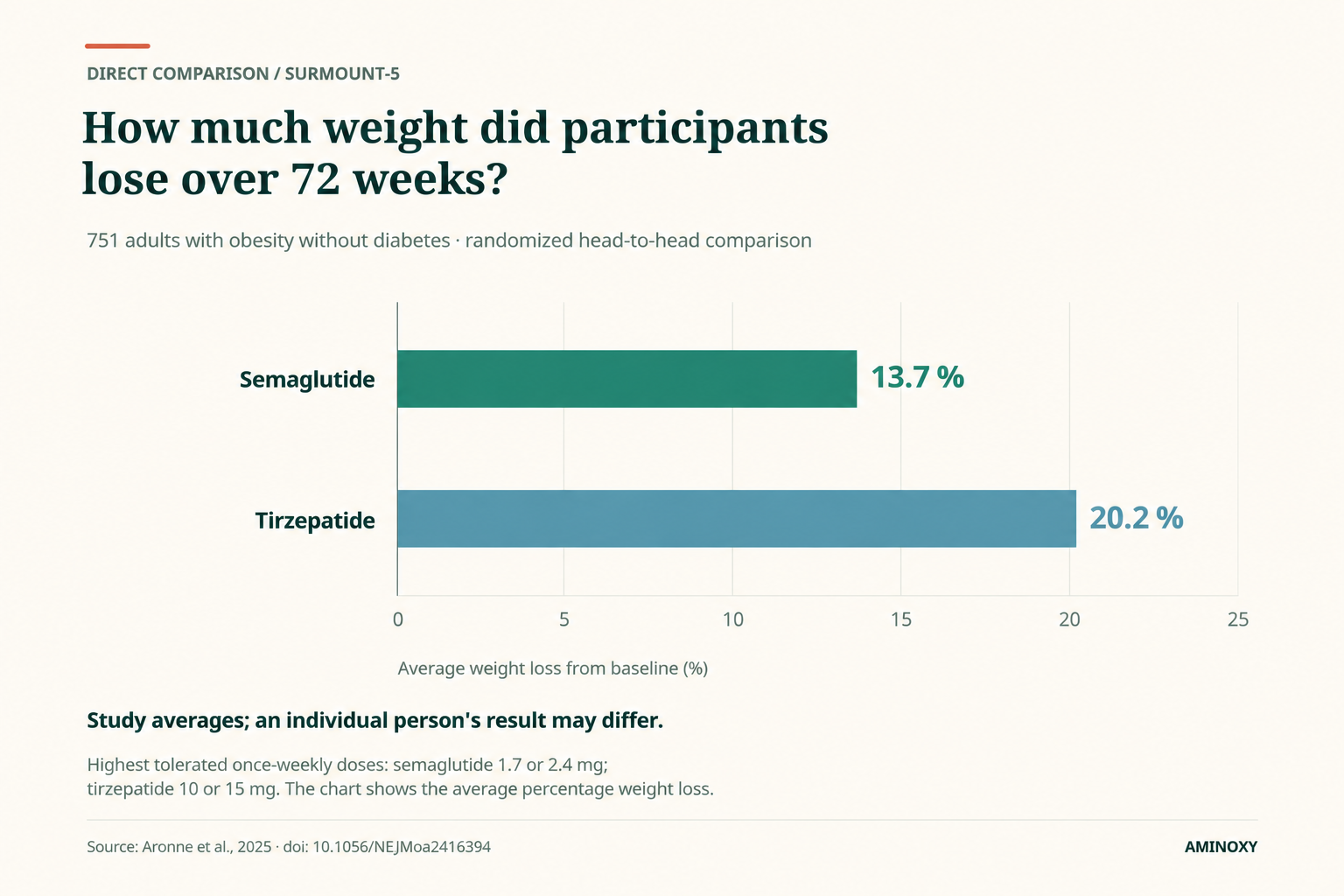
When interpreting these results, it is important to note that the highest dose of semaglutide studied was 2.4 mg per week and the participants did not have diabetes. For people with diabetes, it is therefore more appropriate to look for answers in a study involving similar patients. And if you’re interested in leg strength, this cannot be determined from waist circumference or weight change.
What we already know about retatrutide
Retatrutide produced a significant reduction in weight as early as in a previous Phase 2 study involving 338 adults. In the more recent Phase 3 TRIUMPH-1 study, researchers monitored 2,339 adults with obesity who did not have diabetes. After 80 weeks, weight had fallen by an average of 25.0 per cent in the group receiving the highest dose tested, compared with 3.9 per cent in the placebo group. The placebo resembled the test treatment but contained no active ingredient.
When comparing the percentages, note The results of 25 per cent for retatrutide and 20.2 per cent for tirzepatide come from two different studies. Different people took part in them, and the follow-up periods varied in length. Therefore, simply subtracting these figures will not tell us by how much one substance is more effective. |
In the field of diabetes, we now also have the first results of a direct comparison between retatrutide and semaglutide. On 28 October 2026, the manufacturer published the results of the TRANSCEND-T2D-2 study involving 1,298 adults with type 2 diabetes. According to preliminary data, after 80 weeks, HbA1c levels fell by an average of 2.2 percentage points in both study groups treated with retatrutide and by 1.8 points in those treated with 2 mg of semaglutide. This calculation is based on the assumption that participants continue with their assigned treatment and do not take any other diabetes medication for longer than 14 days. These results are currently available from the manufacturer’s press release.
A reduction in HbA1c, for example, from 8 per cent to 6 per cent represents two percentage points. In the case of weight change, the percentages are calculated based on the original kilograms. These are different indicators.
As of 11 November 2026, retatrutide remains an investigational product in Slovakia and throughout the EU. In the clinical trial, participants receive it under medical supervision. The product of the same name offered ‘for research purposes’ is not authorised for the treatment of humans.
How much of the weight lost is muscle?
Let’s return to the ten kilos mentioned at the start. Scientists can estimate body composition using a DXA scan. The device uses X-rays of two different energies and distinguishes between fat, bone minerals and other soft tissues. The latter group includes muscle, as well as organs and the water contained within these tissues. In studies, the term lean mass is used to refer to this. When shortened to the single word ‘muscles’, the result takes on a different meaning.
In the SURMOUNT-1 sub-study, researchers had comparable DXA measurements from 160 people. Over 72 weeks, approximately three-quarters of the weight lost was fat and one-quarter was other soft tissue. The ratio was similar for both tirzepatide and placebo, although participants lost more weight overall with tirzepatide.
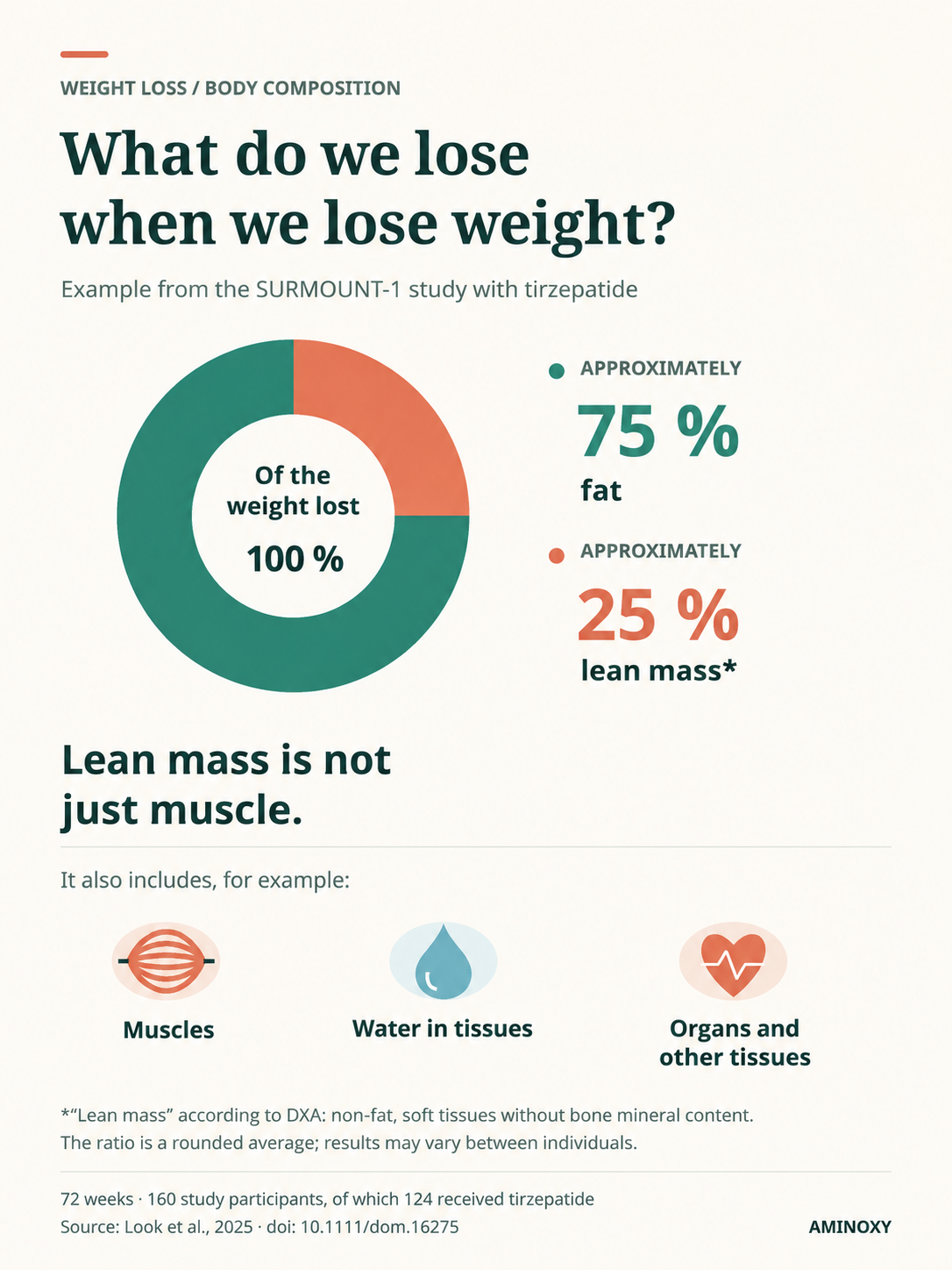
A quarter of the weight loss does not mean a quarter of muscle If someone lost ten kilos, this average would equate to approximately 7.5 kilograms of fat and 2.5 kilograms of other soft tissue. However, this soft tissue comprises not only muscle but also organs and water. The measurement alone does not reveal how much of it was muscle. |
There is another interesting finding regarding semaglutide. In an analysis of 140 participants in the STEP 1 study after 68 weeks, both fat and fat-free soft tissue mass decreased. However, more fat was lost, so fat-free mass ultimately accounted for a larger proportion of total body weight than at the start. Both statements can be true at the same time. When the total mass changes, the percentage can increase even when the weight in kilograms has decreased. The result comes from a smaller subgroup and the authors published it as a conference abstract.
And what about retatrutide? In a separate study, they monitored body composition in people with type 2 diabetes. A total of 189 participants were included in this part of the study, but only 103 of them completed the treatment and both DXA scans – the baseline scan and the one after 36 weeks. At the higher doses of retatrutide studied, there was a significant reduction in fat. According to the authors, the proportion of fat-free mass loss relative to total weight loss was similar to that observed with other treatments for obesity. This study did not address the question of whether retatrutide helps people retain more muscle strength than tirzepatide.
Can bones become thinner during treatment?
Yes, bone density may also decrease during treatment involving significant weight loss. However, it cannot yet be concluded that all three substances directly cause osteoporosis. Weight loss also alters the load on the bones, and a reduced food intake may result in a lack of essential nutrients.

In a one-year randomised study of semaglutide, 64 people at increased risk of fractures were monitored, predominantly postmenopausal women; the average age was 63 years. At the tested dose of 1 mg per week, bone density in the lumbar spine and hip was lower than with placebo after 52 weeks. The authors acknowledge a possible link to weight loss. This small study did not answer the question of whether the treatment increases the number of fractures.
For tirzepatide, one large analysis of medical records found a higher incidence of new-onset osteoporosis or low-impact fractures compared with other GLP-1 agonists. However, another analysis of people aged 65 and over with diabetes found fewer femoral fractures with both semaglutide and tirzepatide compared with another type of diabetes medication. Such observations do not in themselves prove a causal link; it also depends on the patients and the treatment being compared.
As for retatrutide, the studies published so far do not provide a reliable answer regarding the long-term risk of osteoporosis and fractures, particularly in older people. A decrease in bone density, a diagnosis of osteoporosis and an actual fracture are three distinct outcomes. You should therefore not stop your treatment without consulting your doctor; discuss your risk of fractures with them as well.
Especially as you get older: don’t forget about your bones Tell your doctor if you have suffered a fracture following a minor fall, have been diagnosed with osteoporosis, or have experienced repeated falls. Depending on your risk, they may consider a DXA bone density scan. Adequate nutrition, including protein, calcium and vitamin D, is important. Discuss supplements with a specialist as required. Moderate strength training, walking and balance exercises help to look after your musculoskeletal system. If you have osteoporosis or have experienced falls, adapt your exercise routine in consultation with a physiotherapist. |
What to look out for in your everyday movements and diet
You may notice a change sooner whilst gardening than on the scales. Can you still stand up from a squatting position? Do you need to push off with both hands when getting up from a chair? If this is new to you, it’s worth mentioning it to your doctor. They can, for example, measure your grip strength or the time it takes you to stand up from a chair several times. If a condition known as sarcopenia is suspected, the doctor will assess your muscle strength as well as how much muscle mass you have and what condition it is in. A weight loss in itself is not enough to make such a diagnosis.
A reduced appetite can be a good thing. However, if you leave most of your meals uneaten after just a few mouthfuls, you can easily overlook just how little you are eating. Describe yesterday’s meals to a nutritionist, including what was left on your plate due to feeling unwell. They will help you identify suitable portion sizes and sources of protein, such as eggs, yoghurt, fish or pulses. The total amount of food and fluids you consume is also important.
Appropriate strength training might mean lifting weights for one person, whilst for another it might mean getting up from a chair with support under the guidance of a physiotherapist. If you have joint pain or limited mobility, adapt your exercise to suit your abilities. At your check-up, describe any specific changes: can you manage the stairs without stopping, or do you find walking more difficult despite your lower weight?
Fact vs. myth: recurring questions about weight loss
“Semaglutide burns muscle.” Is there any truth in this?
Fact: the treatment primarily results in fat loss. Some muscle mass may also be lost, but we cannot accurately quantify this loss from measurements of total lean body mass. If you want to know whether your strength has changed, compare a specific movement or repeated measurements with a professional against what you were able to do at the start.
“A home scales accurately measures muscle loss.” Is this true?
Fact: Smart scales only estimate muscle mass using a weak electrical current and data such as height and age. In a study of three home scales, weight measurements were relatively accurate, but estimates of fat and muscle differed noticeably from DXA scans. A simple reading of ‘one kilo of muscle lost’ therefore does not necessarily prove an actual loss of one kilogram of muscle.
‘Weakness means I’m losing muscle.’ Is this always the case?
Fact: weakness can have many causes. Tell your doctor about any new or persistent weakness. Mention how long you’ve been feeling it, whether you’ve also experienced nausea, vomiting or diarrhoea, and whether you’re able to eat and drink. These digestive problems are among the known side effects and can lead to fluid loss. In diabetes treated with either insulin or sulphonylureas, this may be a sign of low blood sugar. In that case, follow the hypoglycaemia management plan provided by your diabetologist. If you experience severe, persistent abdominal pain, seek medical help immediately.
“Everyone puts all the weight back on after stopping treatment.” Is this true?
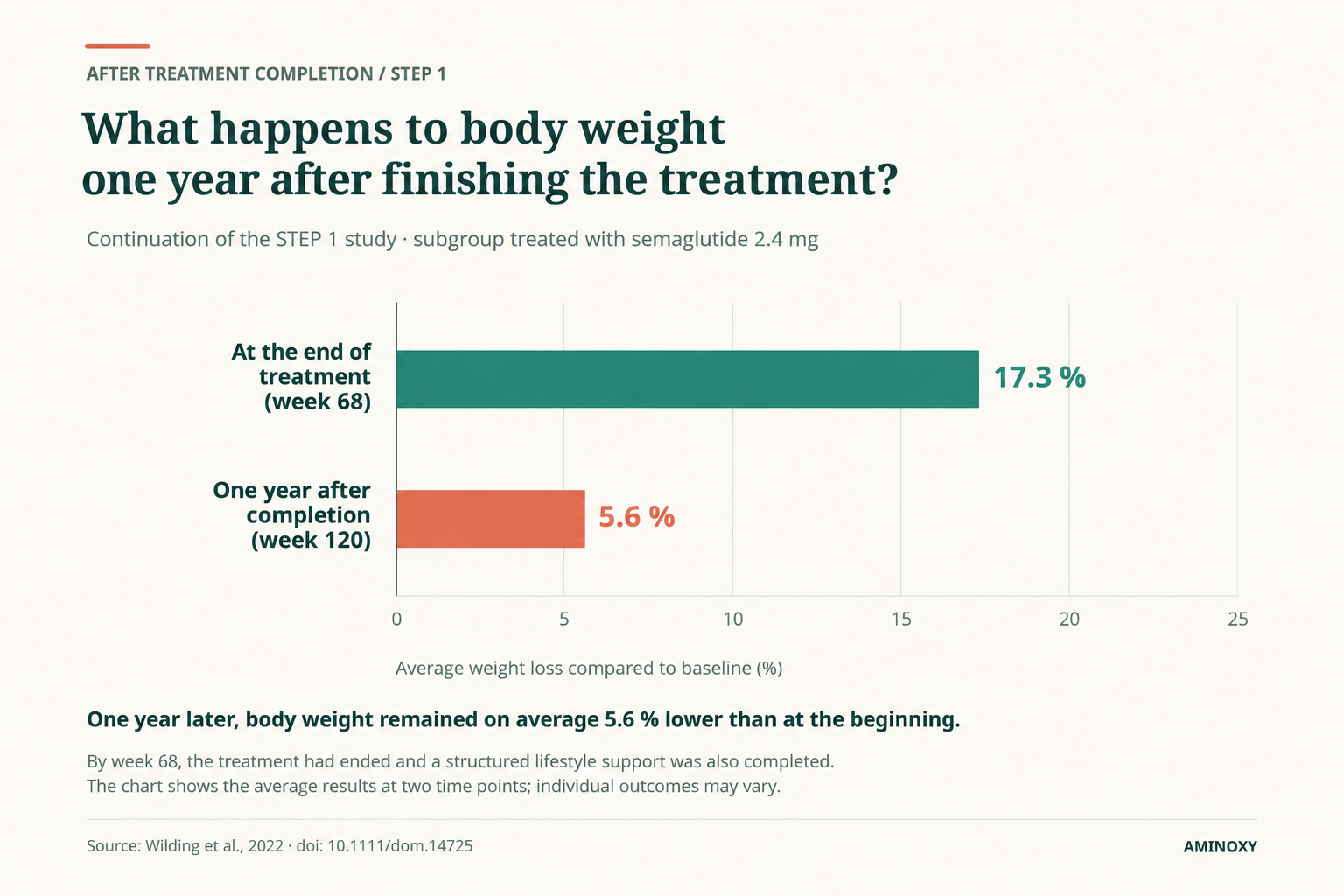
Fact: weight regain is common, but the course varies. In the follow-up to the STEP 1 study, 327 participants were monitored one year after the end of treatment and organised lifestyle support. Those who had originally been taking semaglutide regained, on average, about two-thirds of their previous weight loss. If you are considering stopping treatment, discuss with your doctor what support will be available to you afterwards.
“Apart from my weight, how can I tell if the treatment is helping me?” You could bring this question up at your next check-up. If you’re experiencing weakness, also mention the situation in which you first noticed it. A statement such as ‘I had to stop twice on my way home today with the same shopping’ can tell your doctor more about your difficulties than just another figure on the scales.
This article is for educational purposes only and is not a substitute for individual medical advice. Unapproved research peptides are not intended for self-medication.
Sources used
Look et al. (2025). Changes in body composition with tirzepatide in the SURMOUNT-1 sub-study. PMID 39996356. Full text.
Wilding et al. (2021). Body composition in the STEP 1 sub-study: conference abstract, DOI 10.1210/jendso/bvab048.030. Main STEP 1 study: PMID 33567185.
Coskun et al. (2025). Retatrutide and body composition in type 2 diabetes. PMID 40609566.
European Medicines Agency. Semaglutide: authorised uses, mechanism of action and safety. Ozempic; Wegovy; information on Wegovy in Slovak.
European Medicines Agency. Tirzepatide: authorised uses, mechanism of action and safety. Mounjaro; product information in Slovak.
Jastreboff et al. (2023). Retatrutide for obesity: a phase II clinical trial. PMID 37366315.
Eli Lilly (2026). TRANSCEND-T2D-2: preliminary results of a head-to-head comparison of retatrutide and semaglutide in diabetes. Press release dated 28 October 2026; registration number NCT06260722; information on the research status of retatrutide.
National Institute of Diabetes and Digestive and Kidney Diseases. HbA1c test; insulin resistance.
Frías et al. (2021). Tirzepatide and semaglutide in type 2 diabetes: SURPASS-2. PMID 34170647.
Aronne et al. (2025). Tirzepatide and semaglutide in obesity without diabetes: SURMOUNT-5. PMID 40353578.
Jastreboff et al. (2026). Retatrutide in obesity: the TRIUMPH-1 phase III trial. PMID 42814954.
Cruz-Jentoft et al. (2019). European consensus on the definition and diagnosis of sarcopenia. PMID 30312372.
Expert recommendations on nutrition and physical activity during obesity treatment. EASO, EFAD and ECPO consensus (2026): PMID 42419343. Joint recommendations from four professional societies (2025): PMID 40450457.
Wilding et al. (2022). Weight regain following discontinuation of semaglutide: the STEP 1 follow-up. PMID 35441470.
Frija-Masson et al. (2021). Accuracy of three smart home scales. PMID 33929337. Full text.
Cleveland Clinic. Glucagon and blood sugar regulation. Glucagon.
Sanyal et al. (2024). Retatrutide in metabolic liver steatosis: a phase II randomised trial. PMID 38858523.
Coskun et al. (2022). LY3437943 (retatrutide): preclinical mechanisms and first clinical data. PMID 35985340.
Asmar et al. (2016). GIP, insulin and subcutaneous adipose tissue metabolism in healthy individuals. PMID 27258938.
Hansen et al. (2024). Semaglutide and bone changes in people at increased risk of fractures: a randomised trial. PMID 38737002. Full text.
Hsu et al. (2025). Tirzepatide and the risk of osteoporosis or low-impact fractures: the TriNetX observational study. PMID 41218687.
Chen et al. (2026). Semaglutide, tirzepatide and femoral fractures in people aged 65 years and over with diabetes: an observational comparison with DPP-4 inhibitors. DOI 10.1007/s00198-026-08134-y.
National Osteoporosis Guideline Group (NOGG, 2024). Assessment of fracture risk; nutrition, physical activity and fall prevention.
National Institute of Diabetes and Digestive and Kidney Diseases. The role of insulin and glucagon in regulating blood sugar. Causes of Diabetes.