



Cutting isn’t just about losing as many kilograms as possible. The aim is to reduce body fat whilst retaining as much of the muscle you’ve built up as possible. A sensible diet, strength training and patience will help you achieve this – not a drastic diet that will leave you with less energy and less motivation to exercise.
Defining your muscles
When toning your muscles, you’re aiming to reduce your body fat so that your muscles become more visible. This isn’t about ‘turning fat into muscle’ – they are two distinct processes. Fat is reduced mainly through a sustained reduction in calorie intake, whilst strength training and sufficient protein help to preserve muscle mass.
That’s why it’s worth looking at more than just the number on the scales. Your weight also fluctuates depending on the amount of water, salt or carbohydrates in your food. After a strenuous workout or a salty dinner, your weight may be higher in the morning, even though your body fat percentage hasn’t changed overnight.
You’ll get a more useful picture if you track:
your average weight over several days, rather than a single morning reading,
your waist circumference and, if applicable, other measurements,
photographs taken under similar conditions,
progress in strength and training weights,
energy levels, sleep and how you generally feel throughout the day.

If you’re a beginner or returning to exercise after a long break, you may sometimes see improvements in strength and changes in body composition, even though your weight doesn’t change significantly. However, this isn’t guaranteed for everyone. The important thing is to choose an approach that you can stick to for longer than just a few days.
A diet for toning
The basis is a calorie deficit: you consume slightly fewer calories than your body burns during the day. It doesn’t have to be a drastic restriction. If you cut your calorie intake too drastically, you may feel tired, train less effectively and find it harder to recover. At the same time, a prolonged and overly strict deficit increases the risk that, in addition to fat, you’ll also lose some muscle mass.
When cutting, it is often recommended to take a slower approach, especially if you already have a low body fat percentage and regularly do strength training. An overview of dietary recommendations for athletes describes a useful guideline of approximately 0.5 to 1 per cent of body weight per week, although leaner and more experienced athletes may need to take it at a slower pace. This is neither a mandatory standard nor an exact prediction of the outcome.
In practice, start with small adjustments:
cut down on frequent high-calorie drinks or snacking that you don’t even really enjoy,
keep filling meals with protein and vegetables in your diet,
keep the foods you enjoy, but adjust the portion sizes or how often you eat them,
monitor your progress for at least two to three weeks before making any further changes.
If your weight is falling too quickly, your energy levels are dropping and you’re constantly hungry, your calorie deficit may be too large. If your average weight or waist circumference hasn’t changed for some time, first check your portion sizes, drinks and how regularly you’re eating. There’s no need to immediately add more training sessions or cut out entire food groups.
Weight changes don’t have to be smooth. Water, salt, digestion and even your menstrual cycle can mask the trend for a few days. That’s why you should compare weekly averages and waist circumference rather than individual morning weigh-ins. If your weight stays the same for a few days, that doesn’t in itself mean you need to lose even more.
You can keep a brief record of your calorie intake if it helps you get a sense of portion sizes, but this isn’t the only way. Sometimes a more regular routine, more filling meals and fewer high-calorie drinks can help. If keeping a record causes stress or leads to excessive control over your eating, opt for a more flexible approach or consult a nutritionist. The calorie deficit should be manageable even during a normal day.
A meal plan for cutting
A good meal plan for cutting doesn’t have to consist of chicken, rice and broccoli in every container. The important thing is that your meals help you maintain an appropriate energy intake, provide protein and can be prepared even during a normal working week.
On most days, try to include:
protein from meat, fish, eggs, dairy products, pulses, tofu or other sources,
vegetables and fruit, which add fibre and help increase the volume of your meals,
carbohydrates according to your training load – for example, potatoes, rice, porridge, bread or fruit,
fats from nuts, seeds, oils, eggs or fish.
Carbohydrates do not need to be automatically cut out. They can be a useful part of a meal both before and after training and help meet your energy needs. Similarly, it is not advisable to reduce fats to a minimum simply because you are trying to lose weight. What matters is your overall diet and its long-term sustainability, not banning a single nutrient.
An example of a typical day might look like this:
Breakfast: porridge with yoghurt, fruit and a few nuts.
Lunch: tofu or chicken, potatoes or rice, and a large portion of vegetables.
Afternoon snack: quark, skyr or hummus with bread or a roll, whichever you prefer.
Dinner: an omelette with vegetables and bread, or a bowl of pulses.
This is just an example, not a one-size-fits-all plan. Requirements vary depending on height, weight, activity level, training and health. If you’re looking for a fitness meal plan to help you get defined, use these examples as inspiration, not as a precise calorie breakdown for everyone.

Adjust the number of meals to suit your routine. Some people prefer three larger portions, others four smaller ones; what matters more is whether the overall plan helps you stick to it. For main meals, a simple structure can work well: a source of protein, vegetables or fruit, a side dish depending on your training, and a reasonable amount of fat. This is a guideline, not a mandatory formula for what’s on your plate.
If you’d like a broader perspective on meal planning for weight loss, have a look at the article What to eat when I want to lose weight: the basics of weight-loss nutrition. You’ll find Aminoxy’s range of products for this area in the category Muscle Building. It contains products with varying compositions and purposes, so please read the information for each specific item before making a choice; not every product is a standard dietary supplement. Supplements can complement your routine, but they are no substitute for a balanced diet or strength training.
Your diet doesn’t have to be the same every day, nor does it have to stop the moment you go to a restaurant. Choose a main course with a source of protein and a side dish; add vegetables to taste. You can plan and enjoy a dessert, rather than seeing it as a failure. Flexibility usually helps you stick to your routine for longer than a strict list of prohibitions. Before training, take digestion into account too: some people prefer a larger meal a few hours beforehand, whilst others prefer a lighter snack. You don’t need to find the perfect time or the perfect meal — what’s more important is your overall plan for the day. And that plan should include your everyday life.
Training to sculpt your body
Strength training plays an important role whilst dieting: it reminds the body that it still needs its muscles. If you replace training entirely with a long cardio session and eat very little, your weight may well drop, but that doesn’t necessarily mean you’ve lost only fat. A review of studies involving overweight or obese people shows that adding resistance training whilst dieting helps to preserve lean body mass better than simply restricting food intake. The results cannot automatically be applied to every athlete, but they do support the importance of strength training for weight loss.
Training whilst cutting does not have to be harder each week than the previous one. When in a calorie deficit, the aim may be to maintain strength and good technique, rather than adding sets or kilograms at any cost.
Basic principles:
stick to exercises you know how to perform safely,
focus on controlled movement and an appropriate range of motion,
do not train to failure in every set if this impairs your recovery,
if your performance continues to decline, consider slightly reducing your volume or taking more rest,
Incorporate cardio according to your fitness level and preferences, not as a punishment for eating.
Cardio can improve fitness and increase energy expenditure, but it is not a substitute for strength training. Brisk walking, cycling or swimming can be a pleasant addition if you can fit them in without disrupting your recovery.
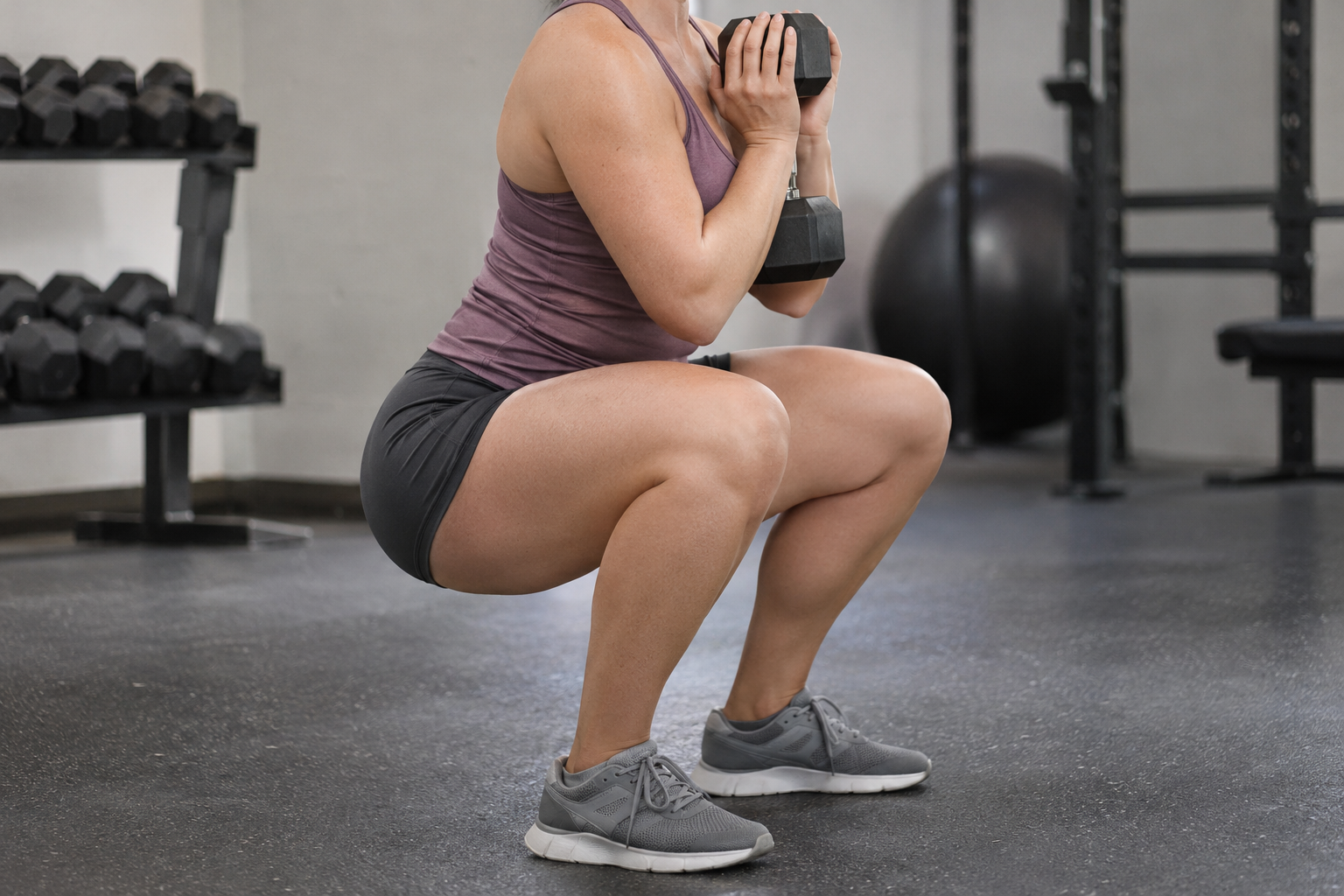
When in a calorie deficit, your performance may fluctuate from time to time. One weaker training session does not necessarily mean you are losing muscle. The trend is what matters: if both your performance and recovery have been deteriorating for several weeks, consider adjusting the number of sets or taking more rest. The aim of training whilst cutting doesn’t have to be a new personal best every week; maintaining the workload and good technique is also a good result.
Also pay attention to the intensity of your working sets. You don’t have to finish every set to failure, nor do you automatically have to reduce all weights just because you’re in a calorie deficit. If your recovery is suffering, stick to the main exercises and, if necessary, reduce the number of sets or extend your rest periods. This way, you’ll adapt your training to a lower energy intake whilst maintaining the strength stimulus for your muscles.
Training plan for body sculpting
A training plan for body definition can be simple. There’s no need to change your exercises every week or search for a secret ‘cutting’ rep count. Your muscles can’t tell whether you’re in a bulking phase or on a diet – they respond to the training stimulus and subsequent recovery.
Example of three strength training sessions per week:
Day | Focus | Example exercises |
Monday | Full body | squats or leg press, chest press, pull-ups, calf raises |
Wednesday | Full body | Romanian deadlift, overhead press, pulldowns, lunges |
Friday | Full body | Front squat or a lighter variation, dumbbell press, lat pulldowns, supplementary arm exercise |
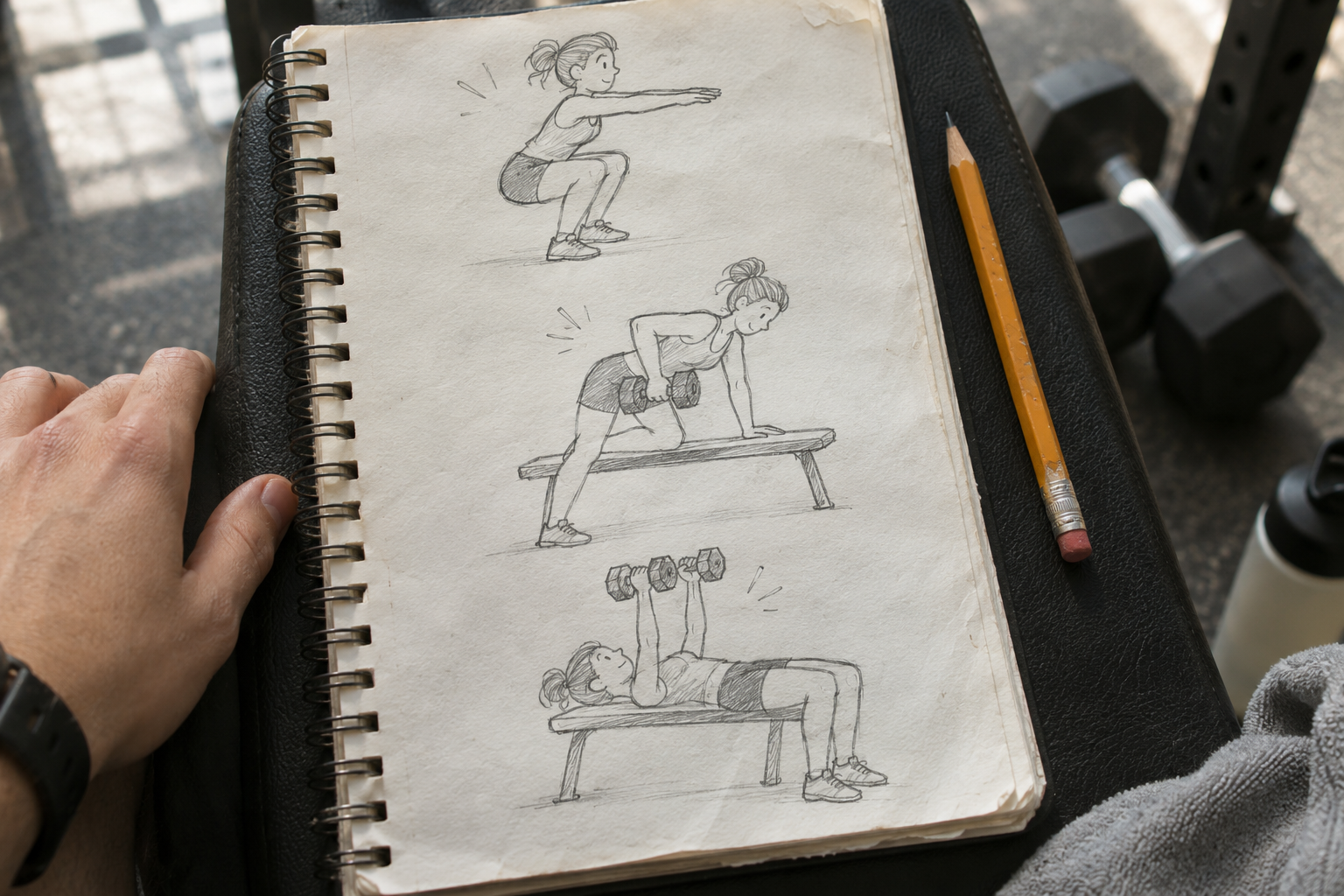
This is merely an example of a training structure. The choice of exercises and the number of sets should be adapted to your experience, equipment and how well you recover after training. Some people prefer to train their whole body three times a week, whilst others find it better to split their training into upper and lower body sessions.
When putting together training plans for body sculpting, focus primarily on what you can manage to do regularly and with good technique. Keep a record of your working weights and repetitions. If your performance fluctuates slightly whilst on a diet, this doesn’t necessarily mean the plan isn’t working. What matters is the trend over several weeks.
When selecting exercises, cover the main movement patterns: squats, presses, pull-ups and exercises for the back of the legs or hips. If a particular movement doesn’t suit you or you’re unable to maintain proper technique, choose a suitable variation. Choose your training plans for toning based on your schedule and experience, not on promises of a quick transformation. The plan should be a tool, not another obligation.
Defining your abs
Visible abdominal muscles depend on their development, the amount of belly fat, and how your body stores fat. Ab exercises can strengthen your core, but on their own they do not guarantee that fat will disappear from this specific area.
Research into localised fat burning is not entirely black and white: one small randomised study in men suggested a change in the abdominal area following a specific exercise. However, this does not mean that doing hundreds of crunches will reliably remove fat from the abdomen alone, or that everyone will achieve the same result.
Include abdominal exercises for strength and muscle development, such as planks, knee raises or controlled crunches. At the same time, stick to your overall plan: a moderate calorie deficit, strength training, adequate protein intake and time. If you tend to store fat mainly around your abdomen, the loss of this fat may become visible later than in other areas.

How visible your abdominal muscles are also depends on where your body stores fat and how developed your muscles are. Photos on social media often involve lighting, posing or editing, so don’t take them as an accurate measure of your progress. Focus on the long-term trend, not on comparing yourself to someone else’s photo.
How long does it take to get a defined physique?
The duration of the process is influenced by your starting and target weight, the amount of fat you want to lose, and the size of your calorie deficit. It also depends on the pace you can sustain over the long term, your training experience, daily activity levels and sleep. It is therefore impossible to give an exact number of weeks.
If you have a longer journey ahead of you, break it down into stages and compare your average weight, waist circumference, performance and energy levels every two to three weeks. If your strength, sleep or mood continue to decline, slow down the pace.
Building muscle is successful when your body composition changes and you’re able to maintain your fitness outside the gym. A patient approach tends to be less dramatic, but is usually easier to sustain.
If your waistline is shrinking and your performance is holding up, the plan may be working even if your weight has plateaued for a while. If your waistline hasn’t changed for several weeks, adjust one thing, such as portion sizes or your daily activity levels.
During a longer diet, a period of maintenance intake can help if you’re feeling tired or struggling to stick to the plan. It’s not a shortcut to losing weight faster, but it can make it easier to get back on track. If you experience severe tiredness, dizziness, low mood or changes to your menstrual cycle, consult a healthcare professional and do not push for a further calorie deficit.
Sources
Resistance training during a diet and the preservation of lean body mass
Localised fat burning during abdominal exercises: a randomised study