



When people hear the word ‘testosterone’, they often immediately think of muscles, energy or libido. However, it is a hormone with multiple roles: in men, for example, it plays a part in sperm production, sexual function, maintaining bone and muscle mass, and the production of red blood cells. Its levels are influenced by a number of factors, ranging from age and health to sleep, diet and body weight.
There are various reasons why people look for ways to boost their testosterone levels. Some want to boost their training results, whilst others feel tired or have a reduced interest in sex. However, the symptoms alone do not indicate whether testosterone levels are actually low. Fatigue, mood swings or reduced performance can have many causes.
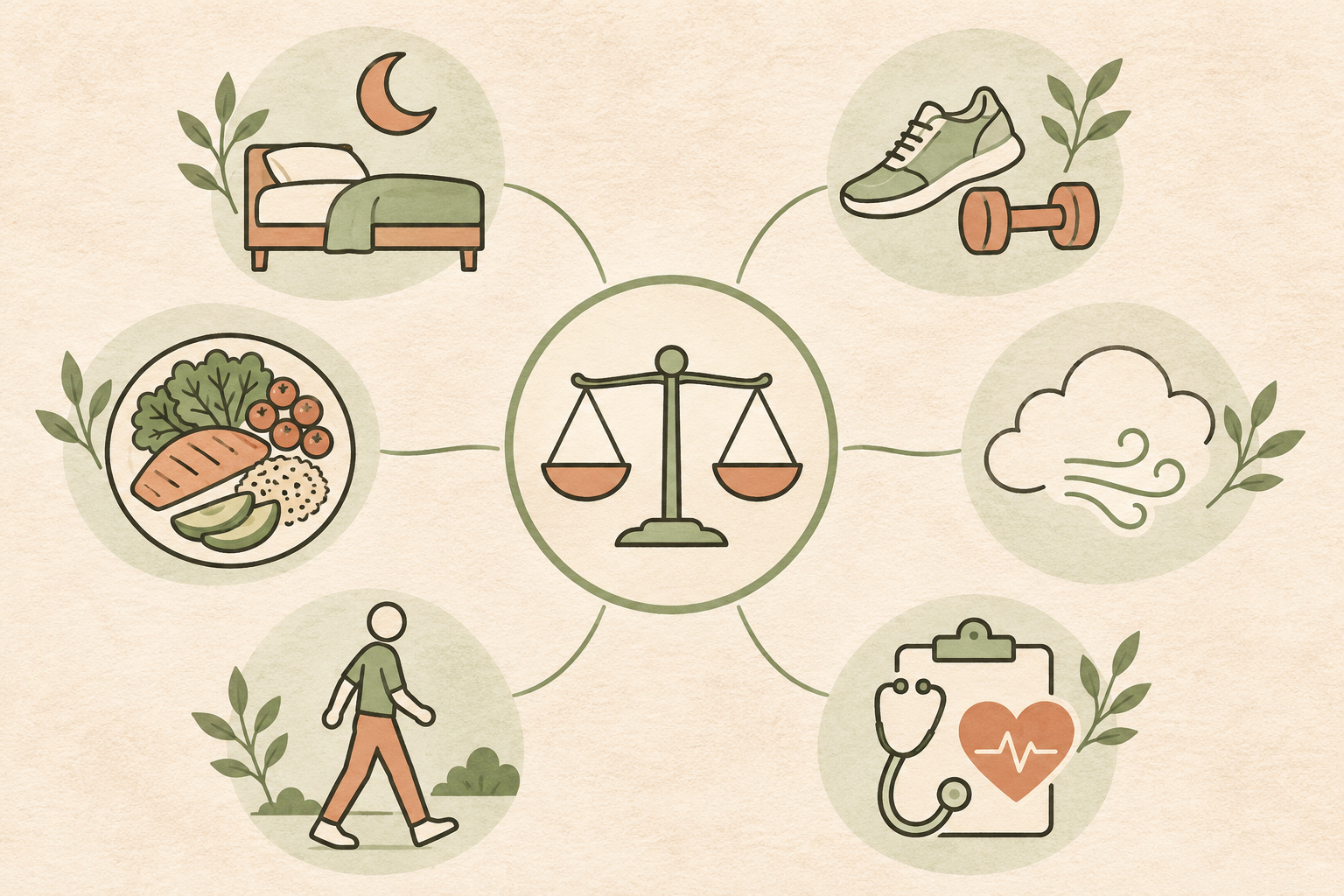
Adopting natural habits can help create the conditions for a healthy hormonal balance. However, they may not boost testosterone levels in everyone, and they certainly do not guarantee a significant increase beyond normal physiological levels. Let’s look at what makes sense, where the evidence is mixed, and when it is appropriate to consult a doctor.
What affects testosterone levels?
Testosterone levels are not exactly the same throughout the day or from one day to the next. In men, they are generally higher in the morning and lower later in the day. The result can also be influenced by your current state of health, what you’ve eaten before the blood test, the quality of your sleep, or the laboratory method used. Therefore, a single figure from a single blood test cannot always be interpreted without further information.
As men get older, testosterone levels gradually decline in some men, but age is not the only explanation. Certain medical conditions and medications can also have an impact.
Hormone levels may be linked to body weight, long-term insufficient energy intake, stress or sleep. This does not mean that every demanding week or missed training session will automatically alter hormone levels.
It is useful to distinguish between normal fluctuations and a long-term problem. For example, after a sleepless night, you may feel tired, but that in itself does not mean you have a testosterone deficiency. Similarly, a good training session does not confirm that all your hormone levels are normal.
When interpreting the results, it is therefore important to consider the wider context:
Timing of the test: testosterone is usually tested in the morning.
Health status: an acute illness or certain long-term conditions can affect the results.
Medicines and other substances: your doctor needs to know what you are taking, including medicines and supplements.
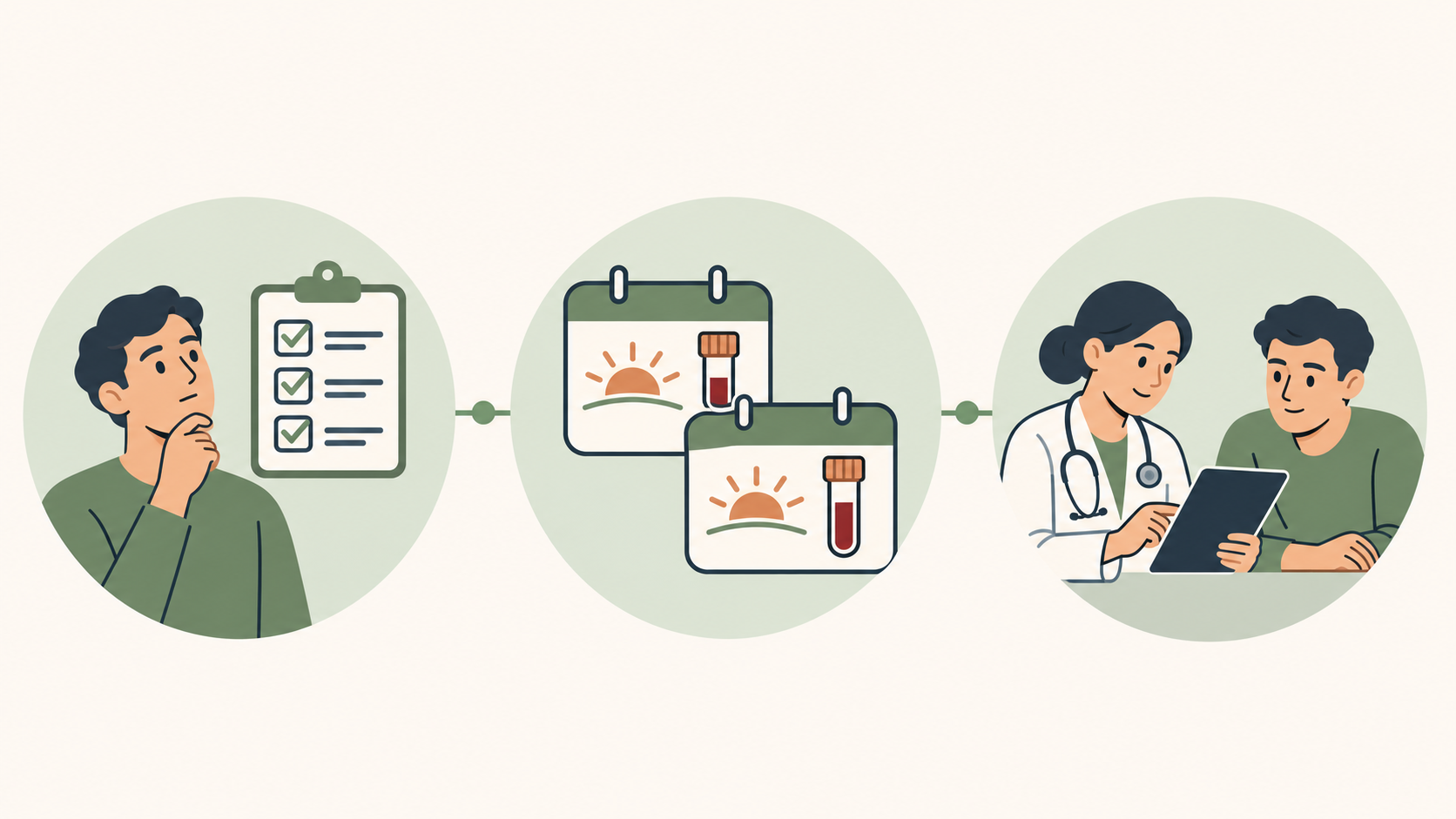
Repeat testing: if low levels are suspected, the result is usually verified by a further blood test.
A diagnosis is therefore not made based solely on how you feel or on a single result. The recommendations of the European Association of Urology (EAU) state that low testosterone is assessed on the basis of symptoms and repeatedly low morning levels.
How can you boost testosterone through sleep?
Sleep is an important part of overall health and recovery. However, this does not mean that sleeping for longer will automatically increase testosterone levels in everyone.
Research into the relationship between sleep and testosterone has yielded mixed results: some smaller studies have reported changes following significant sleep restriction, whilst others have not confirmed these findings.
For example, one randomised study of healthy young men found no evidence that short-term sleep restriction reduced testosterone levels. The authors also pointed out that the research does not yet provide a completely consistent answer.
Even without the promise of a hormonal ‘hack’, it is worth ensuring you get regular and sufficient sleep. The American Academy of Sleep Medicine recommends that adults aged 18 to 60 get at least seven hours’ sleep regularly. However, individual needs vary, and the quality of sleep is also important.
If you want to improve your sleep routine, start with some simple steps:
get up and go to bed at roughly the same time each day,
set aside time in the evening to wind down, rather than working or doing intense exercise just before bed,
keep your bedroom dark, quiet and pleasantly cool,
limit your evening caffeine intake if it makes it difficult for you to fall asleep,
take note of whether you’re frequently woken at night by snoring or a feeling of shortness of breath.

If you’re getting enough sleep but still feel regularly exhausted during the day, the problem may not be down to testosterone. It may be worth discussing your sleep quality, stress or other causes of fatigue with your doctor. If you suspect you have sleep apnoea – for example, if you snore loudly or experience pauses in your breathing – it is advisable not to delay seeking a specialist assessment.
Exercise and testosterone
There are many reasons to include strength training in your weekly routine: it helps build strength, muscle and fitness. However, it is important to distinguish between its overall benefits and the claim that it will permanently increase everyone’s resting testosterone levels.
After a strenuous workout, testosterone levels may change for a short time. However, such a short-term fluctuation is not the same as a permanent increase in baseline levels.
In a systematic review and meta-analysis of 11 studies involving 421 less active men, exercise had, on the whole, a negligible effect on resting testosterone levels in men whose levels were within the normal range.
This finding does not mean that exercise is not worthwhile. Rather, it shows that going to the gym is not a guaranteed way to improve your morning blood test results.
Regular exercise can support heart health, insulin sensitivity, muscle strength and the maintenance of a healthy weight. This is why it is important, even though its greatest benefit may not be reflected in a single hormone reading.
Start by making sure your training routine is sustainable in the long term:
incorporate strength training according to your experience and ability,
add walking, cycling or another activity that suits you,
allow yourself time to rest and gradually increase the intensity,
don’t take every instance of tiredness as a sign that you need to add another training session.

Too much exercise combined with too little food and a lack of recovery can be counterproductive. In the event of a long-term energy deficit, the body may restrict certain functions, including hormonal regulation.
A review of research on energy deficit in men describes how testosterone levels may fall in the event of insufficient energy intake or excessive energy expenditure; in some cases, the condition improved once an adequate energy intake was restored.
Diet and testosterone
A balanced diet over the long term is more important for hormonal health than any single ‘miracle’ food. The body needs sufficient energy and nutrients to function normally. A prolonged and significant calorie deficit can lead not only to hunger and reduced training performance, but also to inadequate recovery.
Your diet should include sources of protein, carbohydrates and fats. Protein helps meet the needs of muscles and other tissues. Carbohydrates provide energy for physical activity and day-to-day functioning. Fats are part of a healthy diet and should not be completely eliminated without good reason. However, this does not mean that the more fat on your plate, the higher your testosterone levels.
A varied diet can help, one that regularly includes, for example:
eggs, fish, meat, dairy products, pulses or tofu as sources of protein,
potatoes, rice, porridge, bread, fruit and other sources of carbohydrates,
nuts, seeds, olive oil, avocado and oily fish as sources of fat,
vegetables and fruit, which provide fibre and various micronutrients.

If you are significantly restricting your food intake, following repeated strict diets or following a very demanding training regime, check that you are consuming enough energy. Research suggests that a long-term energy deficit can disrupt hormonal regulation in men; the consequences may vary depending on the duration and severity of the restriction, as well as on your state of health.
A similar principle applies to vitamins and minerals: it is advisable to address any deficiencies, but taking supplements without a specific reason is not an automatic route to higher testosterone levels. Zinc, for example, is an important mineral, but zinc supplementation is not a universal hormonal booster.
The US National Institutes of Health points out that assessing zinc levels can be complex and that the results must be evaluated alongside other information about diet and health.
Body weight and testosterone
In men who are overweight or obese, body weight may be linked to lower testosterone levels. In such cases, it may be more beneficial to gradually improve metabolic health and lose excess weight than to seek a quick fix in the form of a supplement.
A meta-analysis of 44 studies involving men who were overweight or obese found that weight loss was associated with an increase in both total and free testosterone. The results varied depending on how much weight the participants lost and their initial state of health. It is therefore not possible to calculate from these results exactly how much an individual’s levels will change.
If you decide to lose weight, aiming for gradual and sustainable progress is usually wiser than drastically reducing your food intake. You could try:
regular meals with plenty of protein and vegetables,
more daily exercise, such as walking,
strength training tailored to your abilities,
getting enough sleep, and a realistic plan that you can stick to.
If you are significantly overweight, have diabetes, high blood pressure or other health issues, it is best to discuss the appropriate approach with your doctor or a nutritionist. A crash diet may not be safe or sustainable, and if the calorie deficit is too large, it can worsen fatigue, performance and recovery.
Conversely, someone of a healthy weight does not need to lose weight simply to boost their testosterone levels. For them, it may be more important to eat sufficiently, sleep well and address any underlying health causes of their difficulties. The impact of weight must always be considered in the context of the individual.
Stress and testosterone
Stress is a normal part of life. In the short term, it can help you cope with a challenging situation, but long-term stress often disrupts sleep, appetite, mood and the desire to exercise. These changes can affect overall health and may also be linked to hormonal balance.
The direct link between stress and testosterone is neither straightforward nor the same for everyone. Research covers various types of stress, groups of people and methods of measurement. It would therefore be an exaggeration to promise that a few minutes of relaxation will automatically boost testosterone levels.
A scientific review of factors that may be linked to changes in testosterone lists stress, sleep, weight and nutrition among the influences examined.
Practical steps need not be complicated. Regular exercise, time away from work commitments, a more consistent sleep routine or a chat with someone you trust can all help. If stress turns into long-term anxiety or exhaustion, or begins to impair your day-to-day functioning, it is wise to seek professional help.
Also try to notice whether your basic habits are changing during a more demanding period. Perhaps you’re eating irregularly, skipping rest periods or tackling tiredness with more caffeine. Sometimes it helps to sort out these practical matters first, rather than looking for yet another product with big promises on the label.
Testosterone-boosting supplements
Supplements are often promoted as a simple answer to the question of how to boost testosterone. However, research shows that results depend on the specific substance, its dosage, the quality of the study and the individual’s state of health.
A systematic review of 52 studies examined 27 commonly promoted ‘testosterone boosters’. According to the authors, most of these failed to demonstrate an increase in total testosterone; for some ingredients, potential effects were observed only in certain groups, and the evidence remained limited.
Ingredient | What the available evidence suggests |
Vitamin D | It is important for health, but supplementation has no proven effect on testosterone in everyone. |
Zinc | It is important in cases of deficiency; taking extra is no guarantee of higher testosterone levels. |
Ashwagandha | Some small studies using specific extracts have suggested a possible effect, but this cannot be generalised to every product or every man. |
Tribulus terrestris | Marketing claims about increasing testosterone are stronger than the evidence in healthy men. |
Vitamin D is often mentioned in connection with testosterone. It makes sense to address a deficiency for the sake of general health, but the supplement should not automatically be regarded as a testosterone booster.
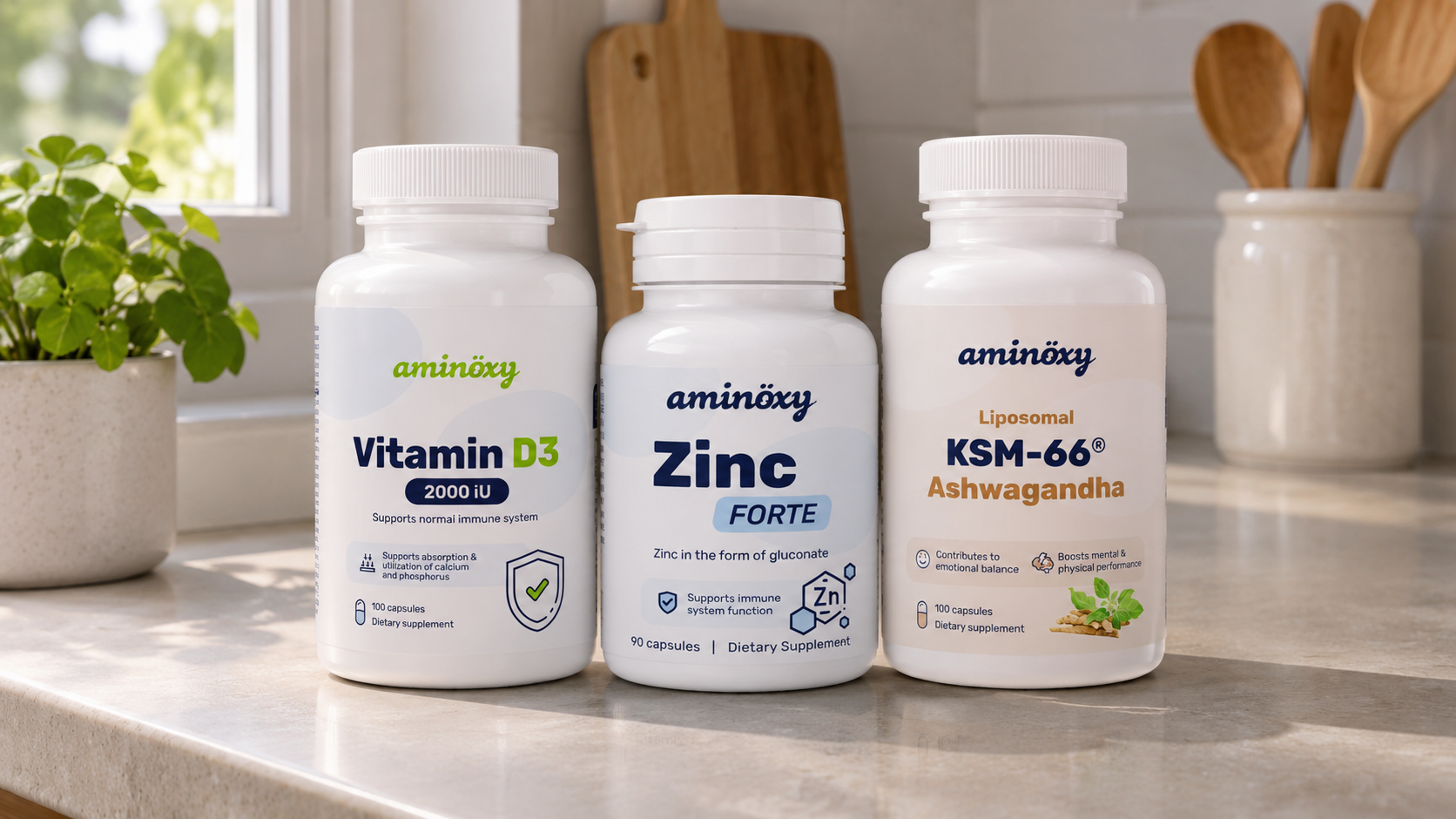
If your doctor recommends taking a vitamin D supplement, we recommend D3 2000 IU, where one capsule contains 2,000 IU of cholecalciferol.
A 2026 meta-analysis of randomised trials found no clear or reproducible effect of vitamin D supplementation on testosterone levels in adult men.
Zinc is essential for several bodily functions. If a person’s intake is insufficient or they have a confirmed deficiency, supplementation may be justified. However, if intake is adequate, an additional dose will not automatically increase testosterone levels.
Furthermore, excessive intake of minerals can cause side effects or interfere with the absorption of other nutrients, so please follow your healthcare professional’s advice and the information on the product label. If a healthcare professional has recommended that you take a zinc supplement, Zinc Forte by Aminoxy contains 25 mg of zinc per capsule.
Ashwagandha has shown signs of a potential effect in some studies. For example, a small study involving older, overweight men found that a specific standardised extract led to an increase in testosterone levels after several weeks, compared with a placebo.
However, this result does not mean that every product containing ashwagandha will have the same effect, or that the result applies to all men.
If you are looking for a specific product, we recommend Liposomal KSM-66® Ashwagandha. The daily dose, as stated on the label, contains 500 mg of ashwagandha extract in a 10:1 ratio and 200 mg of KSM-66®. Take it as a herbal supplement, not as a proven method of increasing testosterone.
Claims that Tribulus terrestris boosts testosterone are particularly popular in marketing. However, a systematic review of clinical studies states that the available evidence does not support its use for increasing testosterone in healthy men.
You can find out more about what is known about Tribulus terrestris and where the evidence ends in the article Tribulus terrestris: effects, myths and scientific facts.
When choosing a supplement, it is therefore worth looking at the specific composition, the quantities of individual ingredients, the recommended use and any warnings. The term ‘testosterone booster’ alone does not indicate whether the product will help, who it is intended for, or whether it is compatible with any medicines you are taking.
In the Testosterone Support category, you can view products focused on this area. When making your choice, always read the information about the specific product and bear in mind that a supplement is no substitute for a medical examination or treatment of a health problem.
If you want to compare common sports supplements with substances that interfere with hormonal processes, have a look at the article Alternatives to Steroids: Which Ones Make Sense?
What doesn’t work for boosting testosterone?
It’s easy to find foods, exercises or supplements online that are claimed to ‘boost’ testosterone. Some claims are based on small studies, measurements taken shortly after exercise, or animal research. This in itself is not enough to conclude that a particular substance will significantly increase testosterone levels in every individual.
The most common exaggerated claims go something like this:
A single food will boost testosterone. Eggs, nuts or any other single food are not a universal hormonal solution. It depends on the overall diet and whether a person is consuming enough energy and nutrients.
The more intense the workout, the higher the testosterone. Levels may change briefly after exercise, but a short-term fluctuation does not constitute a permanent increase in resting levels.
Not every ‘natural booster’ works. The results of a single study on a specific extract cannot automatically be applied to another brand, formulation or group of people.
More of a supplement does not mean a better effect. A higher dose does not guarantee a better result and may increase the risk of side effects.
Fatigue means low testosterone. Fatigue can also be caused by a lack of sleep, psychological stress, anaemia, thyroid problems, infection or other conditions.
A higher level is always better. The aim is not to get testosterone as high as possible, but to assess the result alongside symptoms and overall health. Supplements or hormonal preparations should not be taken simply to increase the number on a piece of paper.
When evaluating such claims, it helps to ask yourself a few questions:
Did the study examine this specific ingredient, or just a substance with a similar name?
Were the participants healthy men, or people with a confirmed deficiency?
Was it a short-term change in a blood test, or a longer-term health benefit?
Have other independent studies confirmed the result and compared it with a placebo?
The answers will help you assess whether the advert is drawing more conclusions from the study than were actually intended. When reading, also note the amount of the active ingredient and whether it corresponds to the dose used in the research.
A sensible approach therefore sounds less dramatic: regular exercise, eating enough, a varied diet, adequate sleep and addressing any health issues. It’s not as enticing a promise as ‘boost your testosterone in a week’, but it’s more in line with what we know from research.
How can you tell if you have low testosterone?
Certain symptoms may be linked to low testosterone, such as a decrease in sexual desire, erectile dysfunction, reduced fertility, loss of muscle mass or unusual tiredness. However, these symptoms are not specific. They can have a number of causes and do not, on their own, confirm a diagnosis.
If your symptoms persist or are affecting your daily life, please consult a doctor. During the consultation, it will be helpful to mention when the symptoms began, whether they developed gradually or suddenly, what medicines and supplements you are taking, and whether you have any other health problems. Depending on the situation, your doctor will decide whether a blood test or further investigations are needed.
Diagnosis is not based solely on symptoms or on a single test result. The European Association of Urology (EAU) guidelines state that low testosterone levels should be assessed in conjunction with symptoms and based on repeated morning measurements taken on an empty stomach.
The 2026 EAU guidelines summary on PubMed also emphasises that the result must be interpreted in the context of your overall health and that a reliable laboratory test must be used.
Therefore, do not request a blood test simply because you have been feeling tired for a week, and do not interpret the result in isolation. If you have been ill, have slept poorly or are taking medication, tell your doctor. This information may be important when interpreting the results.
If low testosterone is confirmed, the next step is to identify the cause. This may be a problem with hormone production, another medical condition, the effect of medication, or functional changes related, for example, to a significant energy deficit.
Treatment is then selected based on the cause, your state of health and your plans for the future. Starting hormone therapy on your own or stopping prescribed medication is not a safe way to manage symptoms.
Healthy lifestyle habits are useful as part of a holistic approach to healthcare, not as a substitute for medical diagnosis. If you suspect you have low testosterone, the most reliable way to find out is through a consultation with a doctor and a proper evaluation of your laboratory results.
Sources
Sleep restriction and testosterone concentrations in young healthy males
Effects of Exercise Training on Resting Testosterone Concentrations in Insufficiently Active Men
Dysregulation of the Hypothalamic-Pituitary-Testicular Axis due to Energy Deficit
Meta-analysis: weight loss and testosterone levels in men with obesity
Do ‘testosterone boosters’ really increase serum total testosterone?
Vitamin D supplementation and testosterone: a systematic review and meta-analysis
Ashwagandha and its effects on hormones in ageing, overweight men