



Building muscle is often simplified to ‘eat more and lift more’. In practice, there are several factors at play: regular training, sufficient energy and protein, gradually increasing the intensity of your workouts, and allowing time for recovery. The good news is that your plan doesn’t have to be complicated. The bad news? Your body doesn’t read motivational quotes, and you won’t build muscle in a single weekend.
How does muscle growth work?
During strength training, the muscles receive a stimulus to which they gradually adapt. If the load is sufficient and regular, the body can build larger and stronger muscle fibres. This process is called muscle hypertrophy.
Following strength training, muscle protein synthesis – put simply, the production of muscle proteins – for a certain period of time. The body continuously replenishes these proteins and, with repeated training, adapts to the stimulus. Therefore, a single training session will not literally ‘build’ muscles, and the post-workout pump is not an indicator of long-term growth.
Visible change is built up gradually through many training sessions, nutrition and recovery. Once your body gets used to the same workload, you can gradually add more repetitions, slightly increase the weight or improve your form. Increase the intensity so that you can still perform the exercise safely.
However, training is just one piece of the jigsaw. The body also needs the building blocks from food, sufficient energy and time to recover. That’s why it’s worth keeping these three things in balance:
training that regularly gives your muscles a reason to grow stronger,
a diet that provides energy and protein,
recovery, during which the body recovers and adapts.
Even beginners, people returning to training after a break, and some people who change their training or diet after a long period of inactivity can build muscle mass. This does not mean that everyone will gain muscle at the same rate or that a calorie surplus is never necessary. The answer to the question of how to gain muscle depends on your previous experience, diet, training, sleep and state of health.
How do you structure your training for muscle growth?
Strength training is the main signal you send to your body telling it that it makes sense to build muscle. You don’t have to spend every day at the gym. What’s more important is that you train each muscle group regularly and stick to your plan week in, week out.
A review of randomised studies in healthy adults has shown that various sensible programmes can promote muscle growth. Programmes involving multiple sets and training muscle groups approximately twice a week also performed well in terms of hypertrophy; however, the results do not suggest that there is one perfect schedule for everyone.
When planning your training, focus on these principles:
Consistency: choose a number of training sessions that you can maintain in the long term.
Sufficient volume: train your muscle groups with several high-quality sets throughout the week.
Appropriate intensity: the final repetitions should be challenging, but your technique should not break down.
Gradual progress: over time, add more repetitions, slightly increase the load or improve your control of the movement.
Compound exercises: squats, presses, rows and hip-flexion exercises can engage multiple muscle groups at once.
Supplementary exercises: these help to target the muscles you want to develop more effectively.

You don’t have to increase the weight at every training session. If today you do the same number of repetitions with better technique or greater control, that’s progress too. Conversely, rapidly increasing the load at the cost of pain or shortening your range of motion may not be worth it.
When training, it’s worth keeping an eye on four things:
→ Volume: Start with a number of challenging sets that you can recover from whilst maintaining your technique.
→ Distribution: If you’re training your whole body several times a week, spread the work across different days rather than cramming it all into one long session.
→ Intensity: The final repetitions should be challenging, but a set doesn’t have to end in failure every time. If your technique holds up and you can repeat the routine, you’ve got a good foundation.
→ Rest periods: Rest long enough to ensure you can perform the next set to a high standard. A shorter rest period isn’t automatically better; a longer rest during a demanding exercise can help maintain your performance.
A good plan is also one that fits into your week. If your schedule regularly takes up more time than you have available, try simplifying it. Two or three training sessions that you can stick to over the long term are usually more useful than a perfect plan that you’ll end up shelving after a few weeks.
What might a simple weekly training plan look like?
Day | Workout |
Monday | Full body: squats, press, pull-ups, calf raises |
Tuesday | Rest day or light walk |
Wednesday | Full body: lunges, overhead press, pulldowns, supplementary exercises |
Thursday | Rest |
Friday | Full body: leg press, dumbbell press, pull-ups, shoulders or arms |
Weekend | Rest, light exercise as desired |
This is just an example, not a ready-made personal training plan. Experience shows that splitting the workout into upper and lower body sessions, or following a different schedule, can work just as well. When choosing exercises, take into account the equipment available, your technique and any injuries you may have.
What should you eat when building muscle?
If you want to gain muscle, your body needs enough energy for training and day-to-day activities. However, a large calorie surplus does not automatically mean faster muscle growth. Part of the weight gain may be fat, especially if the surplus is significant and your training does not provide your muscles with an adequate stimulus.
A practical starting point is to eat regularly and add small amounts of food to what’s already working for you. Then monitor changes in your weight, waist circumference and training performance.
A small study involving trained individuals compared a maintenance calorie intake with a moderate and a larger energy surplus. The short duration and small number of participants do not allow for a universal rule to be drawn, but the results support a cautious approach: faster weight gain does not necessarily mean proportionally faster muscle growth.
Make sure to include the following in your diet:
a source of protein with most main meals,
carbohydrates, which help meet your energy needs and support your training,
fats in moderate amounts,
vegetables and fruit for variety and fibre,
meals that you enjoy and know how to prepare as part of your everyday routine.
You don’t have to eat ‘clean’ 100 per cent of the time. If your diet consists mainly of nutritious and filling meals, the occasional pizza or dessert won’t derail your progress. What matters is what you do consistently, not a single meal on a Saturday evening.
If you’re trying to build muscle, that doesn’t mean mindlessly increasing your portion sizes. If your weight is increasing but your waistline is also growing significantly and your performance isn’t improving, it may be worth adjusting your portions slightly. If your weight hasn’t changed for weeks and your training progress has stalled, try adding a small amount of food and reassess the trend.
You can easily put together a balanced meal:
→ Energy source: rice, potatoes or bread.
→ Protein source: eggs, meat, fish, tofu or pulses.
→ Variety and fats: vegetables and, if needed, a little oil, nuts, seeds or avocado.

If you have a smaller appetite, yoghurt with fruit or a milk drink may be easier than a large portion. If you feel too full after a meal, split it into smaller portions. A suitable diet isn’t the most complicated one, but one that you can stick to even during a normal working week.
You can find more practical tips on post-workout meals in the article What to eat after exercise and when?
How much protein do you need?
Protein provides amino acids, which the body uses to build and repair tissues, including muscles. However, protein alone won’t build muscle – it’s important to combine it with resistance training and ensure you have sufficient overall energy intake.
A large meta-analysis of training studies found that the benefit of a higher protein intake during strength training gradually diminished at around 1.6 g per kilogram of body weight per day. This is neither a magic figure nor a mandatory minimum for everyone; individual needs vary.
Another systematic review suggests approximately 1.4 to 2.0 g of protein per kilogram of body weight per day for most exercisers. It is sensible to view this as a guideline rather than a strict requirement to count every gram.
You can obtain protein from, for example:
eggs, milk, yoghurt, quark and cheese,
fish, chicken and other types of meat,
lentils, beans, chickpeas and soya products,
protein powder, if this is a practical addition to your diet.
It can help to spread your protein intake across several meals throughout the day. However, you don’t need to drink it within a few minutes of your last set. Your total daily intake is more important than the perfect timing of a single meal.
A practical tip is to spread your protein intake across your main meals, for example as follows:
→ Breakfast: eggs or yoghurt.
→ Lunch: meat or pulses.
→ Dinner: tofu, fish or quark.
If you follow a plant-based diet, vary your sources – soya products, pulses, nuts and grains will help to add variety to your diet. If you get enough protein from your regular meals, you don’t need protein powder; it can come in handy on days when you’re short on time or can’t find a meal that suits you.
How quickly can you build muscle mass?
There’s no single figure that applies to everyone when it comes to how quickly you can build muscle mass. A beginner often makes faster progress than someone with years of regular training behind them. Muscle growth is also influenced by genetics, age, diet, training history and recovery.
The pace also varies depending on where you’re starting from. A beginner may get stronger quickly in the first few weeks as their technique improves and their body learns to coordinate movement. This increase in performance may not immediately show up as a visible difference in the mirror.
After a break, some people return to their previous level of fitness, which is different from building muscle from scratch. So don’t take the first few weeks as a predictor of your results for the whole year. Progress may first become apparent through more confident technique or a higher number of repetitions.
Furthermore, what you see on the scales isn’t just muscle. Your weight fluctuates depending on water retention, carbohydrate stores in your muscles, the contents of your digestive tract and your salt intake. After starting creatine, your weight may also increase due to a higher water content in your muscles; this does not in itself mean that you have suddenly gained fat.
When tracking your progress, therefore, pay attention to:
your average weight per week,
changes in working weights and repetitions,
waist circumference and other measurements,
photographs taken in similar lighting and with the same posture,
how your clothes fit and how you feel.
If you’re wondering how to build muscle quickly, a faster increase on the scales isn’t necessarily a good thing. Sensible weight gain tends to be slow and carefully monitored. Focus on the trend over several weeks, not on whether you weigh more on Monday morning than you did on Friday.
How can you build muscle mass after 40?
The question of how to build muscle mass after the age of 40 often comes with the fear that ‘it’s too late’. It isn’t. Even at an older age, muscles can respond to strength training.
A meta-analysis of studies involving people aged 65 and over found that strength training had a beneficial effect on muscle size and muscle fibre size. However, no change was observed in the total lean body mass of the lower limbs, which may not accurately reflect the growth of individual muscles. The result therefore does not predict what will happen to everyone over the age of 40, but it does show that even at an older age, muscles can respond to training.
After the age of 40, it may be important to plan rest periods even more carefully, to train with an appropriate load and to take your state of health into account. However, this does not mean that you should only train with light weights or avoid more challenging exercises. The load should be appropriate to your abilities and technique.
Start with a programme that you know you can stick to. If you have a chronic condition, haven’t exercised for a while, or experience pain when moving, consult a specialist and choose a suitable starting point. Consistency is more valuable than a single heroic training session followed by a week off.

Once you’re over 40, it’s worth adapting your training to fit in with your everyday life. These principles can help:
→ Schedule: Balance it with work, family and sleep; consistency is more important than a perfect plan.
→ Getting back into it: After a break, start off gently and increase the intensity gradually.
→ Recovery: If you’re recovering more slowly, adjust the number of sets or the time between training sessions rather than giving up on exercise altogether.
→ Diet: Include sources of protein regularly and eat enough to suit your activity levels.
Age alone is not a reason to skip strength training; tailor your plan to your fitness level and health.
How can women build muscle mass?
The basic principles of muscle building apply to both women and men: resistance training, sufficient energy and protein intake, and recovery. A meta-analysis comparing changes in muscle size following strength training found that the relative potential for muscle hypertrophy is similar in women and men, although absolute differences in muscle size and baseline values remain.
If you’re looking for advice on how women can build muscle mass, there’s no need to automatically devise a completely different training plan. It’s important to tailor the workload to your experience, goals and personal preferences.
The fear that a few strength training sessions will immediately result in a ‘too bulky’ physique is often exaggerated. A significant increase in muscle mass requires long-term training and a balanced diet. Strength training can also boost your strength and confidence in everyday activities – from carrying the shopping to climbing stairs, which will suddenly cease to be a cardio challenge.
Workouts for women don’t need to follow some secret, completely different formula. You can choose exercises based on your goals and what you enjoy; there’s no need to limit yourself to machines or light weights.
Some women feel more tired at certain times of their cycle. On those days, you can adjust the intensity according to how you feel, but there’s no need to automatically change your entire plan or follow a one-size-fits-all calendar. Over time, your training logs will show you what works best for you. The basics remain the same: work your muscles regularly, eat enough and allow yourself time to rest.
What role do recovery and sleep play?
Training is a stimulus, but more training doesn’t automatically mean more muscle. If you repeatedly cut back on sleep, skip rest periods and finish every session completely exhausted, both your performance and your motivation to continue may suffer.
Recovery is supported by:
plenty of sleep and a fairly regular routine,
rest days or lighter training sessions with a lower intensity,
adequate food and fluids,
gradually increasing the intensity of your training,
adjusting your programme when fatigue builds up over a longer period.
Normal muscle soreness may occur after a new or more demanding training session. However, it is not a reliable indicator of whether the training has been effective. If you experience sharp pain, if it gets worse, or if the pain affects your movement, do not regard this as a necessary price to pay for progress.
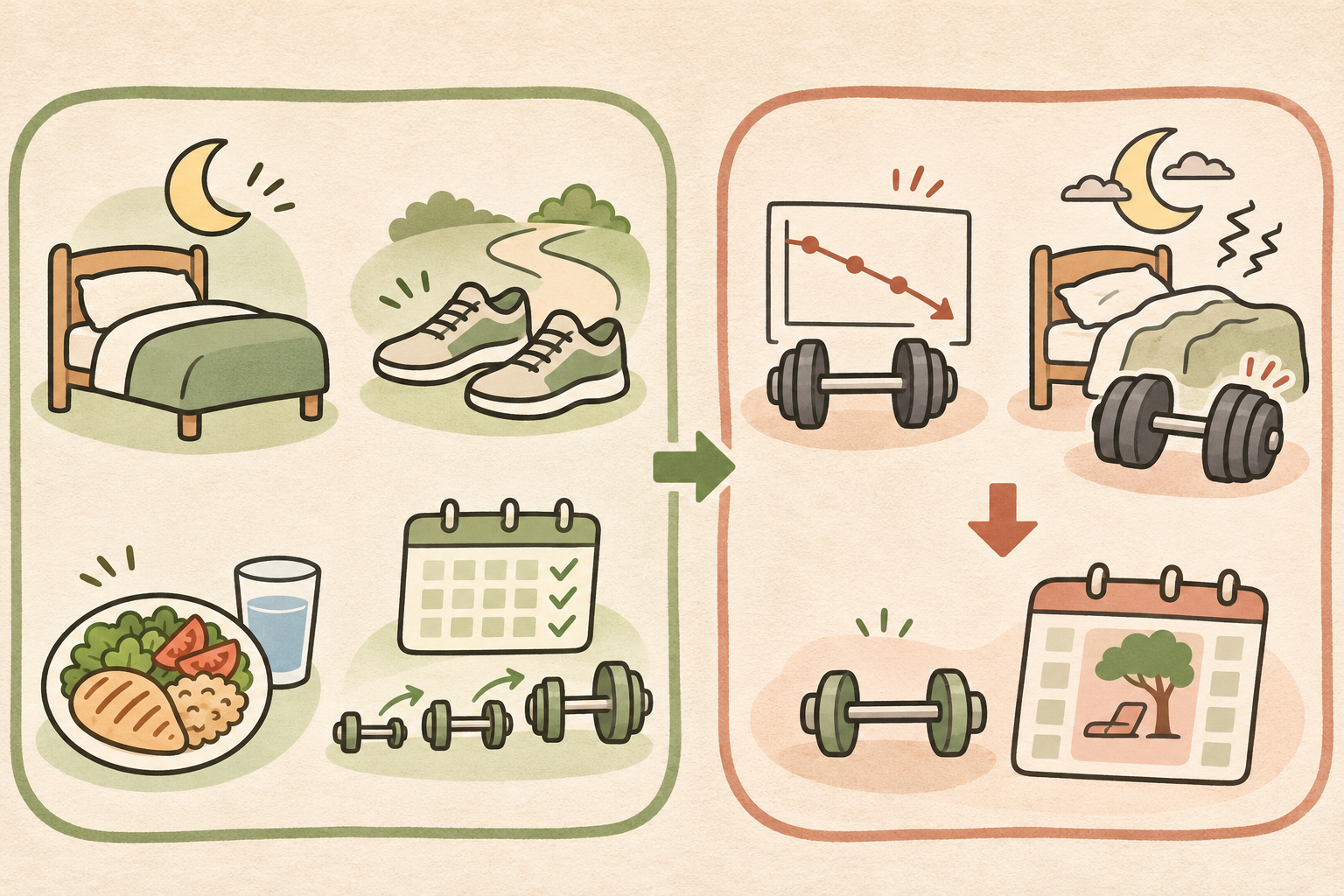
Rest does not mean you mustn’t move. A walk or a lighter day can fit well between more demanding training sessions. Keep an eye on whether fatigue is building up. The following signs may appear, for example:
→ Your performance drops over several consecutive training sessions.
→ Your sleep is poorer and your usual weights feel unusually heavy.
If this happens, try reducing your training volume for a few days or extending your rest period, and see if your energy returns. Everyone has the odd weaker training session; what’s more important is a prolonged dip in performance.
Do nutritional supplements help with muscle growth?
Supplements can make it easier to achieve a specific goal, but they are no substitute for training or food. Among the best-researched options are creatine and protein powder, which can serve as a convenient source of protein when you’re unable to get enough from your regular meals.
Before choosing a supplement, ask yourself what it should actually help you with:
→ Protein: This can be a convenient option if you’re unable to get enough protein from your regular meals.
→ Creatine: Check the amount per serving, other ingredients and the instructions on the packaging.
→ Multi-ingredient blend: Check the full list of ingredients. The sheer number of ingredients does not necessarily mean better results.
A creatine blend may suit those who want to combine several ingredients. Choose a supplement based on your needs, tolerance and budget. Don’t add more products at once, so you can work out what suits you best. Training, nutrition and recovery remain the foundation of growth.
If you wish to include creatine in a blend, CREATINE MONSTER MIX combines five forms of creatine, with one serving containing 6,000 mg of creatine complex, including 3,000 mg of creatine monohydrate. It’s a convenient multi-ingredient option for your training routine. However, the sheer number of forms does not prove that it will be more effective than creatine monohydrate.
In the Muscle Building category, you’ll also find the STARTER GYM PACK, which combines Crea Pump, BCAA Amino Powder and Epi Cat into a single pack.
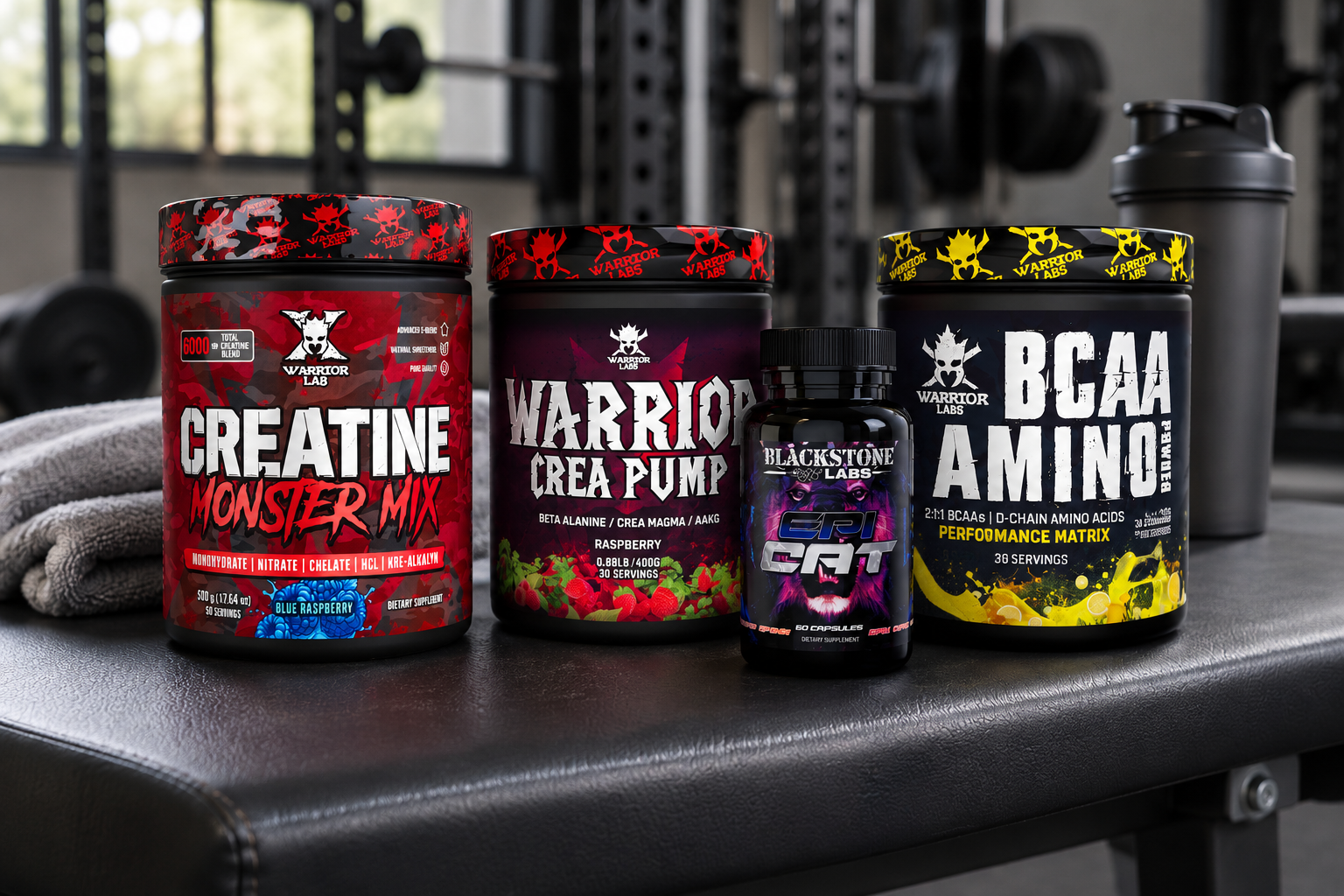
It may suit those who want to have several training products together; before choosing, it’s worth checking the ingredients of each one and considering whether they fit into your routine. A supplement pack is not a prerequisite for muscle growth, and the individual ingredients do not automatically have the same level of scientific evidence.
If you want to get the basics straight first, have a look at the article How to Build Muscle Faster: What Helps Most?
The most common mistakes when building muscle
When trying to build muscle mass, people often get stuck on something that seems like a big mystery, but it’s usually quite simple: plans change frequently, portion sizes are estimated by eye, and recovery is put off until ‘when there’s time’.
Watch out for these mistakes in particular:
Too large a calorie surplus: your weight may increase quickly, but this doesn’t necessarily mean faster muscle growth.
Chaotic training: if you change your entire programme every week, it’s harder to tell whether you’re making progress.
Insufficient protein intake: without regular sources of protein, achieving your goal becomes unnecessarily difficult.
Exercising too frequently without rest: another set isn’t always the solution to a plateau.
Comparing yourself to others: people have different starting points, levels of experience and circumstances.
Expecting immediate changes: muscle growth is slower than the ‘before and after’ photos on social media suggest.
When progress slows down, don’t immediately see it as a sign that you need a new training plan or another product. First, look at your records from the last few weeks:
→ How often you’ve been training and whether the weights and reps have changed.
→ How your weight has changed and whether you’ve been getting enough rest.
Then adjust one thing at a time and give it time. If you change several things at once, it’ll be hard to tell what helped. A simple note on your mobile will do – the plan doesn’t have to be complicated; you just need to know what you did last time.
If you’re wondering how to gain muscle mass quickly, the answer usually isn’t in yet another supplement or a more complicated training split. Start with a plan you can stick to: train regularly, eat enough and track your progress. How do you build muscle? Give your body a good reason, plenty of nutrients and time to respond.