


The workout ends with the final repetition, but the body still has work to do: replenish its energy and prepare the muscles for the next session. The good news is that you don’t need a stopwatch or any special ‘miracle’ meal to do this. In this article, we’ll explain how to eat whilst exercising, what to eat before and after a micro-workout, and why your overall diet is more important than rushing to eat straight after your last set.
How should you eat when exercising?
The key is to eat enough to get through both your workout and your day, whilst regularly providing your body with the nutrients it needs to recover. There is no single diet that suits everyone. The diet of someone who wants to build muscle will differ from that of someone trying to lose weight or maintain their weight.
You don’t need to eat the same portion sizes every day. After a strenuous workout or a more active day, you may naturally need more; during rest periods, you’ll need less. As well as your hunger, pay attention to your energy levels during training and how you feel afterwards. One off day doesn’t mean anything; if fatigue or a drop in performance keeps happening, take a look at your diet, sleep and rest.
In most meals, it’s worth bearing three things in mind:
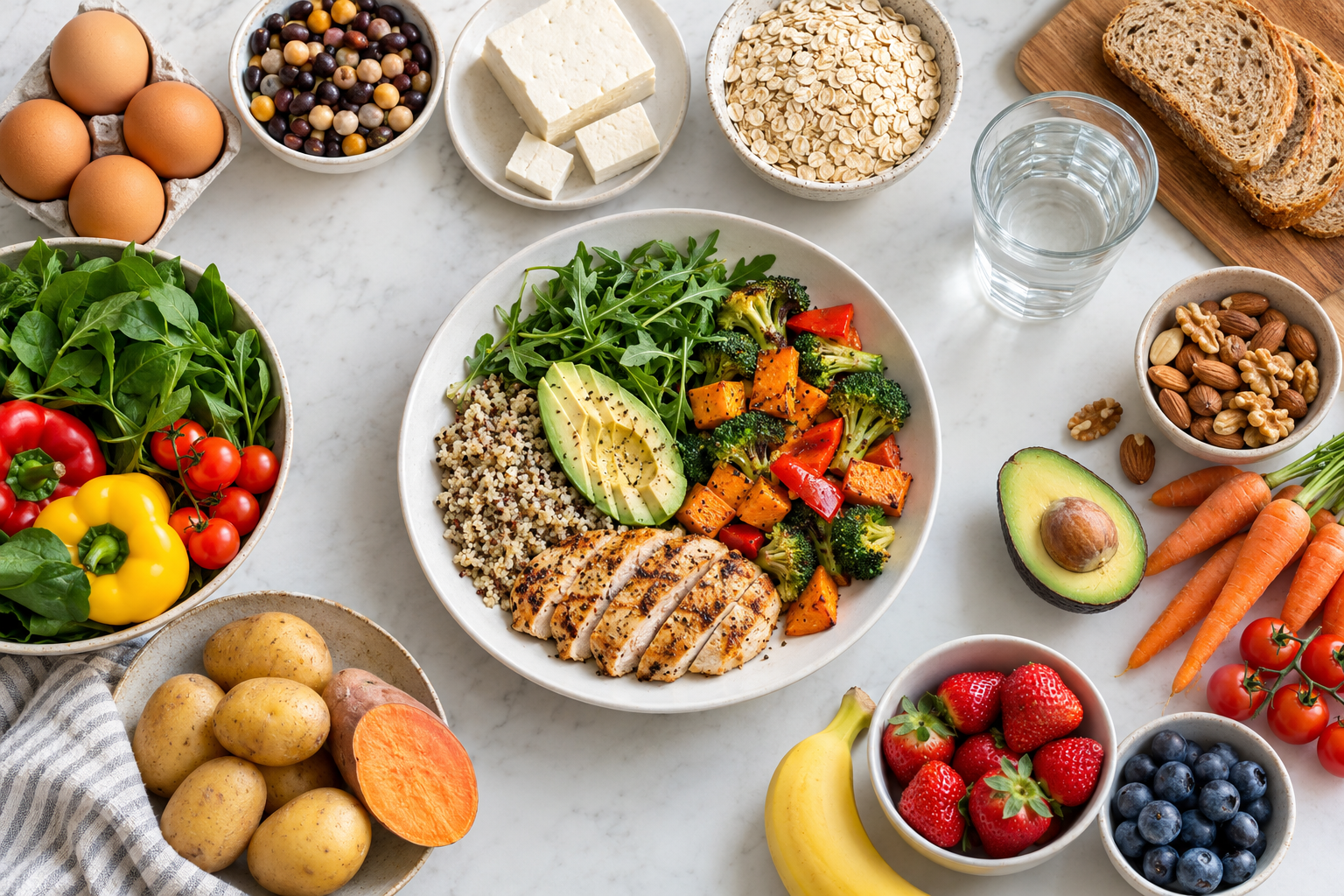
Protein from meat, fish, eggs, dairy products, pulses or tofu.
Carbohydrates from rice, potatoes, porridge, bread, fruit or pasta.
Fats, for example, from nuts, seeds, olive oil, avocados or oily fish.
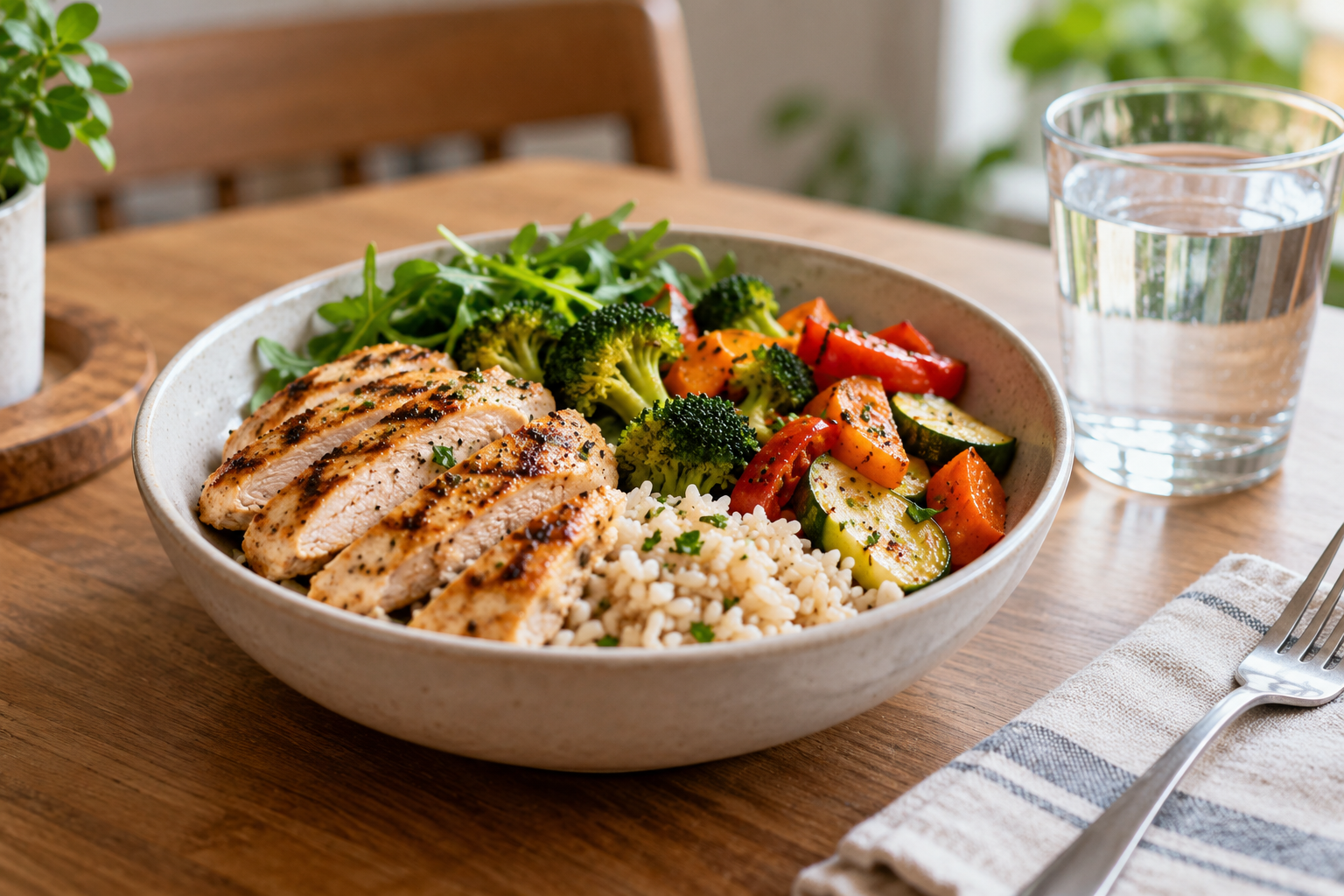
This also includes vegetables, fruit and fluids. However, not every meal needs to look like a perfectly styled photo from a fitness profile. What you eat regularly throughout the week is more important than whether you forget to add broccoli once in a while.
In a varied diet, remember to include micronutrients as well as proteins, carbohydrates and fats. Iron is a component of haemoglobin, which carries oxygen, and vitamin D helps the body absorb calcium, which is important for bones. Iron is found, for example, in meat and pulses, whilst vitamin D is found in oily fish and in some fortified foods. However, this does not mean that everyone who exercises needs iron or a multivitamin in capsule form. It is best to obtain most nutrients from food; taking a supplement only makes sense when there is a specific reason to do so. If you are experiencing prolonged fatigue, have an unbalanced diet or suspect a deficiency, consult a healthcare professional and do not take high doses ‘just to be on the safe side’. Useful information is available from the NIH ODS on iron and NIH ODS on vitamin D.
With regular strength training, the body needs sufficient energy and protein to cope with the strain and to recover between sessions. The position of professional organisations on sports nutrition emphasises the importance of an adequate intake of energy and nutrients, particularly protein and carbohydrates, during periods of increased physical activity.
Don’t forget to drink enough. The amount of fluid you need depends on the duration and intensity of your training, the temperature, and how much you sweat. During a normal training session, most people simply need to have water to hand and drink as required. There’s no point in forcing yourself to drink litres at a time – it’s possible to overdo it even with hydration.
During a standard strength training session at the gym, most people do not need to drink a sports drink or eat an energy gel whilst exercising; water and a meal before or after the session are usually sufficient. The situation is different for long, intense endurance activities, such as a long run or a cycle ride lasting several hours. During intense exercise lasting more than an hour, carbohydrates consumed during the activity can help maintain performance. The ISSN’s guidance on nutrient timing suggests a guideline of 30 to 60 grams of carbohydrates per hour. This could be a drink, a gel or an easily digestible meal; it is not a must-have in every sports bag. If you train for shorter periods or mainly for leisure, this recommendation does not automatically apply to you.
What should you eat before exercising?
A pre-workout meal should provide energy and shouldn’t unnecessarily weigh down your stomach during exercise. Most people find a combination of carbohydrates and protein suitable, for example:
oat porridge with yoghurt and fruit,
bread with an egg or cottage cheese,
rice or potatoes with chicken, tofu or pulses,
a banana and yoghurt when there’s less time before your workout.
Adjust the timing and portion size of your meal depending on how much time is left before your workout and how the food agrees with you. Allow more time after a larger meal; if your workout is imminent, a smaller snack may suffice. A fatty or very heavy meal may weigh on some people’s stomachs during exercise, whilst others find it doesn’t bother them. Try out simple options and notice which ones give you energy and allow you to focus on your squats rather than just thinking about the end of the set. What to eat before a workout also depends on your appetite and digestion. You’ll find more tips in the article What to eat and take before a workout: diet vs. supplements.
What to eat after a workout?
After a workout, it’s good to have a meal that replenishes both protein and carbohydrates. A post-workout meal doesn’t have to be complicated: it can be a normal lunch or dinner that you’d have even without the workout.
For example:
rice, chicken and vegetables,
potatoes with eggs and salad,
pasta with tuna or tofu,
Greek yoghurt with fruit and oats,
bread with cottage cheese and vegetables.
If you’re not heading straight home after your workout, you can prepare your meal in advance. Leftovers from lunch, a wrap with an egg or tofu, or yoghurt with fruit will fit in your bag and are more practical than buying the first thing you come across when you’re hungry.
Protein after exercise provides the body with the building blocks it needs to rebuild muscle protein. Carbohydrates help replenish the energy the body has used up during training. They don’t have to be in precise proportions or in the form of a special shake – what’s more important is that they feature regularly in your diet.
If you train once a day and your next session isn’t until the following day, there’s usually no need to panic about whether you’ve eaten straight after your last repetition. The situation is different with intense training sessions in quick succession. A systematic review of muscle glycogen replenishment focused primarily on athletes who had another session within eight hours; in such cases, faster carbohydrate replenishment is more important.
And what should you eat after training if you don’t feel like a big meal straight after exercising? Start with a smaller portion, such as yoghurt with fruit, milk and a banana, or a sandwich containing a source of protein. You can have a full meal later, once your appetite returns.
One thing a protein drink usually won’t sort out is muscle soreness. Your muscles may still feel tender after a new exercise or an unusually strenuous workout, even if you’ve eaten properly. In a systematic review with a meta-analysis on protein and recovery showed that protein may help maintain certain indicators of muscle strength, but it did not alleviate the muscle soreness itself. If your thighs ache the next day when walking down the stairs, this does not automatically mean you were lacking protein. Muscle soreness is more likely to occur after a new or more strenuous activity and is not a reliable measure of the quality of your training.
Protein and muscle growth
Protein helps the body to repair and build muscle tissue. However, it does not build muscle on its own – muscles need a training stimulus, sufficient energy and time to recover. For people who exercise , a guideline daily intake of approximately 1.4 to 2.0 grams of protein per kilogram of body weight is often recommended.
The ISSN’s stance on protein and exercise suggests a guideline portion of approximately 20 to 40 grams of high-quality protein. This is not a mandatory figure for everyone; what is more important is the daily intake and its distribution across several meals.
Common sources of protein include:
eggs, meat and fish,
milk, yoghurt, quark and cheese,
lentils, beans, chickpeas and tofu,
combinations of grains and pulses.
If you follow a predominantly plant-based diet, you can easily vary your protein sources – for example, tofu, pulses, tempeh and soya yoghurt.
If you’re struggling to get enough protein from your regular meals, a post-workout protein shake can be a convenient option when you’re in a hurry or don’t fancy a big meal. However, it isn’t essential and doesn’t replace a varied diet.
Another option is creatine, which serves a different purpose to protein. CREATINE MONSTER MIX combines five forms of creatine with electrolytes and minerals in a caffeine-free drink. However, a creatine drink is not a substitute for a meal or a source of protein. You’ll find further options in the Muscle Building category.
If you like to prepare an amino acid drink during your workout, Amino Essence combines BCAAs with a blend of essential amino acids. It can be a practical addition to your training routine, but it is not a substitute for a proper meal or a source of protein. If you’re already getting enough protein from your diet, such a supplement may not be necessary.
You can find out more about the relationship between protein and amino acids in the article Amino acids: the athletes’ secret trick?.
Energy and carbohydrates during exercise
Carbohydrates are a practical source of energy for the body, particularly during more intense training. They are found in fruit, bread, rice, potatoes, porridge and pasta. The body stores some of these carbohydrates in the muscles as glycogen – a reserve it draws on during exercise.
Your carbohydrate requirements also depend on the intensity of your training. After a short strength training session, a normal meal is often sufficient; longer or more demanding sessions can deplete glycogen stores more significantly.
Therefore, post-workout carbohydrates can form part of a meal that also provides protein, such as rice with tofu or potatoes with eggs.
You don’t need to be afraid of carbohydrates or eat them within a strictly defined time window. What’s more important is your overall energy and nutrient intake and how well it aligns with your goal. When building muscle mass, the body needs enough energy for both training and recovery. When losing weight, your intake can be lower, but too large a calorie deficit can impair performance and hinder recovery.
Most of the time, you can choose foods that fill you up and provide other nutrients too:
oatmeal and wholemeal bread,
rice, potatoes or pasta,
fruit,
pulses.
However, you don’t have to stick to a single ‘correct’ list. White rice after a workout isn’t off-limits, and wholemeal bread isn’t automatically suitable for everyone just before exercise. It depends on the portion size, the timing and how a particular food agrees with you.
If your energy intake is consistently too low in relation to your training and day-to-day activities, the result may be more than just slower progress. In sports medicine, this imbalance is referred to as relative energy deficiency in sport (REDs). The 2023 consensus of the International Olympic Committee points out that it can affect both women and men and impact both performance and health. Warning signs may include recurrent fatigue, reduced performance, more frequent illnesses or injuries, and, in women, changes to the menstrual cycle. These symptoms may have other causes and do not in themselves constitute a diagnosis. It is not a matter of missing a single meal, but of a long-term, recurring imbalance between energy intake and expenditure. If these symptoms persist, it is sensible to discuss them with a doctor or a nutritionist, rather than simply masking your fatigue with yet another coffee or supplement.
Timing your meals around training
When it comes to when to eat after exercise, the ‘anabolic window’ is often mentioned – the idea that you only have a short window of opportunity to eat after a workout, otherwise you’ve missed your chance. In practice, it’s not quite that dramatic. If you’ve had a protein-rich meal before your workout, you don’t need to rush to your shaker after your last set.
If you’ve been training on an empty stomach or it’s been a long time since your last meal, you might find it best to eat sooner.
What’s more important is a regular intake of protein and energy throughout the day. A 2025 meta-analysis comparing pre- and post-workout protein intake, found no significant difference in changes to lean body mass based on timing alone. However, there were few studies that directly compared the two. Eating after a workout makes sense, but you don’t need to count the minutes just for that.
Good post-workout recovery also depends on how your whole day goes:
Did you have enough energy throughout the day?
Did your meals include a source of protein?
Did you replenish your fluids as needed?
Do you have time for sleep and rest?
What should you eat after training in the evening? Simply have a normal evening meal with a source of protein and a side dish, depending on how hungry you are and how intense your training was. This could be an omelette with bread, quark with fruit, or rice with tofu or chicken. If a larger portion before bed doesn’t agree with you, opt for a smaller one.
What might a meal plan look like when you’re training?
The following example shows how you can plan a training day without counting every bite. Adjust your portion sizes according to your hunger, your goal, your training time and what suits you best. This isn’t a personalised meal plan or a precise calorie plan.
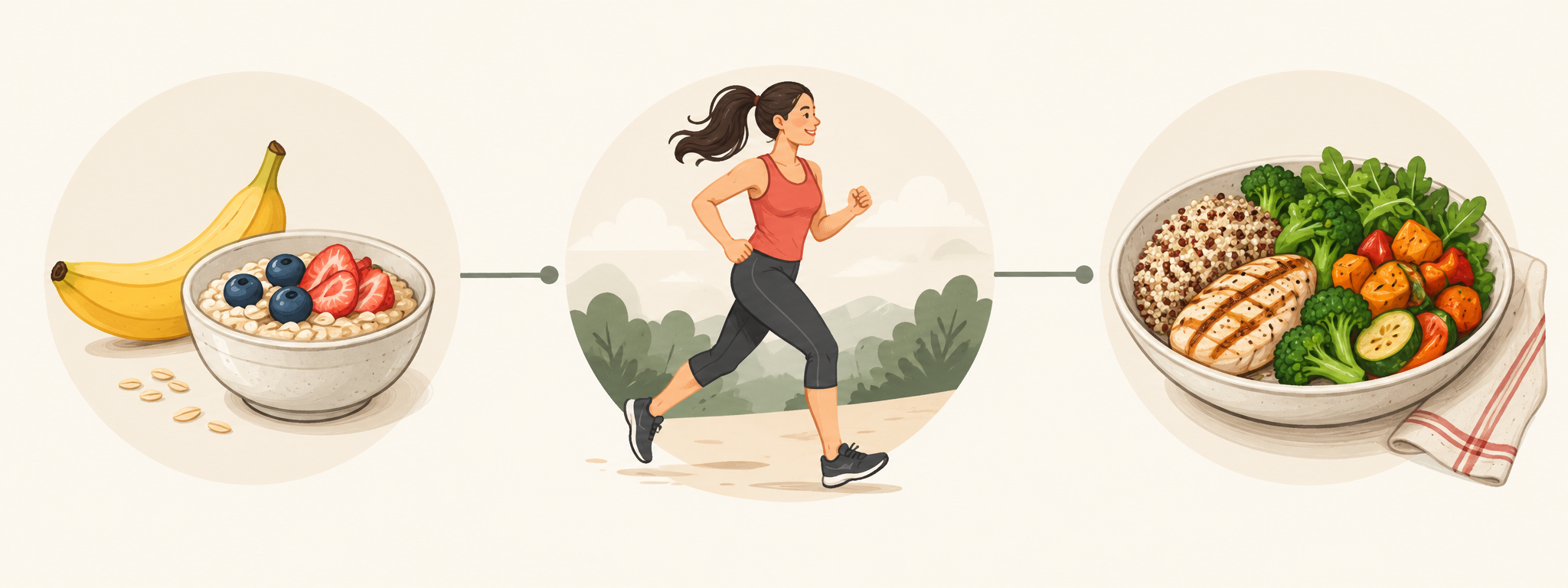
Breakfast: porridge with milk or yoghurt, fruit and nuts.
Lunch: rice or potatoes with chicken, fish, tofu or pulses and vegetables.
Pre-workout: a banana with yoghurt or bread with cottage cheese.
After training: pasta with tuna, tofu or chicken; alternatively, potatoes with eggs and a salad.
Dinner: if you’ve eaten after your workout, dinner can be a lighter meal – for example, yoghurt with fruit or bread with an egg.
If you train in the morning, you don’t need to force yourself to eat a large breakfast just before your workout. Some people prefer a light snack, whilst others prefer a meal after training. If you train in the evening, you don’t need to skip dinner for fear that you won’t ‘get the most out of’ the food you eat after your workout. It depends on your overall diet and your routine.
Conclusion
When it comes to exercise, the key factors are a regular supply of energy, sufficient protein, and foods that help you train effectively and recover. Before training, choose something that will give you energy without weighing down your stomach. Afterwards, have a normal meal containing protein and carbohydrates whenever suits you – without the stress of a hypothetical timer.
A post-workout meal is an important part of the puzzle, but it cannot, on its own, replace a balanced daily diet, regular training or sleep.