


Ashwagandha, an herb with the fascinating meaning "smell of a horse," has been valued for centuries in Indian Ayurvedic medicine. This plant, also known by its botanical name Withania somnifera, is considered an adaptogen - a substance that helps the body resist various forms of stress. Research suggests that ashwagandha may have a broad spectrum of positive effects, including antimicrobial, anti-inflammatory, anti-tumor, and anti-stress properties.
For athletes and fitness enthusiasts, it is particularly interesting that ashwagandha can increase endurance and strength. It is believed to support testosterone production while simultaneously reducing the level of cortisol, the body's primary catabolic hormone. Furthermore, this herb appears to have calming effects on the nervous system, interacting with GABA receptors in the brain, which can lead to reduced anxiety and improved sleep quality.
This combination of effects makes ashwagandha a potentially highly useful supplement for anyone engaged in exercise or sports, as well as for those looking for natural ways to manage stress and anxiety.
Research on Ashwagandha and Testosterone
When reviewing the available medical literature regarding the connection between ashwagandha and testosterone, several clinical studies emerged focusing on men suffering from infertility who were administered high doses of this herbal extract.
One of these studies, conducted on a group of such men, demonstrated that ashwagandha:
Not only improved multiple indicators of male fertility, but
Also increased testosterone levels in participants by an average of 17%.
Another study focused on men's health yielded surprising results. The research showed that high doses of ashwagandha can increase testosterone levels in men by up to 40%. This finding, if confirmed by further studies, could offer significant benefits for older men with lower testosterone levels, particularly when it comes to building muscle mass.
These studies, along with others, underscore the importance of continued research into ashwagandha and its potential health benefits. We will eagerly follow further developments in this area.
Potential Effects and Dosage
Ashwagandha represents a promising natural remedy in the fight against inflammation and related health issues, though it is always advisable to consult a doctor before using it. Its potential in combating systemic inflammation, however, is particularly noteworthy.
The potential effects of ashwagandha have been observed across various studies. It is important to note that many of these studies used higher doses (5 grams per day). For general use, a lower dose of 1000-1200 mg per day is recommended.
In relation to athletic performance, ashwagandha can be considered a true ergogenic aid (a physical performance-enhancing substance).

Performance, Fatigue, and Active Ingredients
One study involving 40 subjects aged 18 to 29, who consumed 500 milligrams of Ashwagandha for 1 to 6 months, found that the subjects exhibited a significant increase in strength and sprint speed, along with a 12.5% increase in maximum oxygen delivery to the muscles (VO2 max).
Other studies show that the herb acts against fatigue, which naturally increases the motivation to exercise. In Ayurvedic medicine, ashwagandha is referred to as a Rasayana, meaning it is used as an energizing tonic and an anti-fatigue herb.
Although the herb has several components, the main active ingredient is considered to be withaferin-A, which is a steroidal lactone (an important group of natural substances with potentially significant biological effects). This specific compound is believed to help prevent the onset of Alzheimer's disease and possesses anti-tumor effects. Ashwagandha helps prevent cancer through a number of mechanisms, one of which is increasing the activity of immune cells called Killer T-cells, which seek out and destroy emerging tumors in the body.
One of the most interesting effects of ashwagandha is its impact on thyroid hormone function. Thyroid hormones control the resting metabolic rate, and when they are out of balance, they can trigger a multitude of diseases.
Ashwagandha appears to have an interesting effect on thyroid function: it promotes the conversion of the T4 hormone into the more active T3 form. This effect is more pronounced in men than in women, although the exact reasons are unknown.
Important Warnings:
Interactions: Interestingly, ashwagandha can interact with other medications. For example, it can neutralize the effect of metformin, a commonly used diabetes drug that typically reduces thyroid activity.
Overuse Risk: It is important to note that ashwagandha should be used with caution. If used excessively, it can cause an overactive thyroid, known as hyperthyroidism. Therefore, it is advisable to consult a doctor before using it, especially if a person is taking other medications or has thyroid issues.
Ashwagandha and Resistance Training: A Good Combination?
While several studies have suggested that ashwagandha may have ergogenic (performance-enhancing) effects, none of those prior studies involved subjects engaged in resistance training. This raises the question: Can ashwagandha provide beneficial effects to those seeking additional muscle size and strength?
Until now, the answer to this question has been speculative. However, a newly published study examines what happens when healthy men involved in a resistance training program consume supplemental ashwagandha. Let's take a closer look at this study.
Study Methodology and the "Beginner" Challenge The study lasted eight weeks with the goal of testing whether ingesting an ashwagandha supplement would support an increase in muscle mass and strength in 57 male subjects aged 18 to 50.
These men had little training experience, so they could be considered "untrained." Using untrained subjects always complicates studies focusing on the effects of exercise and nutrition simply because untrained subjects respond differently compared to those with training experience.
For example, providing a basic resistance training program to anyone not accustomed to training inevitably leads to an increase in muscle strength within about two months. What happens is that the training opens previously dormant pathways between the brain and the muscles, making the muscles more efficient. This increased efficiency becomes evident as increased muscle strength.
Strength gains always come first when a weightlifting program is initiated, followed by a gain in muscle mass (hypertrophy).
The usual problem encountered when using beginners as study subjects is that it is difficult to distinguish what is driving the improvement: is it the provided supplement, the type of training system, or just the natural effects of the training itself? But in a study like this, since both groups of subjects did everything identically except for ingesting the herb, any difference in results can be accurately attributed to the effects of the ashwagandha.
Study Parameters:
The 57 men were divided into two groups: one group took ashwagandha, the other took a placebo.
Participants consumed either 600 mg of ashwagandha daily or a placebo for 8 weeks.
All men exercised 3 times a week.
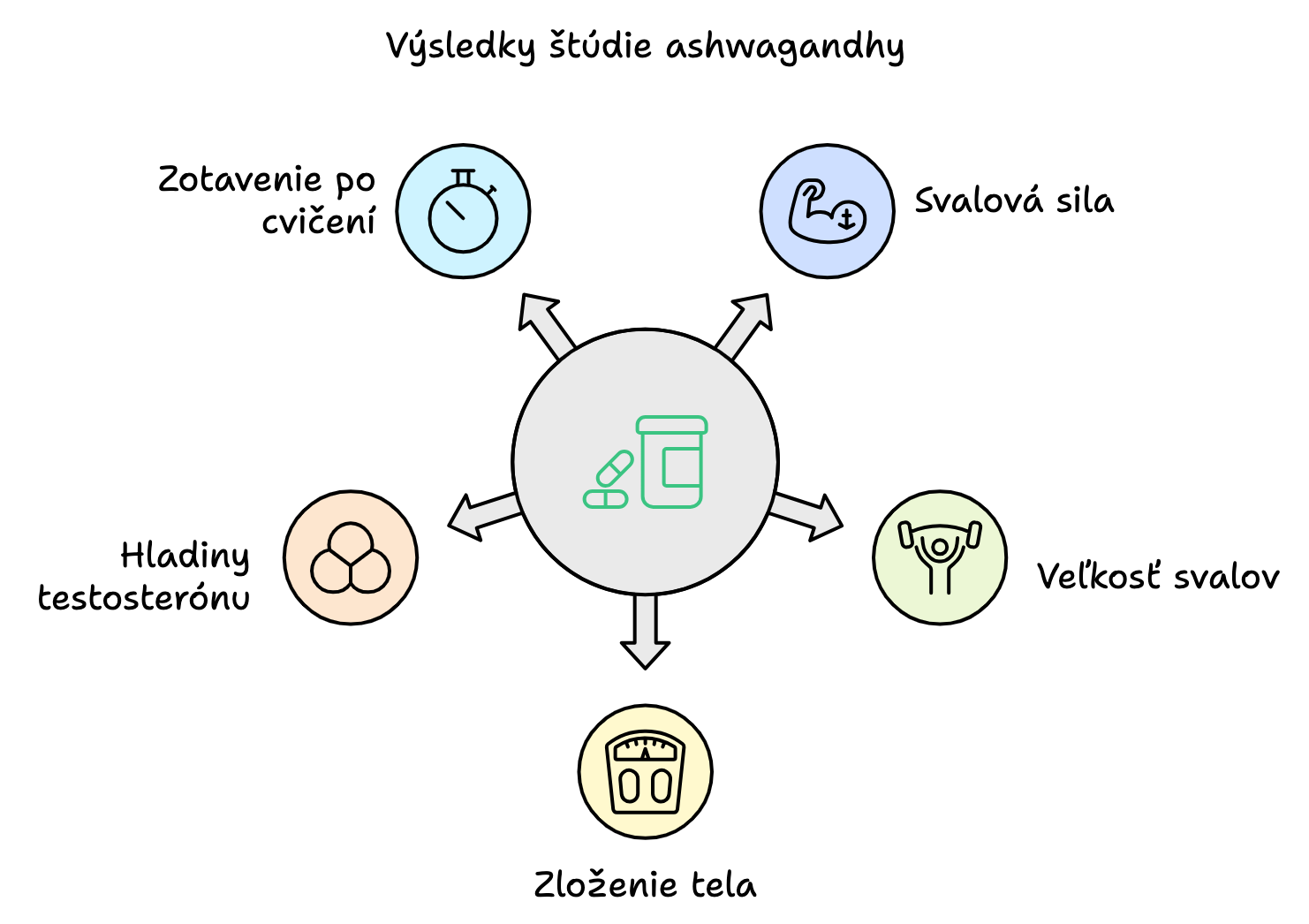
The researchers monitored multiple factors:
Muscle strength
Muscle size
Body composition
Testosterone levels
Post-exercise recovery
The study was "double-blind," meaning that neither the participants nor the researchers knew who was taking ashwagandha and who was receiving a placebo. This helps ensure the objectivity of the results.
The goal was to determine whether ashwagandha truly has a positive impact on performance and recovery during resistance training compared to a placebo.
This study is an interesting contribution to the research on natural supplements and their potential impact on fitness and strength training. The results can be useful for both athletes and everyday gym-goers looking for ways to improve their performance.
Study Results
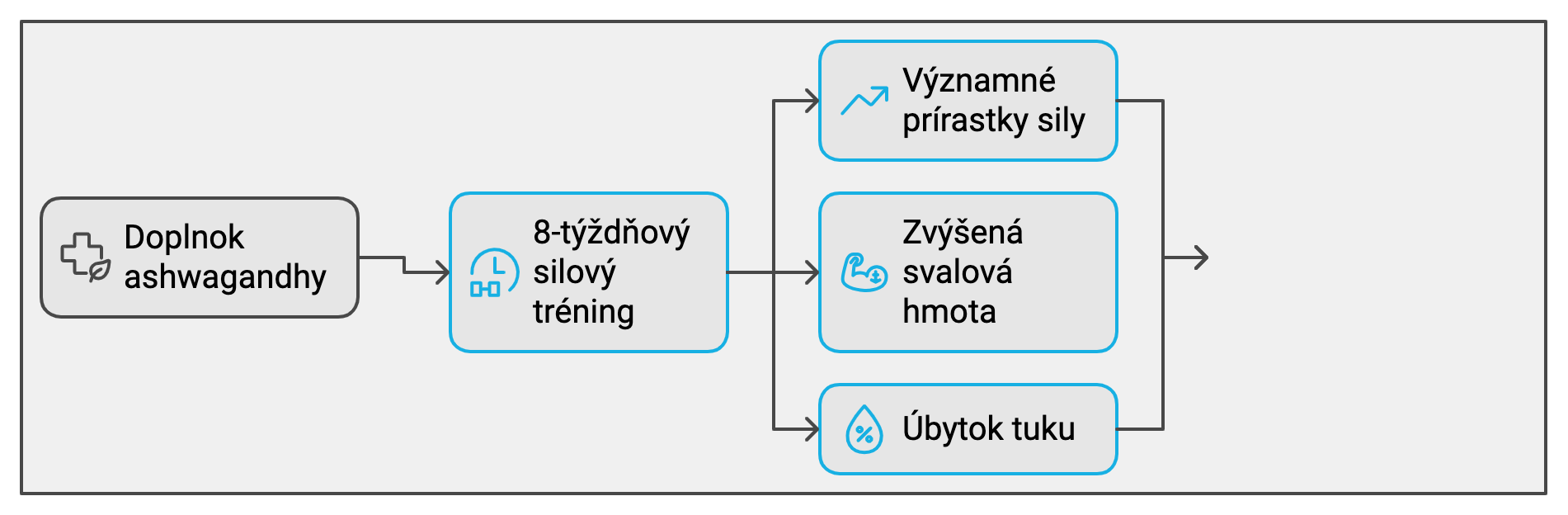
Effect on Strength: The group taking ashwagandha achieved significantly greater strength gains in both the upper and lower body compared to the placebo group during the 8-week resistance training program.
Impact on Muscle Mass and Fat: In the ashwagandha group, a more significant increase in upper body muscle mass and a greater loss of body fat were observed, although the accuracy of the fat measurement may be limited by the method used.
Potential Benefits and the Need for Further Research: The results suggest that ashwagandha can have a positive impact on strength and muscle mass gains during resistance training. However, to draw definitive conclusions, further studies using more precise measurement methods are needed.
Impact on Testosterone and Recovery
Regarding testosterone levels, those who ingested the actual ashwagandha supplement exhibited significantly higher levels compared to those in the placebo group. In fact, men in the herb group showed testosterone levels about 5 times higher than the placebo group. The same was true for post-exercise recovery.
While both groups showed considerable progress in post-exercise recovery over the eight weeks, those in the ashwagandha group again demonstrated significantly greater muscle recovery after training than the placebo group. This was determined by the levels of creatine kinase that appeared in the blood post-workout.
None of the men who ingested ashwagandha reported any side effects - indicating a potentially safe profile for this supplement.
What is it about ashwagandha that might be responsible for the effects noted in this study? As previously mentioned, ashwagandha appears to support an increase in testosterone while simultaneously reducing cortisol levels.
Studies published in recent years have downplayed exercise-induced testosterone increases, noting that the post-workout hormone spike is too brief to support any real gains in muscle mass and strength. Anabolic steroids provide such gains because they deliver a sustained increase in testosterone (or rather, modified versions of testosterone that anabolic steroids represent) over several hours. But having a favorable ratio between testosterone and cortisol after a workout would tip the balance toward anabolic effects in the muscles, and this is exactly what ashwagandha seems to do.
Cellular Energy and Antioxidant Effects: Ashwagandha is a traditional herb used in Ayurvedic medicine that has potentially positive effects on energy production in cells.
This plant can improve the function of mitochondria, which are responsible for producing cellular energy in the form of ATP and burning fat.
Scientific studies suggest that ashwagandha may prevent the breakdown of ATP in cells and increase muscle creatine levels, thereby supporting energy production. These effects can lead to faster muscle recovery and potentially better muscle mass gains.
Furthermore, ashwagandha can reduce anxiety, which may contribute to better concentration during exercise and, consequently, a more effective workout.
Ashwagandha can support muscle recovery through antioxidant effects that minimize muscle damage post-workout.
The herb helps control excessive inflammatory responses and can reduce levels of lactic acid and blood urea nitrogen.
It may alleviate delayed onset muscle soreness (DOMS), which typically appears 48 hours after an intense workout.
Overall, ashwagandha appears to have promising potential in supporting energy metabolism and exercise performance.
Study Limitations and Demographics
The studied subjects were relatively young, with the oldest being 50 years old. It is unclear how ingesting ashwagandha would affect older individuals, such as those over 60. But it is highly likely that it would work - just as well or better - because many people over 60 exhibit lower testosterone levels as well as more limited post-exercise recovery, both of which are favorably influenced by ashwagandha.
A sample size of 50 is also not ideal, meaning that future studies involving more subjects, including older men and women, are required. Speaking of women, it would also be good to see how ashwagandha affects them, meaning women of all age groups. Ashwagandha may be beneficial for women, who often exhibit lower-than-normal thyroid hormone activity. Ingesting the herb in moderate doses may help normalize thyroid function in some women.
Recommendations for Supplementation
If you decide to try an ashwagandha supplement, use one derived from the root extract. There are two forms of ashwagandha supplements available: one derived from the leaves of the herb and the other from the roots.
While leaf extracts may help alleviate feelings of anxiety, they do not produce most of the other effects discussed in this article. Look for products containing KSM-66, which is a standardized ashwagandha root extract. This was the exact product used in the study.
Although the ideal dose of ashwagandha is listed on some websites as 6,000 milligrams per day (divided into three daily doses of 2,000 milligrams), this high dose is not recommended due to the possibility of herb-induced overactive thyroid hormones. For most uses, a dose of 300 to 600 milligrams per day is more than sufficient.
Conclusion
Scientific studies confirm that ashwagandha has significant potential in building muscle mass and strength, especially when combined with regular resistance training. Research has demonstrated improvements in maximum strength, recovery, and overall body composition.
Another key benefit of ashwagandha is its adaptogenic effect, which helps reduce cortisol levels and stress in the body, subsequently creating better conditions for muscle growth and recovery. A recommended daily dose of 600–1200 mg of standardized extract has proven effective for achieving these effects.
Although ashwagandha is not a miracle supplement, it represents a safe and natural alternative for athletes and active individuals seeking support for their training goals. Its long-term use, combined with a proper lifestyle and training, can yield measurable results in muscle strength and volume.
Keywords:
#ashwagandha #musclegrowth #naturalanabolic #testosterone #thyroidhormones #fatigue #stress #cortisol #research #nutritionalsupplements
Sources
Smith, S. J., Lopresti, A. L., Teo, S. Y., & Fairchild, T. J. (2021). Examining the effects of herbs on testosterone concentrations in men: A systematic review. Advances in Nutrition, 12(3), 744-765.
Bonilla, D. A., Moreno, Y., Gho, C., Petro, J. L., Odriozola-Martínez, A., & Kreider, R. B. (2021). Effects of Ashwagandha (Withania somnifera) on physical performance: Systematic review and Bayesian meta-analysis. Journal of Functional Morphology and Kinesiology, 6(1), 20
https://www.appliedmetabolics.com/ashwagandha/
Bc. BellaXy