

Fat burners are among the best-selling dietary supplements today. They are favored especially by athletes and bodybuilders who are trying to shed excess fat before competitions. However, their popularity also extends to ordinary people who do not compete in bodybuilding or other sports, but simply want to lose weight. Advertisements for these products often promise extreme results and feature models with perfect abdominal muscles and slim waists without any signs of body fat. They even imply that taking fat burners alone is sufficient for significant fat loss, even without exercise.
The key question remains, however, whether these fat burners actually work. Many of them contain various active ingredients, including L-carnitine, BCAA amino acids (especially leucine), or glutamine. Most of these substances are purported to work on the principle of thermogenesis – a process in which excess calories are converted into heat instead of being stored as fat.
Such mechanisms do indeed exist in the body. In recent years, for example, it has been discovered that a specific type of fat called brown adipose tissue (BAT) is much more active in adults than previously assumed. In the past, it was believed that BAT existed in significant amounts only in animals and human infants, and that its activity decreases after the nursing period. Amino acids for weight loss and various fat burners can support this natural process.
It is interesting that some people can eat anything without consequences for their physique. This applies even despite a diet rich in high-calorie foods that would normally lead to weight gain. Initially, this natural resistance to weight gain was attributed to a "faster metabolism." However, when the thyroid function of these people was checked, it appeared normal. Today, we know that the reason why many people do not gain as much weight as expected based on their food intake is the more active function of brown adipose tissue (BAT) combined with a tendency for constant movement. This effect is scientifically known as "non-shivering thermogenesis," and it surprisingly burns a significant amount of calories daily. However, latest research suggests that the effect of BAT on fat burning may have been significantly overestimated, and we will discuss this further in this article.
-webp.webp)
Revealed: Why Fat Burners Alone Are Not Enough? The Surprising Truth About Amino Acids and Metabolism
What does all this have to do with fat burners? As mentioned, the composition of such supplements includes ingredients that research suggests can safely provide thermogenic effects. In fact, most people who tend to gain fat easily often exhibit a deficit in the sympathetic nervous system.
Our body has a natural system for controlling fat burning that works similarly to a thermostat—when more energy is needed, it starts burning more fat. This system is part of our nervous system and produces two important hormones: adrenaline and noradrenaline (also known technically as epinephrine and norepinephrine). When these hormones reach fat cells, they trigger something like a domino effect: the fat cells begin to release stored fat into the blood so the body can use it as energy. Interestingly, people who struggle with weight loss and gain weight easily often have this system slowed down, which is why natural fat burning is more challenging for them than for others.
The most important question regarding fat-burning supplements is whether they actually work. Some research shows that certain ingredients can support calorie burning and reduce appetite, but the results are often mixed. Most supplements may have only a mild effect and work best in combination with a proper diet and regular exercise.
For effective fat burning, amino acids for weight loss are also important as they significantly influence fat metabolism. Among the most important are branched-chain amino acids (BCAAs)—leucine, isoleucine, and valine—which help preserve muscle mass during weight loss. Taurine supports energy metabolism and can increase the efficiency of fat burning. CLA (conjugated linoleic acid) is another substance that may support the reduction of adipose tissue.
Growth hormone, often promoted for its effects on fat mobilization, works by making fat cells more sensitive to catecholamines. This leads to greater release of fat from fat cells. Various fat burners attempt to mimic these processes.
However, studies examining the actual effects of fat burners have yielded mixed results. Some do not work at all, while others do offer mild thermogenic effects that can help with a weight loss diet, especially when combined with exercise. It is often overlooked that fat burners and even growth hormone help mobilize fat from fat cells, but they do not actually oxidize or burn the fat. This is where physical activity and exercise come in.
Popular fat burners today often contain ingredients that research suggests may offer certain thermogenic effects. For example, studies show that ingredients like green tea and caffeine can help increase calorie expenditure and support fat burning, although these effects are usually mild and depend on a combination with the right diet and exercise. Such ingredients include green tea, caffeine, synephrine, yohimbine, carnitine, and others. By far the most active ingredient among these is caffeine, which is proven to mobilize fats because it promotes the release of catecholamines.
For many years, the most popular fat-burning combination consisted of 25 mg of ephedrine, 200 mg of caffeine, and 325 mg of aspirin, marketed as T-5. Later, aspirin was removed. The ephedrine/caffeine combination proved to be extremely effective in supporting weight loss. It worked not only by increasing thermogenesis but also by promoting the conversion of the inactive thyroid hormone (T4) into the 5-times more active form, T3. This combination also reduced appetite, which is how most prescription weight loss drugs work. However, the FDA later banned the sale of ephedrine, primarily due to several cases of serious health problems. Careful analysis of these cases, however, found that they were the result of either ephedrine overdose or pre-existing cardiovascular conditions, which were a contraindication for ephedrine use, even though it tended to lower blood pressure with continued use.
Biochemical Mechanisms of Amino Acids in the Body Fat Reduction Process: From Research to Practical Application
Research into weight loss support has identified a significant group of amino-acid-based supplements that can significantly influence metabolism and the body fat reduction process. Amino acids, as the basic building blocks of proteins, play a key role in a number of metabolic processes related to a healthy lifestyle and weight regulation.
We divide amino acids into essential and non-essential, with essential ones needing to be obtained through a healthy diet, as the body cannot synthesize them. A significant breakthrough in understanding their role in weight loss came from research in the 1980s, which revealed the ability of certain amino acids to stimulate the secretion of growth hormone (GH). This hormone significantly influences fat metabolism and supports its mobilization, especially in combination with a caloric deficit and regular exercise.
Growth hormone acts as a counterbalance to insulin, helping to maintain proper blood sugar levels by acting in opposition to insulin. During a low-carb diet or prolonged fasting, its secretion increases, leading to more intense mobilization of fat reserves for energy purposes. This process is particularly pronounced 24-48 hours after the start of a fast.
Specific research focused on the amino acids arginine and ornithine, which support the release of growth hormone by inhibiting somatostatin. However, clinical studies have shown different results depending on the method of administration. With intravenous (directly into the vein) administration of arginine (20-30 g), the stimulation of GH secretion was significant, while with oral administration, the bioavailability is only around 40% due to enzymatic degradation in the digestive tract and liver.
The latest Japanese research has brought significant findings about phenylalanine, an essential amino acid naturally occurring in protein foods. Studies have shown that isolated doses of this amino acid increase fat oxidation during physical activity, thereby supporting the overall weight loss process. This effect is particularly pronounced when combined with aerobic exercise and a balanced dietary regimen.
To maximize the effects, it is crucial to understand that amino acids function as part of a complex metabolic system. Optimal results in body fat reduction are achieved through a combined approach that includes:
A precisely determined caloric deficit
Correct timing of amino acid intake
A systematic training program
Consistent adherence to healthy lifestyle principles
Monitoring of metabolic markers
This scientifically grounded approach to weight loss utilizes the organism's natural metabolic processes and optimizes them through targeted supplementation and lifestyle management.
-webp.webp)
Phenylalanine: An Overlooked but Versatile Amino Acid
While some amino acids are well-known among athletes, phenylalanine (PL) often remains in the background, despite its potential to significantly support metabolism and the weight loss process. Its effects on the body can positively influence not only athletic performance but also an overall healthy lifestyle.
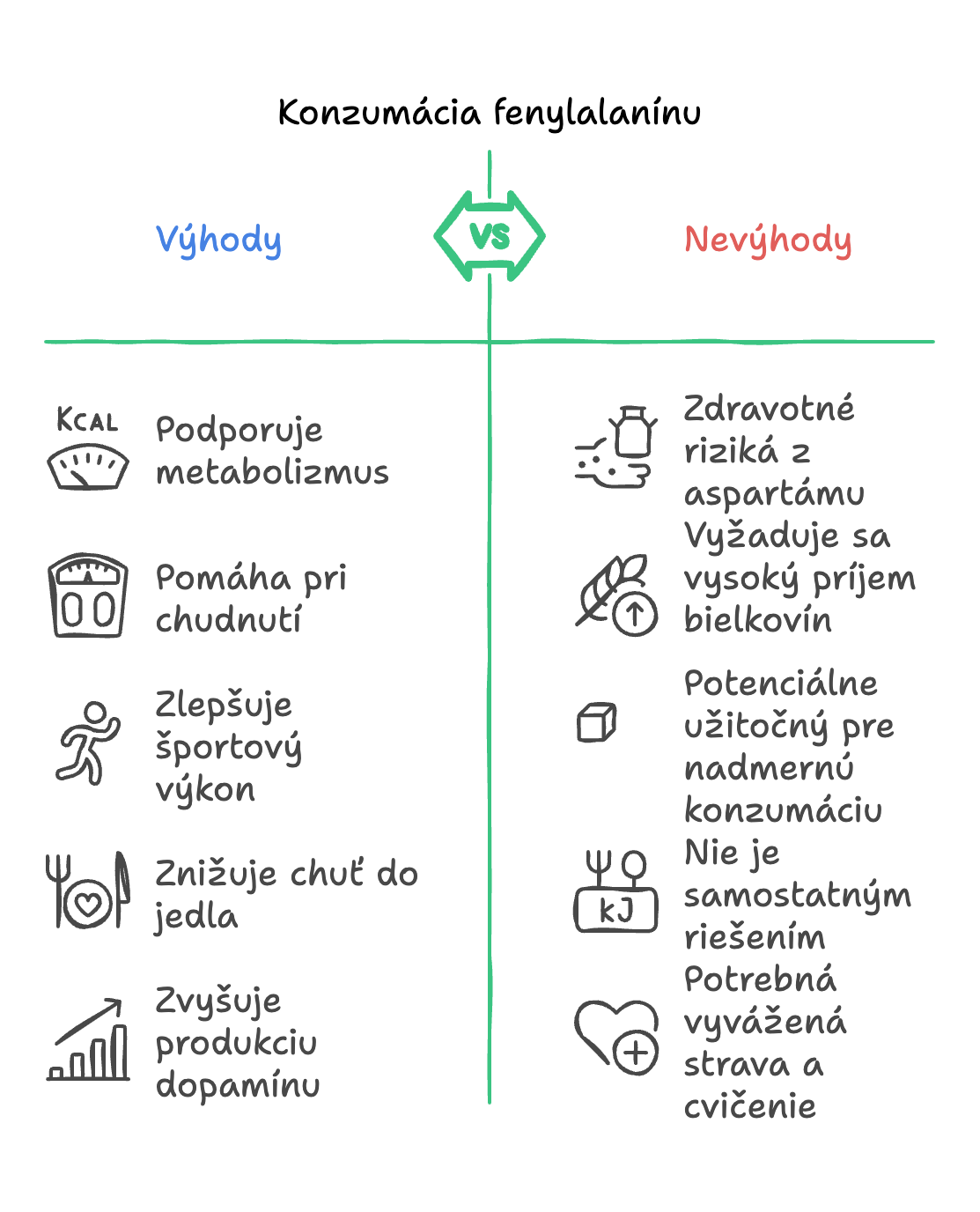
Phenylalanine is part of the artificial sweetener aspartame, which has caused some controversy. However, it is important to understand that it is an essential amino acid that we naturally consume in a healthy diet. Excessive intake of aspartame could indeed cause health problems, but for that to happen, a 75 kg person would have to drink 19 cans of diet cola a day.
For optimal metabolism, it is crucial to obtain phenylalanine from high-quality sources. We find it mainly in protein-rich foods, which are the foundation of a low-carbohydrate diet—meat, eggs, poultry, and fish. These foods are extremely important in creating the caloric deficit necessary for weight loss.
In the body, phenylalanine is converted into another amino acid—L-tyrosine—which plays a key role in the production of thyroid hormones and catecholamines (adrenaline and noradrenaline). These substances directly support fat burning, especially during exercise for weight loss. Therefore, we can consider phenylalanine and tyrosine as natural "fat burners."
Research has shown that phenylalanine can help reduce appetite by stimulating the release of cholecystokinin (CCK), a hormone involved in the digestion of proteins and fats. This effect can be useful when adhering to a weight-loss-focused diet plan.
Phenylalanine has a somewhat notorious reputation because it makes up half of the basic components of the artificial sweetener aspartame.
Phenylalanine also influences the production of dopamine, a neurotransmitter responsible for motivation, including the motivation to exercise and maintain a healthy lifestyle. Sufficient dopamine is key to maintaining long-term motivation for weight loss and exercise.
The latest studies have brought an interesting finding: phenylalanine can increase fat oxidation during exercise, which makes it a significant aid in weight loss. This effect is particularly pronounced when exercise is part of a complex approach to a healthy lifestyle that includes a balanced diet and regular movement.
For optimal results, it is important to combine phenylalanine intake with a balanced diet plan, regular exercise, and an overall healthy lifestyle, as demonstrated by the latest studies. Remember that no single substance is a miracle solution—success lies in a comprehensive approach to health and fitness.
Is Phenylalanine Really a Fat Burner?
To achieve a lean physique and effective fat burning, it is important to understand how hormones work in our body. Our basal metabolism is a complex system where phenylalanine plays a significant role in the process of healthy weight loss.
In collaboration with natural peptides in the body, phenylalanine promotes the release of hormones that help burn fat. Similar to L-carnitine for weight loss, phenylalanine also influences how our body handles fat reserves. For optimal vitality and results, proper calorie counting and tracking nutrient intake using a BMI calculator are key.
An interesting Japanese study showed that a 3-gram dose of phenylalanine (which can also be obtained from healthy protein-rich recipes) significantly supports fat burning during moderate exercise. The study participants exercised on a stationary bike for an hour at low intensity, which proved ideal for fat burning.
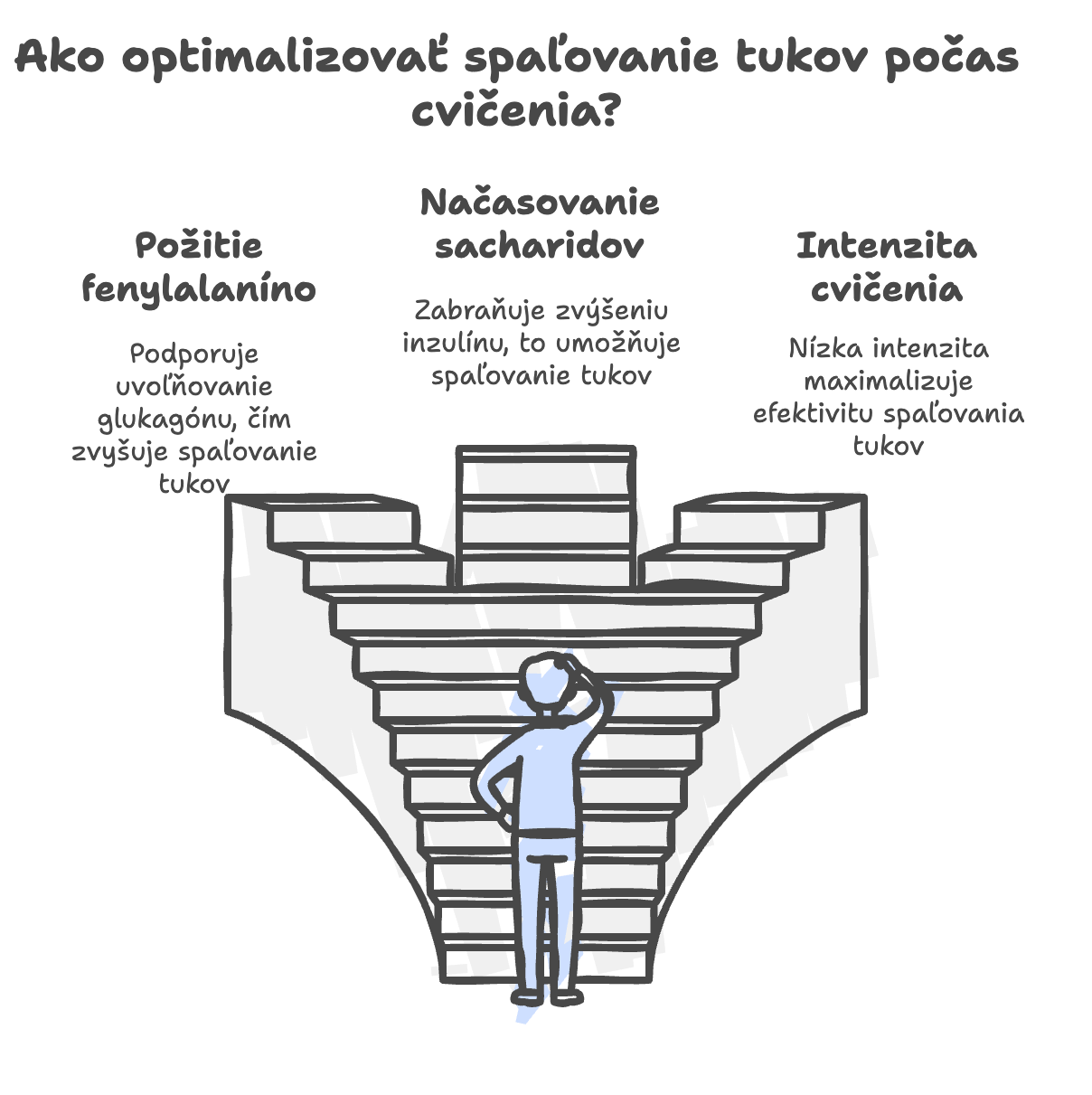
Before exercising, they followed a diet with a precise nutrient ratio and low caloric intake (694 calories), which, along with regular body detoxification, can support physique shaping. Research has shown that phenylalanine stimulates the release of glucagon, a hormone that promotes the use of fat stores as an energy source.
For those interested in peptides (available for sale in specialized stores), it is important to know that their effect can be amplified by the right combination with phenylalanine. Animal studies have shown that Phenylalanine also supports the production of appetite-controlling hormones.
Ketone bodies, which are formed during low-carb diets, help preserve muscle mass and provide an alternative source of energy. After 3-4 weeks, the body adapts and begins to use fat stores more efficiently. Despite critics' concerns, with the right approach, there is no loss of muscle mass.
From my own experience, I can confirm the effectiveness of a low-carb diet. When I competed in bodybuilding, I started with a maximum intake of 40 grams of carbohydrates per day. After five weeks, I gradually increased the intake to 100 grams, which led to continued fat loss without significant loss of muscle mass.
Although many experts claim that weight loss is only about calories, they ignore other important factors like appetite control and muscle mass preservation. In these respects, low-carb diets prove to be the most effective for most people.
For optimal results, I recommend combining:
Adequate intake of phenylalanine from natural sources
Regular lower-intensity exercise
Monitoring nutrient intake
Sufficient rest
Gradual dietary adjustments based on individual needs
The Science of Fat Burning: How Does Phenylalanine Help with Weight Loss?
When trying to tone the physique and remove subcutaneous fat, the hormone glucagon plays a key role. Research shows that this hormone significantly increases energy expenditure and fat burning during exercise. It is similar to when the body enters a state of ketosis during a keto diet.
Researchers examined three amino acids - arginine, alanine, and phenylalanine - and their influence on metabolism. They found that these substances promote the production of nitric oxide, which, in addition to improving blood circulation, also helps with fat burning. Study participants took these amino acids one hour before cardio exercises on a stationary bike.
Interestingly, the best results in fat burning were achieved at low exercise intensity (about 42% of maximum power). This is an important insight for anyone who combines strength training with cardio activities. Regular movement at this intensity, along with proper supplementation, can significantly support the effects of a ketogenic diet.
When counting calories, the timing of carbohydrate intake is important. If you consume them right before training, the body blocks fat burning due to increased insulin production. Phenylalanine helps unblock this process by promoting glucagon release.
Regarding the safety of Phenylalanine use, research confirms that a 3-gram dose is safe. Studies with 10-gram, and even 30-gram doses showed no side effects. For optimal results, however, quality sleep is also important, as it supports regeneration and hormonal balance.
Can we therefore say that phenylalanine is effective for fat burning before exercise? Even though current studies look promising, we need more research with a larger number of participants and longer-term observation. For now, we know that a 3-gram dose of Phenylalanine one hour before aerobic training can support fat burning.
For best results, follow these recommendations:
Take Phenylalanine several hours after a meal.
Avoid carbohydrates at least 4 hours before training.
Maintain lower aerobic exercise intensity.
Combine with a balanced diet and sufficient rest.
It remains to be seen whether Phenylalanine could also be effective for high-intensity interval training - future research will show.
Conclusion
Long-term research shows that amino acids, which are the basic building blocks of protein in food, can significantly support fat burning in the body. Some amino acids work by promoting the release of hormones that help mobilize fat in the body - such as growth hormone. However, newer studies bring an interesting finding about Phenylalanine, an essential amino acid that can increase fat burning during exercise. This recently discovered effect of Phenylalanine is related to the fact that it promotes the release of glucagon.
Glucagon is a hormone produced by the pancreas that acts against the effects of insulin while independently supporting fat burning in the body. Although further studies are needed to confirm Phenylalanine's ability to burn fat through increased glucagon release, this amino acid could prove to be a truly effective indirect fat burner.
In the context of a healthy lifestyle, this finding is significant for anyone striving for effective fat burning and overall improvement in their fitness.
Sources
Effects of oral phenylalanine supplementation on exercise-induced fat oxidation in healthy men" - Journal of Nutritional Science and Vitaminology
"Phenylalanine and tyrosine kinetics during an oral load of phenylalanine in healthy subjects" - Metabolism: Clinical and Experimental
"The effects of phenylalanine on exercise-induced fat oxidation: a preliminary, double-blind, placebo-controlled, crossover trial" - Journal of the International Society of Sports Nutrition
"Amino acids and muscle loss with aging" - The Journal of Nutrition
https://www.appliedmetabolics.com/the-amino-acid-that-helps-to-burn-fat-by-jerry-brainum/
"Branched-chain amino acids and muscle protein synthesis in humans: myth or reality?" - Journal of the International Society of Sports Nutrition
Sportovní výživa ve fitness a silových sportech, Lukáš Roubík a kol.
"Regulation of protein metabolism in exercise and recovery" - Annals of Nutrition and Metabolism
Micronutrients, Uwe Gröber
"Amino acid metabolism during exercise and following endurance training" - Sports Medicine
"The role of dietary protein in weight loss and weight maintenance" - The American Journal of Clinical Nutrition
"Protein intake and energy balance" - Physiology & Behavior
"Dietary protein and exercise have additive effects on body composition during weight loss in adult women" - The Journal of Nutrition
Dr.AminöXy