


How to lose weight healthily: obesity, hormones and long-term solutions
The question ‘how to lose weight’ is one of the most frequently searched health queries in Slovakia, and this is no coincidence. According to Eurobesity, around 25 per cent of Slovakia’s adult population is obese, and more than a third are overweight. In other words, two out of three adult Slovaks have a body weight that is detrimental to their health.
But losing weight isn’t that simple. Studies show that most people who lose weight on a diet are unable to maintain the results in the long term. Why ? Because ‘eating less and exercising more’ isn’t enough. The body isn’t a wallet into which you simply deposit and withdraw calories — it’s a biological system involving hormones, metabolic adaptations and the mind.
This article is an introduction to a series that will show you what science actually knows about weight loss today.
What is obesity and being overweight?
Most people do not distinguish between the terms ‘being overweight’ and ‘obesity’. In fact, these are two clinically distinct categories with different health risks.
The difference between being overweight and obesity
The most commonly used indicator is the body mass index, or BMI. This is calculated by dividing weight in kilograms by height in metres squared.
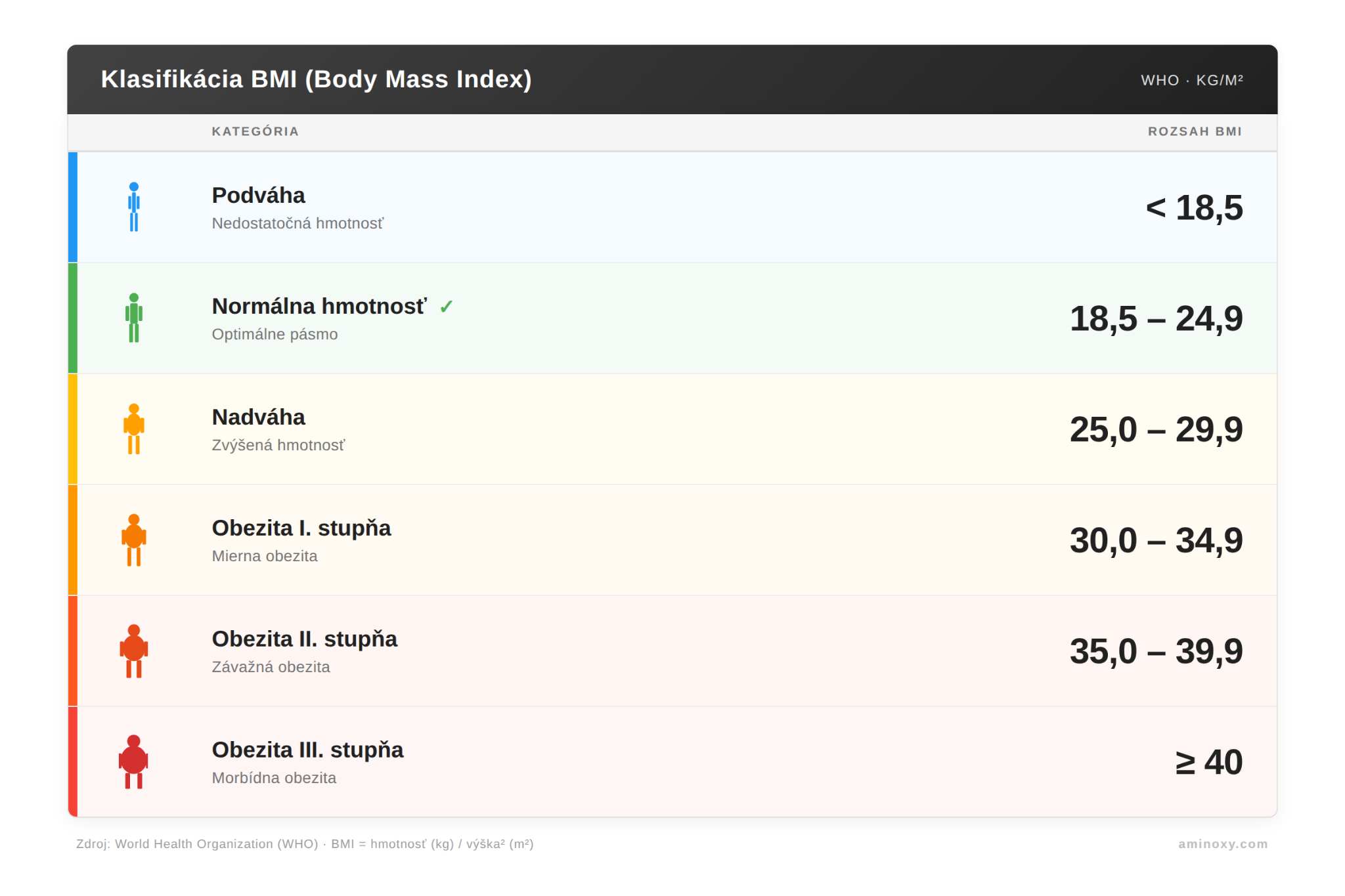
Created using Claude AI (Anthropic)
However, BMI has serious limitations. It does not distinguish between muscle and fat mass, so a strength athlete with a low body fat percentage may be classified as overweight according to this figure, even though objectively they are in better shape than the average person with a normal BMI.
A more accurate measurement is provided by body fat percentage (DEXA scan, bioelectrical impedance, calipers). Another indicator is waist circumference: for men, a measurement above 102 cm, and for women, above 88 cm, indicates an increased metabolic risk.

There is also the phenomenon known as ‘normal-weight obesity’ ( NWO). This occurs when the BMI is within the normal range but the body fat percentage is high. Research from Comenius University in Bratislava, based on a sample of over 600 young Slovaks of normal weight, found that NWO occurs in 31.5 per cent of women and 19 per cent of men aged between 18 and 30. In other words: the figure on the bathroom scales is not the whole story.
Obesity as a chronic disease
The World Health Organisation (WHO), the American Medical Association (AMA, 2013) and the European Commission have all officially recognised obesity as a chronic disease in recent years . It is more than just an aesthetic problem or a lack of willpower. What exactly is it?
Adipose tissue is not a passive store of calories. It is an endocrine organ that produces more than 100 hormones and signalling molecules (known as adipokines). These substances secreted by adipose tissue influence metabolism, inflammation and appetite. In obesity, the balance of these signals is disrupted, leading to chronic low-grade inflammation, which is a major risk factor for cardiovascular disease, type 2 diabetes, certain types of cancer and Alzheimer’s disease.
💡 Obesity is a risk factor for more than 200 health complications — ranging from diabetes and high blood pressure to depression and osteoarthritis. Even a 5–10 per cent reduction in body weight can significantly lower these risks, even if a person does not reach their ‘ideal’ weight. |
We look in detail at the degrees of obesity, its causes and specific health risks in the second instalment of the series: Obesity as a disease: degrees, causes and health risks
Summary
|
How to lose weight healthily and sustainably
The basic principle is indisputable and physically inevitable: without a calorie deficit, you cannot lose weight. A calorie deficit means that the body takes in less energy than it burns, and makes up the difference from its reserves — primarily fat reserves. What matters is how you achieve this deficit and how quickly. Either you lose fat and maintain the result, or you lose muscle and in six months’ time you’ll be back where you started.
What does it depend on?
The source of calories influences the hormonal response. A protein-rich diet increases satiety, preserves muscle mass and has a higher thermic effect of food (the energy the body uses for digestion). For example, 100 kcal from protein does not affect appetite or metabolism in the same way as 100 kcal from white sugar.
Physical activity outside the gym matters more than you might think. Brainum (2022, Applied Metabolics) summarised research showing that prolonged sitting reduces the activity of the enzyme lipoprotein lipase (LPL – the enzyme that enables muscles to use fat as fuel) by up to 90 per cent. If you spend most of the day sitting down, your body ‘switches’ to a mode in which it burns fat less efficiently. Even if you go for a workout in the evening, you’ll burn fat far less effectively than you could. The solution is simple: aim for at least around 8,500 steps during the day (roughly a 6 km walk). This is the threshold at which your body remains in ‘fat-burning mode’ and exercise works to its full potential.
There are limits to how fast you can lose weight. Crash diets (with an extreme calorie deficit) lead to a loss of muscle mass, a drop in resting metabolic rate and hormonal adaptations that sabotage long-term success.
And where does the body’s fat actually go? Many people think it is burnt for energy or converted into muscle. In reality, most of the weight of body fat leaves the body through exhalation in the form of carbon dioxide. The rest is excreted as water in urine, sweat and breath. This is a fundamental biochemical process, which we describe in detail in the blog post Where does body fat go: Facts and myths about weight loss.
💡 Reality rather than promises: A healthy rate of weight loss is 0.5–1 per cent of body weight per week, which equates to 2–4 per cent per month. For a person weighing 90 kg, this means 0.45–0.9 kg per week, or approximately 1.8–3.6 kg per month. Not 5 kg per week. Not 10 kg per month. |
We explore why rapid weight loss fails and how to calculate your optimal rate in Part 3 of the series: How much weight is healthy to lose in a month and why rapid weight loss fails.
Practical questions about nutrition — how much protein, how to balance your macronutrients, what to eat and when — are covered in the next article: What to eat when you want to lose weight: the basics of nutrition for weight loss.
Summary
|
The hormonal aspect of weight loss
This brings us to the least understood yet most important part of the story. Why do two people who eat the same and exercise the same lose weight differently? Why does the weight ‘plateau’ after a few weeks of dieting? Why does the fat return with a vengeance after a successful diet?
The answer is: hormones are behind it all.
The body perceives calorie restriction as a threat and actively defends itself against it. This is not speculation; it has been confirmed by the most prestigious studies:
Sumithran et al. in the New England Journal of Medicine (2011) monitored participants in a 10-week diet programme. The researchers measured levels of leptin, ghrelin, peptide YY, GLP-1, amylin, cholecystokinin and insulin at the start, at the end of the programme and one year later. The conclusion? Hormonal changes that increase hunger and reduce satiety persisted for a year after the diet ended. The body does not ‘adjust’ hormonally to fat loss within a few weeks.
Even more dramatic results were reported in a study by Fothergill, Hall et al. (2016, Obesity) — a six-year follow-up of 14 participants in the American TV show “The Biggest Loser”, who lost an average of 58.3 kilograms over 30 weeks. After six years, they had regained an average of 41 kg of the weight they had lost; their resting metabolic rate remained 704 kcal/day below the baseline level, and the so-called metabolic adaptation (the difference between predicted and actual metabolism) was -499 kcal/day. Put simply: their bodies were burning almost 500 kcal less per day than would be expected given their body type. Permanently.
Which hormones play a role in this?
Leptin — the satiety hormone secreted by fat cells. It decreases during weight loss → the brain receives the signal ‘we’re running low on reserves, eat!’.
Ghrelin — the hunger hormone produced by the stomach. It rises during weight loss → leading to stronger hunger signals between meals.
Insulin — regulates blood sugar levels, and when insulin resistance occurs (reduced sensitivity of cells), it becomes difficult to mobilise fat. This is also linked to how blood sugar levels fluctuate throughout the day. We explore this topic in more detail in the article The Glucose Revolution: Keep Your Blood Sugar Levels in Balance.
Testosterone and growth hormone (GH) + IGF-1 — anabolic hormones. Low levels of these make it difficult to maintain muscle mass whilst losing weight and impair insulin sensitivity.
Cortisol — a stress hormone. Chronically elevated levels, caused by sleep deprivation and stress, promote the accumulation of visceral fat (dangerous abdominal fat around the organs).
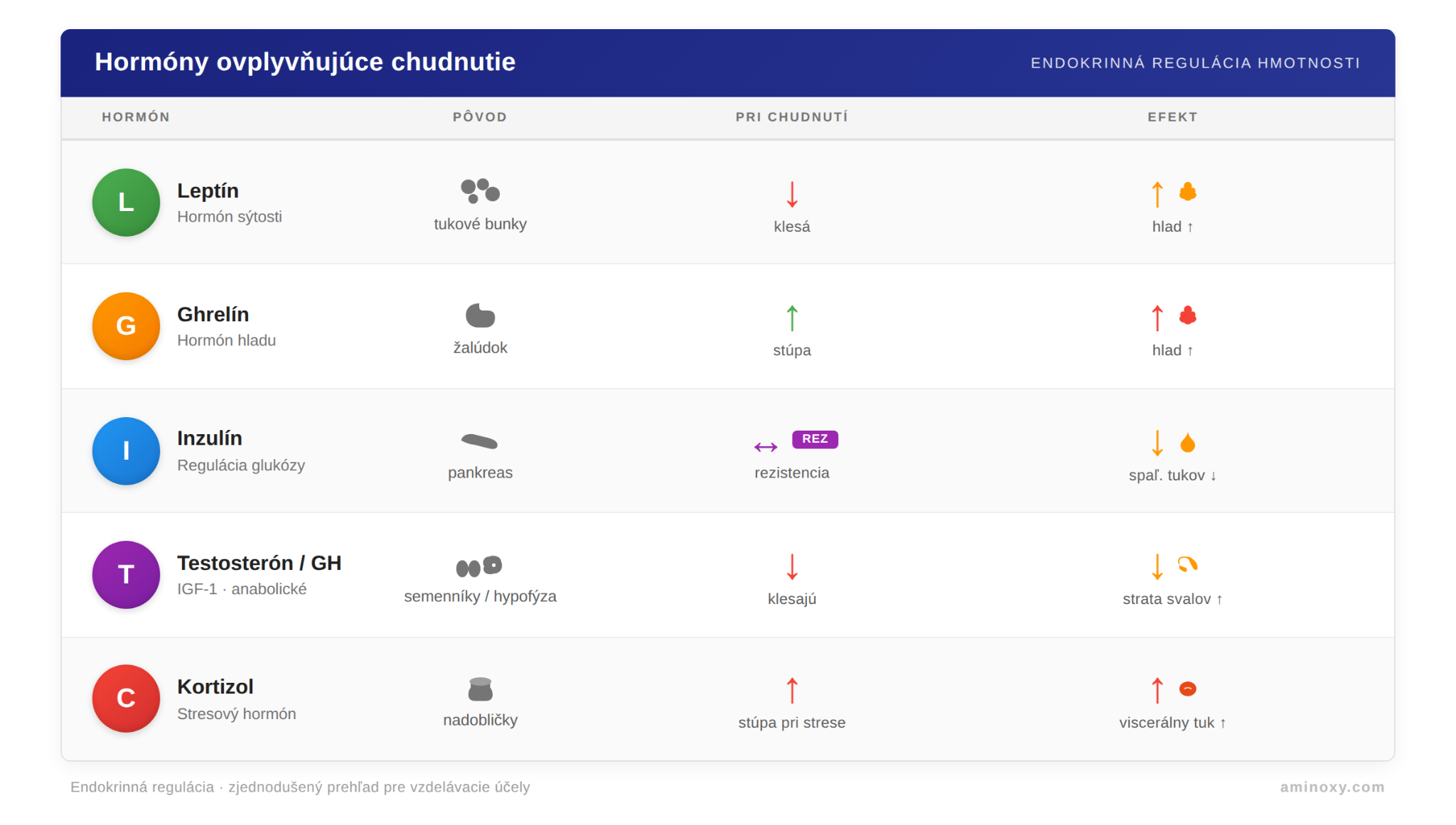
Generated using Claude AI (Anthropic)
💡 A brief overview of GLP-1 medications (Ozempic, Wegovy, Mounjaro) In recent years, there has been much talk about injectable medicines that significantly suppress appetite and lead to weight loss of around 15–20 per cent per year ( Brainum, 5/2024, Applied Metabolics). However, there are three important points that are often not mentioned in the media:
|
You can read in detail about testosterone, IGF-1, insulin, leptin, cortisol and how to manage them naturally whilst losing weight in Part 5 of this series: Hormones and Weight Loss.
Summary
|
Mental health and body image
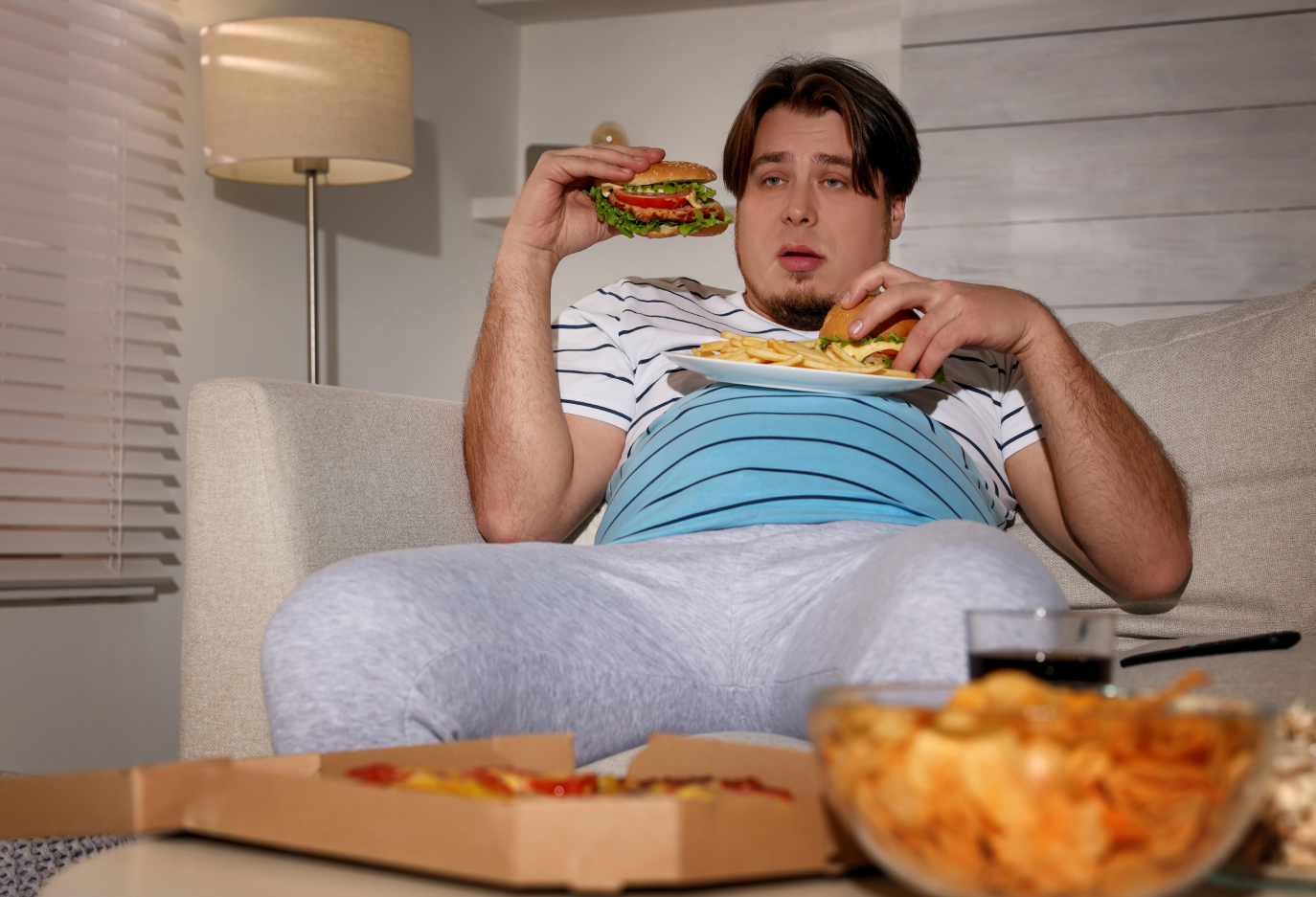
This is the most underestimated part of the whole equation. Even if you have a perfect diet and training plan, stress, lack of sleep and an unhealthy relationship with food can undo all your hard work. All it takes is one tough week at work, a few sleepless nights, and by Friday evening you’ll find yourself mindlessly raiding the fridge.
Here are a few scientifically proven facts:
Sleeping less than 7 hours a day increases levels of ghrelin (the hunger hormone) and cortisol (the stress hormone), whilst reducing leptin (the satiety hormone). The result? Greater hunger, more cravings for sweet and processed foods, and weakened willpower.
Chronic stress and high cortisol levels promote fat storage in the abdominal area and impair insulin sensitivity.
Emotional eating is a very common reason for diet failure. It occurs when we eat not because we are hungry, but out of boredom, sadness, frustration or anxiety.
An ‘all-or-nothing’ mindset triggers a vicious cycle: a strict diet → the first ‘slip-up’ → a feeling of failure → overeating → an even stricter diet the following morning. In the long term, this approach is the least effective way to lose weight.
A healthy relationship with your own body is the foundation of long-term success. People who lose weight for themselves and to feel good about themselves are more likely to achieve good results and maintain them.
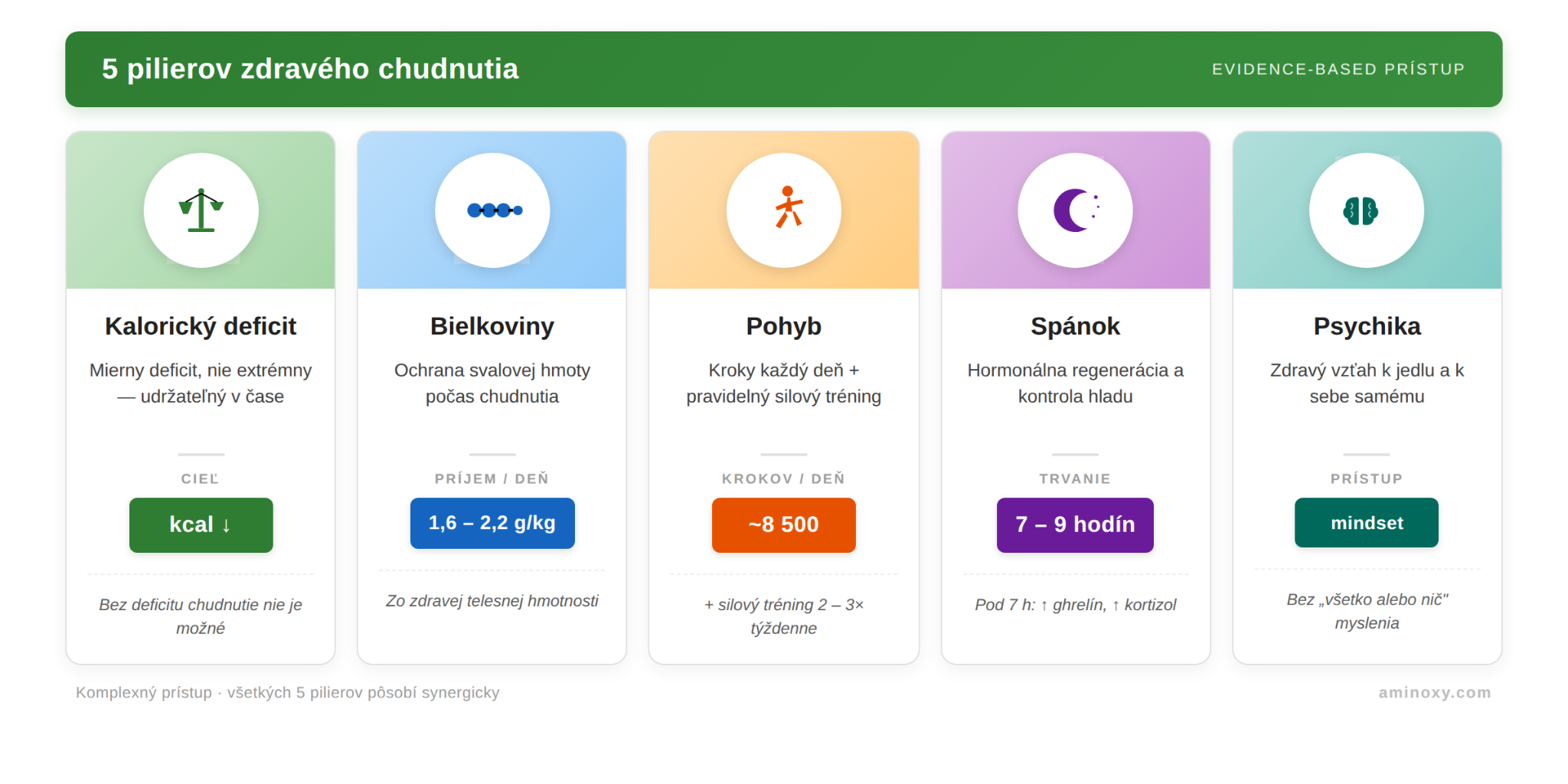
Created using Claude AI (Anthropic)
The sixth instalment in the series is dedicated to the topics of stress, sleep, emotional eating and building a healthy relationship with your body: Mental Health and Weight Loss.
Aminoxy as your weight-loss partner
If you’d like to support your weight loss with high-quality dietary supplements, try those from the Aminoxy online shop. We’ve put together a category for you: weight-loss supplements. These products, with their transparent ingredient lists, will support you on your journey to achieving your dream figure.
View weight loss supplements >
Important notice: The information in this article is intended solely for educational purposes. It does not constitute medical advice or a recommendation of specific substances. Before taking any dietary supplements, particularly if you have any health conditions or are taking medication, please consult your doctor or pharmacist.
📚 This article is part of a 6-part series on How to Lose Weight Healthily. Continue reading the other articles:
Part 2: Obesity as a disease: stages, causes and health risks
Part 3: How much weight is healthy to lose in a month, and why rapid weight loss fails
Part 4: What to eat when you want to lose weight: the basics of a weight-loss diet
Part 5: Hormones and weight loss: testosterone, IGF-1 and their impact on metabolism
Part 6: Mental health and weight loss: self-confidence, stress and your relationship with your own body
Sources
EASO Eurobesity. Country Profile – Slovakia. 2024. Available at: https://eurobesity.org/advocacy/country-profiles/slovakia/
Global Nutrition Report. Slovakia Country Nutrition Profile. 2022. Available at: https://globalnutritionreport.org/resources/nutrition-profiles/europe/eastern-europe/slovakia/
EUFIC. Europe’s obesity statistics: figures, trends & rates by country. 2024. Available at: https://www.eufic.org/en/healthy-living/article/europes-obesity-statistics-figures-trends-rates-by-country
Sumithran P, Prendergast LA, Delbridge E, Purcell K, Shulkes A, Kriketos A, Proietto J. Long-term persistence of hormonal adaptations to weight loss. N Engl J Med. 2011;365(17):1597-1604. DOI: 10.1056/NEJMoa1105816 | PubMed: 22029981
Fothergill E, Guo J, Howard L, Kerns JC, Knuth ND, Brychta R, Chen KY, Skarulis MC, Walter M, Walter PJ, Hall KD. Persistent metabolic adaptation 6 years after ‘The Biggest Loser’ competition. Obesity (Silver Spring). 2016;24(8):1612–1619. DOI: 10.1002/oby.21538 | PubMed: 27136388
Falbová D, Sulis S, Oravská P, Hozaková A, Švábová P, Beňuš R, Vorobeľová L. The prevalence of normal-weight obesity in Slovak young adults and its relationship with body composition and lifestyle habits. Bratislava Medical Journal. 2025;126(10):2698–2707. DOI: 10.1007/s44411-025-00273-8
World Health Organisation. Obesity and overweight – Fact sheet. WHO Geneva. 2024. Available at: https://www.who.int/news-room/fact-sheets/detail/obesity-and-overweight
Brainum J. A Calorie is A Calorie–or is it? Applied Metabolics Newsletter. March 2022. appliedmetabolics.com
Brainum J. Fat Block: Why You Aren’t Burning Fat with Exercise. Applied Metabolics Newsletter. December 2022. appliedmetabolics.com
Brainum J. Natural Alternatives to GLP-1 Agonist Drugs. Applied Metabolics Newsletter. May 2024. appliedmetabolics.com