
Peruvian Maca: Effects, Uses, and Potential Risks
Peruvian Maca (Lepidium meyenii) is one of the most sought-after plants in the category of natural performance and libido enhancers. But is it supported by scientific research? Maca does indeed have effects, but not necessarily the ones most commonly advertised on packaging. The following lines will show you the facts and context backed by scientific studies.
Maca (Lepidium meyenii)
What is Maca and Why is Peruvian Maca Popular?
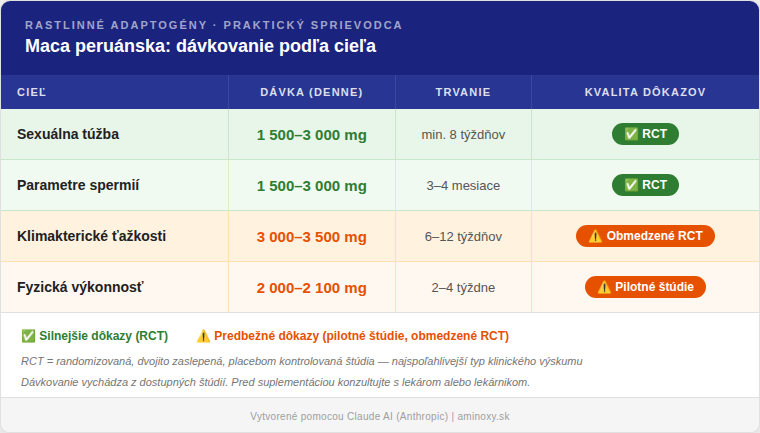
Peruvian maca grows at an altitude of 4,000 to 4,500 meters above sea level in the Peruvian Andes - in harsh conditions where most plants cannot survive. Peruvians consume it cooked (raw maca is toxic to humans), and a typical daily dose in a traditional setting can reach up to 100 grams. Modern dietary supplements utilize much lower doses, usually ranging from 1,500 to 3,000 mg per day.
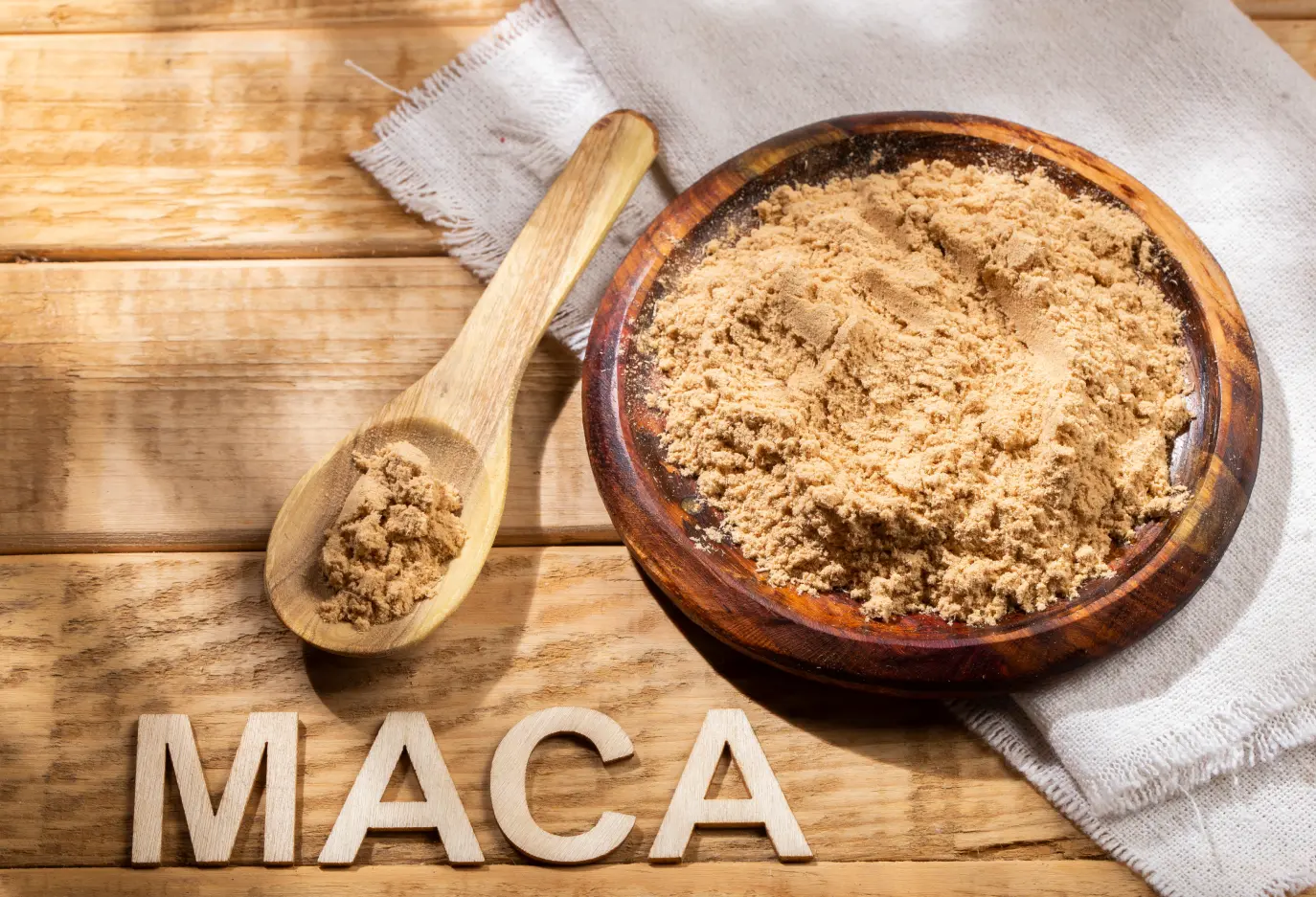
Maca belongs to the Brassicaceae (cruciferous) family, making it a relative of cabbage, broccoli, or radishes. The root part of the plant is used, which is dried and ground into a powder, or processed into what is known as a "gelatinized" form. This means it has been precooked to make it more digestible; this is the preferred form for supplementation.
Maca and Its Variants Maca occurs in several color variants, with each having a slightly different composition of bioactive compounds:
Black Maca — shows the best results in improving sperm parameters and cognitive functions (based on animal studies; partially confirmed by human data).
Yellow Maca — the most widespread and common type; the majority of human studies have used this variant or a mixture containing it.
Red Maca — research suggests it has potential in reducing prostate enlargement (so far, only in animal models).
💡 Most commercial products contain a blend of multiple color variants. If a manufacturer declares a specific color and references research, that is a plus. However, direct evidence from human studies for the individual variants remains limited. |
Nutritional Composition and Bioactive Compounds
Maca is a nutritionally interesting plant: it is a good source of vitamin C, potassium, and complex carbohydrates, while also having a low fat content. In addition to essential nutrients, it contains unique bioactive compounds:
Macamides and macaenes — substances exclusive to maca, which are likely responsible for its effects on libido and the nervous system.
Glucosinolates — compounds characteristic of cruciferous plants, which are attributed with certain health benefits.
Effects of Maca on Performance and Vitality
Maca and Testosterone: The Most Widespread Myth This is the most essential part of the entire article and, at the same time, the one surrounded by the most myths and half-truths.
Maca does not increase testosterone levels in humans. This is not just a hypothesis; it is the conclusion of several well-designed clinical studies.
Key evidence comes from Gonzales GF et al. (2002, Andrologia, PubMed: 12472620) — a randomized, double-blind, placebo-controlled study (the "gold standard" of scientific research, where neither the participants nor the researchers know who is receiving the active substance and who is receiving the placebo). The researchers followed 57 men aged 21–56 who took either 1,500 mg or 3,000 mg of maca daily for 12 weeks.
The results were unambiguous:
Sexual desire increased in a statistically significant way — starting from the 8th week of supplementation.
Testosterone levels: no change.
Estradiol (estrogen) levels: no change.
No changes in other monitored hormones.
"Maca has an independent effect on sexual desire... not as a consequence of changes in testosterone or estradiol levels." — Study conclusion (Gonzales et al., 2002)
So why is maca sold as a "testosterone booster"? The answer is simple: older animal studies showed an increase in testosterone, but this effect was not confirmed when transitioning to human studies. It is a classic example of how results from animal models are not always translatable to humans.
💡 Jerry Brainum, author of the Applied Metabolics newsletter and one of the most respected analysts in the supplement field, summarized it clearly: As a testosterone booster, maca is a "flop." (Brainum J., Applied Metabolics, October 2019) |
Proven Effects of Maca
So, what is maca actually good for? These are the areas most commonly discussed, but for each of them, we will once again look at the evidence-backed reality.
1. Libido and Sexual Function This is the area with the strongest scientific support. Gonzales's 2002 study has been confirmed by further research - an increase in sexual desire has been consistently reported in healthy men, postmenopausal women, and men with mild erectile dysfunction.
The mechanism remains unexplained. It is hypothesized that macamides are involved in the modulation of neurotransmitters (transmitters of nerve signals in the brain), but the exact biochemical chain has not yet been scientifically confirmed.
Important: The effect only appears after 8 weeks of regular use at a daily dose of 1,500–3,000 mg. Anyone expecting immediate results will be disappointed.

2. Male Fertility and Sperm Parameters The second well-documented area. Gonzales GF et al. (2001, Asian Journal of Andrology, PubMed: 11753476) observed 9 healthy men aged 24–44 years who took either 1,500 or 3,000 mg of maca daily for 4 months (a study without a control group).
Results: An increase in seminal volume, sperm count, and sperm motility. These changes occurred without any alteration in LH, FSH, prolactin, testosterone, or estrogen levels.
These findings were later confirmed by a more controlled study by Melnikovova I et al. (2015, Evidence-Based Complementary and Alternative Medicine, PubMed: 26421049). This was the first double-blind, randomized, placebo-controlled study of semen parameters in healthy men (20 men aged 20–40 years, 1.75 g of maca daily for 12 weeks). The results showed an increasing trend in sperm concentration and motility compared to the placebo, while hormones remained unchanged.
3. Menopause and Climacteric Symptoms
Lee MS et al. (2011, Maturitas, PubMed: 21840656) published a systematic review (an analysis of multiple studies combined) encompassing 4 randomized controlled trials in perimenopausal and postmenopausal women. The results indicated a reduction in overall climacteric symptoms, including hot flashes, anxiety, and depressive moods.
The authors themselves noted that the evidence is limited - the studies had relatively small sample sizes of participants. The results are promising but not definitive.
💡 Maca does not affect hormonal levels, unlike phytoestrogens (plant-derived substances that mimic estrogen). This can be an advantage for women who want to avoid hormonal interventions. |
Tip: Alpha Max for Lady by WarriorX Lab is a supplement designed specifically for women. It contains Peruvian maca extract (Lepidium meyenii 4:1, 300 mg) combined with other adaptogenic herbal extracts.
4. Physical Performance and Strength
This area has the weakest scientific support and requires caution in interpretation.
Stone M et al. (2009, Journal of Ethnopharmacology, PubMed: 19781622) monitored 8 male cyclists in a crossover design (each participant tried both maca and a placebo), with 14 days of supplementation with maca extract, followed by a 40 km time trial. The time improved from 57.62 to 56.56 minutes - statistically significant compared to the baseline, but the improvement compared to the placebo after supplementation was not statistically significant. With eight participants, this is a pilot study (a small, preliminary study - serving to verify whether it makes sense to conduct larger research), not proof of an ergogenic (performance-enhancing) effect.
A newer study by Jiannine and Antonio (2019, Journal of Exercise and Nutrition) followed 47 adults (22 men, 25 women) who took 2.1 g of maca daily for 28 days in a randomized, double-blind, placebo-controlled design. In men, a statistically significant decrease in feelings of fatigue and an increase in grip strength were noted compared to the placebo; in women, these differences compared to the placebo were not confirmed. This is a study in a smaller journal without PubMed indexing - the results are interesting but require replication.
5. Bone and Prostate Health
Animal models suggest protection against osteoporosis and the potential of red maca to reduce prostate enlargement (benign prostatic hyperplasia - a non-cancerous enlargement of the prostate that is common in older men). Human evidence for these effects is currently lacking, so these are preliminary findings, not proven effects.
Created using Claude AI (Anthropic)
Maca and Potential Side Effects
Maca has a favorable safety profile, which is also confirmed by the thousand-year tradition of its consumption in Peru. In clinical studies at doses of 1,500–3,000 mg per day, no serious adverse effects were reported. Even toxicological studies on animals found no signs of toxicity at standard doses.
Reported adverse events have been rare and isolated: there was one case of vaginal bleeding and one case of a manic episode (a psychotic state with extreme energy and impaired judgment). Another case involved lead contamination of a product, which is a quality issue with a specific brand, not with maca itself.
When to exercise caution:
Thyroid disorders: Glucosinolates contained in maca can disrupt proper thyroid function at high doses. Consult your doctor before use.
Pregnant and breastfeeding women: Safety has not been documented.
Users of hormonal medications: Caution is advised, although maca itself does not affect hormones.
💡 Raw maca is toxic - always choose cooked or gelatinized forms. Studies also generally use gelatinized maca or aqueous extracts. Gelatinized maca (precooked and processed) is the preferred form for standard supplementation. |
Natural Support for Fertility and Libido: What Aminoxy Offers
If you are looking for dietary supplements with a transparent composition and scientifically backed ingredients, Aminoxy offers several relevant products:
Alpha Max for Lady — Contains Peruvian maca extract (Lepidium meyenii 4:1, 300 mg) as part of a complex of 12 herbal extracts. Relevant for women seeking support for libido, energy, and hormonal balance—areas where maca has the strongest scientific backing.
Estrogen X — A complex aimed primarily at hormonal balance in men (regulation of estrogen and prolactin), which, among other things, contains maca root powder (200 mg). Maca is one of several ingredients and can contribute to supporting libido and energy.
Conclusion
Peruvian maca is not a testosterone miracle, but neither is it an empty advertising slogan. It has real, scientifically documented effects in three areas: libido, sperm parameters, and climacteric symptoms. The exact mechanism by which it works has not yet been sufficiently explained by science.
SummaryHow maca works and what it does not do:
|
Important disclaimer: The information in this article is intended exclusively for educational purposes. It does not constitute medical advice or a recommendation for specific substances. Before taking any supplements - especially if you have health conditions or are taking medication - consult with a doctor or pharmacist.
Read more articles from this series
Plant-based substances and performance: facts over marketing — Introduction to the series: what phytochemicals are, how extracts differ from isolated compounds, and why these substances are even used in sports.
Tribulus terrestris: effects, myths, and scientific facts — The plant with the longest-standing reputation in this field, and also one of the best-researched. What is its real impact on testosterone? The result might be surprising.
Ecdysterone: effects, research, and regulation in sports — Ecdysterone and related ecdysteroids are among the most promising plant-based substances in current research.
Sources
Gonzales GF, Córdova A, Vega K, Chung A, Villena A, Góñez C, Castillo S. Effect of Lepidium meyenii (MACA) on sexual desire and its absent relationship with serum testosterone levels in adult healthy men. Andrologia. 2002;34(6):367–372. DOI: 10.1046/j.1439-0272.2002.00519.x | PubMed: 12472620
Gonzales GF, Cordova A, Gonzales C, Chung A, Vega K, Villena A. Lepidium meyenii (Maca) improved semen parameters in adult men. Asian J Androl. 2001;3(4):301–303. PubMed: 11753476 (štúdia bez kontrolnej skupiny)
Melnikovova I, Fait T, Kolarova M, Fernandez EC, Milella L. Effect of Lepidium meyenii Walp. on semen parameters and serum hormone levels in healthy adult men: a double-blind, randomized, placebo-controlled pilot study. Evid Based Complement Alternat Med. 2015;2015:324369. DOI: 10.1155/2015/324369 | PMID: 26421049 | PMCID: PMC4569766
Lee MS, Shin BC, Yang EJ, Lim HJ, Ernst E. Maca (Lepidium meyenii) for treatment of menopausal symptoms: A systematic review. Maturitas. 2011;70(3):227–233. DOI: 10.1016/j.maturitas.2011.07.017 | PubMed: 21840656
Stone M, Ibarra A, Roller M, Zangara A, Stevenson E. A pilot investigation into the effect of maca supplementation on physical activity and sexual desire in sportsmen. J Ethnopharmacol. 2009;126(3):574–576. DOI: 10.1016/j.jep.2009.09.012 | PubMed: 19781622
Brainum J. Testosterone-boosting supplements: What's the evidence for them? Applied Metabolics Newsletter. October 2019. appliedmetabolics.com
Brainum J. Herbal Testosterone boosters: An Update. Applied Metabolics Newsletter. March 2021. appliedmetabolics.com
Brainum J. Testosterone-boosting Supplements: How they work and do they work? Applied Metabolics Newsletter. March 2025. appliedmetabolics.com
Jiannine LM, Antonio J. The Effects of Lepidium meyenii on Grip Strength, Fatigue, and Sexual Behavior. J Exerc Nutr. 2019;2(1). Dostupné: https://www.journalofexerciseandnutrition.com/index.php/JEN/article/view/40