
Plant-Based Substances and Performance: Facts Instead of Marketing
Tribulus, ashwagandha, maca, or Tongkat Ali — in advertisements, all these natural substances promise better performance, higher testosterone, and greater muscle mass. But what is the reality?
Scientists examined the 50 best-selling testosterone-focused supplements. For more than 61% of their ingredients, there is not a single scientifically backed piece of evidence regarding their effect on hormones. For another 10%, there is evidence that they actually decrease testosterone. The goal of this series of articles is to help you distinguish which claims are based on evidence — and which are just marketing.
What are phytochemicals and why are they interesting for sports?
Definition and Basic Classification
Phytochemicals (from the Greek phyton = plant) are biologically active compounds produced by plants; not as primary nutrients, but as part of the plant's defense mechanism or communication with its environment. They are interesting for the human body precisely because many of them demonstrate biological activity in studies: this means they act as anti-inflammatories, antioxidants, hormonal modulators, or they influence metabolic pathways.
Each of these groups operates through a different mechanism.
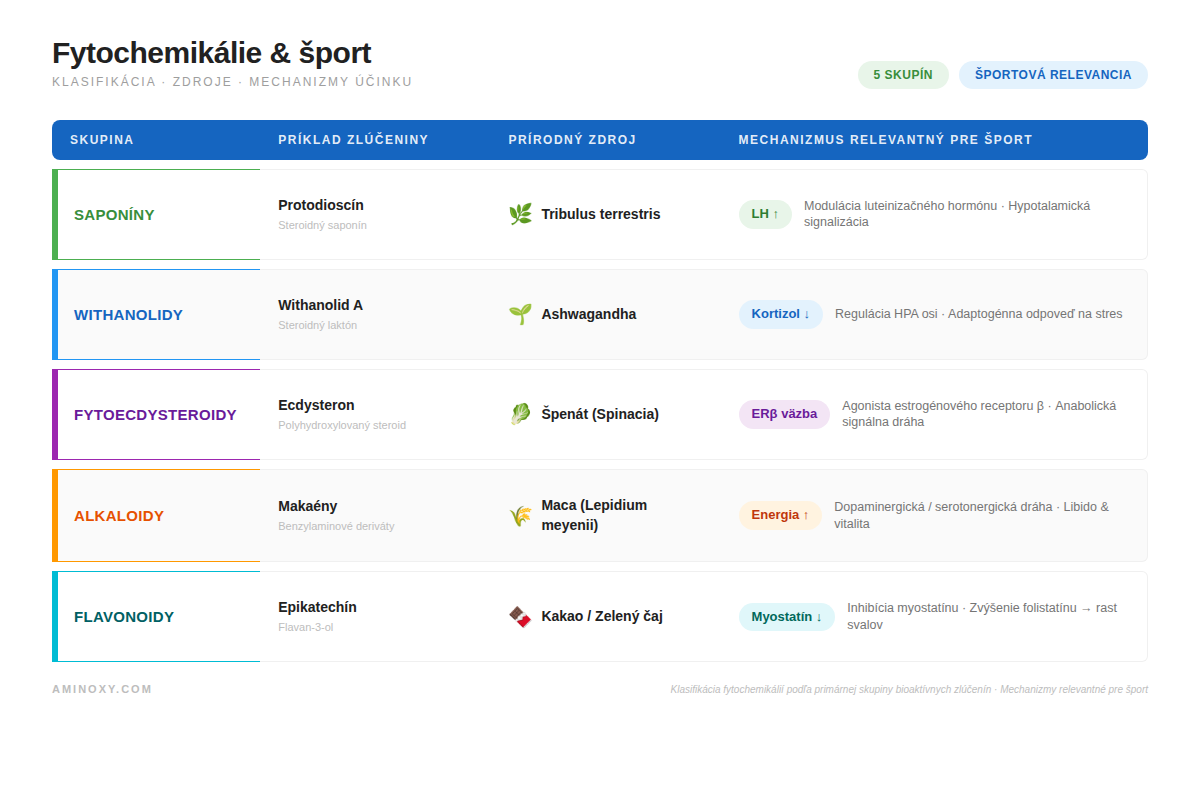
Created using Claude AI (Anthropic)
Extracts vs. Isolated Compounds — What matters?
Imagine ordering a coffee. You can get whole coffee beans with their complex aroma, or pure caffeine in a pill. The effect is not the same — even though the active substance is the same. A similar dilemma faces scientists when researching plant-based supplements: should they test the whole extract, or just the isolated active compound?
A whole extract can contain dozens of compounds that work together — one amplifies the effect of another, while a third slows its breakdown in the body. The problem is that such a mixture is difficult to standardize. The amount of the active substance can fluctuate between individual batches by tens of percent, just as the strength of an espresso depends on where and when the beans were harvested.
And this is exactly where a practical problem arises for anyone who reaches for a supplement in a pharmacy or e-shop. If the manufacturer does not state how much of the active substance the product contains, you have no way of knowing whether you are getting what the scientists tested in the study.
A good example is ashwagandha. The KSM-66 extract is standardized to 5% withanolides — these are the biologically active substances to which ashwagandha owes most of its effects. The Shoden extract goes even further: 35% withanolides. A product labeled simply as "ashwagandha powder" without a stated standard may contain trace amounts, or almost nothing at all.
Not every supplement with the same name is the same supplement. Standardization of the active substance content is what separates a clinically tested preparation from a randomly mixed powder.
And that is not all. Independent analyses have revealed an even more serious problem: a study published in the Journal of Mass Spectrometry (Geyer et al., 2008) found that many commercial supplements contain substances that are not on the label at all — including banned doping substances. For athletes subjected to doping tests, this can have serious consequences, even if they never knowingly took anything banned.
Why are plant extracts interesting in sports and recovery?
Researchers' interest in plant substances is not a fashion trend. It is based on several specific biological mechanisms.
First direction: impact on the hormonal axis. The body manages testosterone production like a well-run production chain: the brain (hypothalamus) issues a command, the pituitary gland amplifies it and sends it on, and finally, the testes do the work and produce testosterone. Certain plant substances intervene directly in this chain — for example, they influence the release of LH (luteinizing hormone), which is essentially a "manufacturing instruction" for the testes. Others act indirectly: they lower cortisol, a stress hormone that naturally suppresses testosterone levels.
Second direction: cortisol as the enemy of testosterone. These two hormones function as counterweights — when one rises, the other falls. Imagine it as a seesaw: long-term stress, tension, or overtraining will raise cortisol levels, and testosterone will plummet. Several plant adaptogens, such as ashwagandha, rhodiola, or eleutherococcus, have demonstrated the ability in randomized trials to somewhat balance this seesaw by lowering cortisol.
Third direction: building muscle through pathways outside of testosterone. Certain plant substances, specifically phytoecdysteroids, affect muscle cells completely differently. They activate so-called estrogen receptor beta, which are protein structures present in the muscle cells of both men and women. Despite the confusing name, they have nothing to do with female hormones in this context; upon activation in muscle tissue, they simply trigger the production of muscle proteins.
Summary
|
Research, marketing, and reality: how to recognize credible evidence?
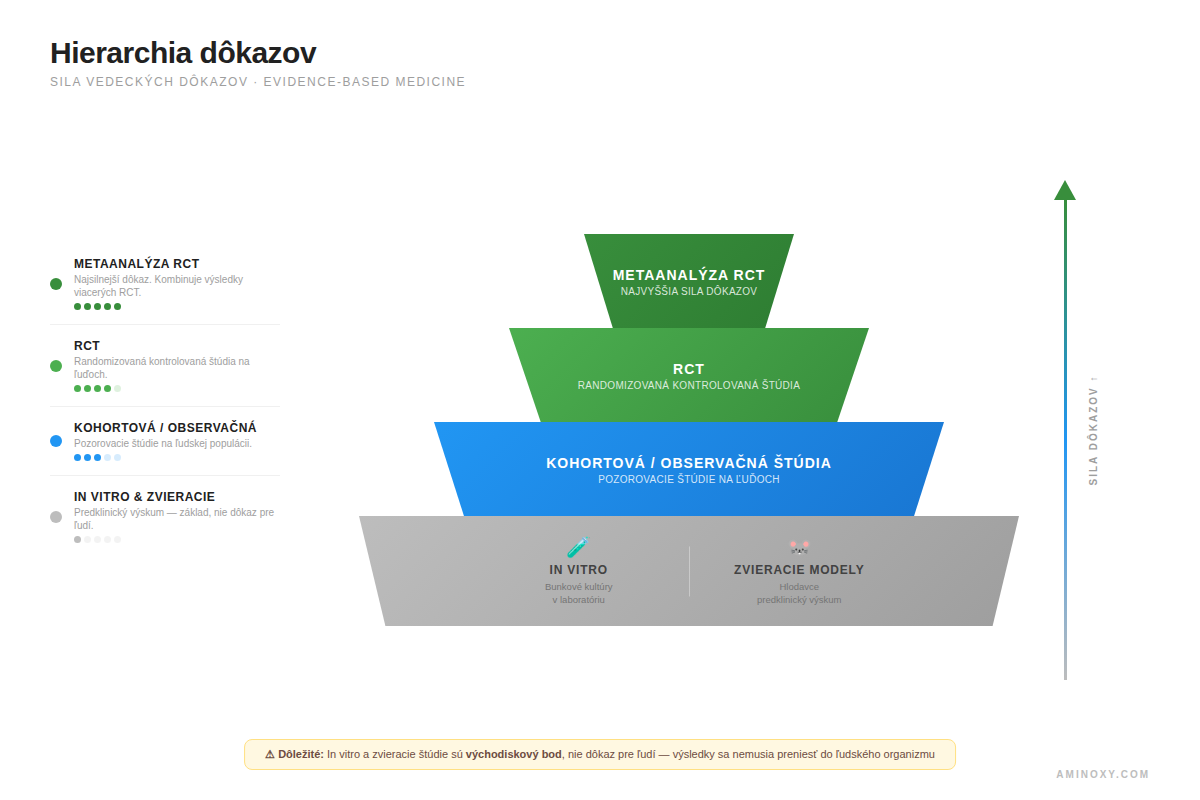
The hierarchy of evidence — why the type of study matters
Not every study has the same value. In medicine and nutritional science, a hierarchy of evidence applies.
Created using Claude AI (Anthropic)
The field of plant-based testosterone-boosting supplements is characterized by a significant imbalance: most of the available data comes from animal or in vitro studies. What works in a petri dish or in a rat may not manifest in the human body at all.
A classic example is D-aspartic acid (DAA). In rodent studies, it reliably increased testosterone, but in high-quality human studies, it demonstrated no consistent effect. In some cases, it even lowered testosterone levels. Brainum (Applied Metabolics, 10/2019) states unequivocally: "DAA is a waste, and anyone looking for higher testosterone levels should avoid it."
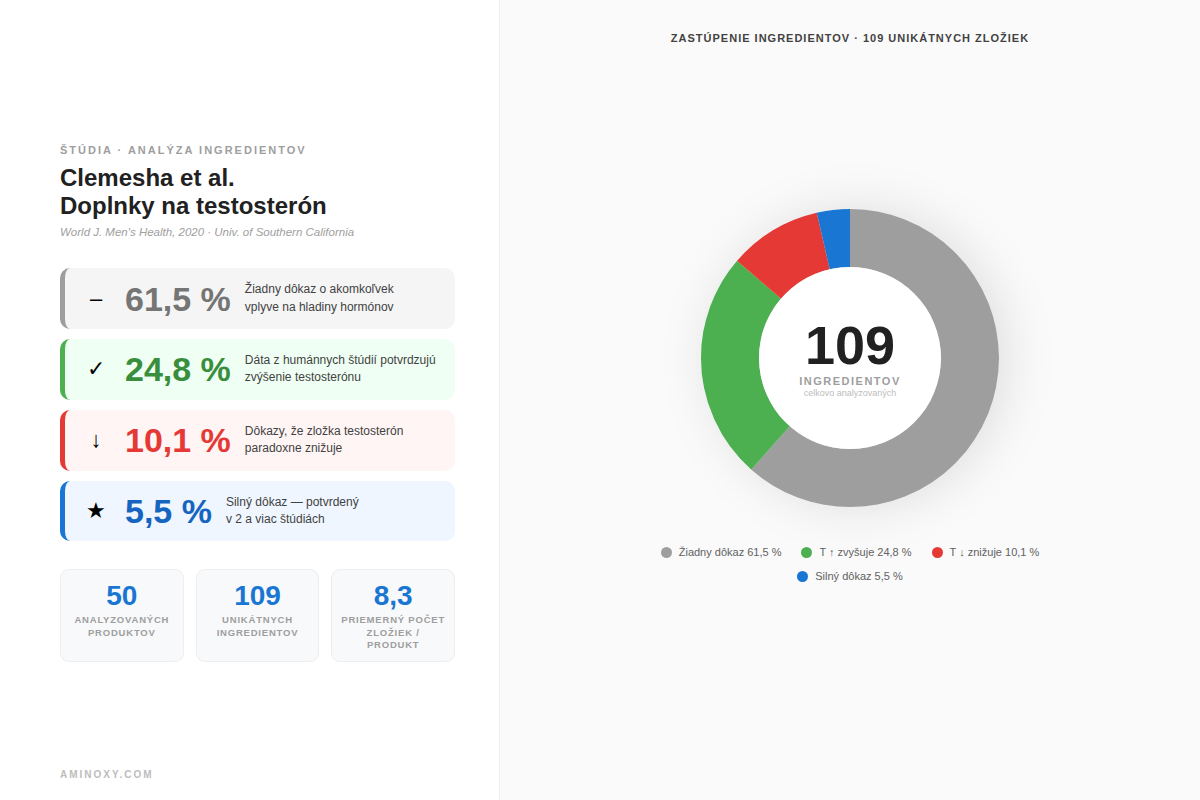
Research example: A study by Clemesha et al. (World J Men’s Health, 2020). Researchers from the University of Southern California analyzed the 50 best-selling testosterone supplements. Across all products, they identified 109 unique ingredients, with a single product containing an average of 8.3 of them. The authors' conclusion: 90% of the supplements claim to increase testosterone, but only 24.8% have any evidence to support this claim. More detailed information can be found in the infographic below.
Created using Claude AI (Anthropic)
Combinations of Plant Substances — Synergy or a Marketing Trick?
Most commercial supplements on the market do not contain just one substance, but complex mixtures — so-called proprietary blends. From a scientific perspective, this presents a problem: when we have a product with multiple ingredients, it is impossible to determine which of them is responsible for any potential effect.
Furthermore, preparations with proprietary blends usually do not state the exact amount of each ingredient, only the total amount of the mixture. This makes comparison with scientifically tested doses impossible. If a study demonstrated the effect of ashwagandha extract at 600 mg of KSM-66 (5% withanolides), a product with 50 mg of unspecified ashwagandha powder is not an equivalent.
The Placebo Effect in the Context of Plant-Based Supplements
The placebo effect is more pronounced in the field of performance supplements than in many other areas of medicine. If a person believes that something works, they train harder, pay more attention to their diet, and sleep better. The results can then be real, but they are not caused by the supplement itself. That is exactly why a properly designed study must be double-blind and placebo-controlled.
Anecdotal evidence, i.e., statements from individuals along the lines of "it worked for me," are extremely widespread in the social media environment and equally unreliable. A person who starts taking a supplement and simultaneously slightly adjusts their training and diet usually attributes the results to the supplement, not to the other factors.
Summary
|
Conclusion
Realistic expectations: what plant substances can and cannot do
So, what is the conclusion? After reviewing the available data, the overall picture is moderately optimistic:
Certain substances — ashwagandha, Tongkat Ali, fenugreek — have demonstrated the ability to slightly increase testosterone in high-quality human studies. This was particularly evident in men with lower baseline levels or under conditions of elevated stress.
For a healthy man with normal testosterone levels, the effect is best described as optimization within the physiological range, but not a dramatic change.
Brainum states in this context that none of the available natural supplements can produce testosterone levels comparable to injectable testosterone or anabolic steroids.
It is equally important to understand that "natural" does not automatically mean safe. Certain plant substances (such as Fadogia agrestis, Bulbine natalensis) have demonstrated hepatotoxic and nephrotoxic effects at higher doses in animal studies. We simply do not have sufficient data on how they affect the human body.
💡 Key fact: It is estimated that more than a quarter of current pharmaceuticals originate from natural plant-based compounds. Just because something comes from nature does not automatically mean it is safe or effective — neither one nor the other. Arsenic and cyanide are also natural substances. (Brainum, Applied Metabolics, 2025) |
Natural support for hormonal balance: what the market offers
If you are among those looking for supplements based on plant substances, Aminoxy offers several products with transparent compositions:
EPI CAT (Blackstone Labs) — a supplement based on epicatechin, a natural flavonoid from cocoa, which has shown the potential to influence myostatin levels in preliminary research. This protein naturally limits muscle growth, although evidence from human studies remains inconsistent.
MUSCLE Peptide — a formula combining ecdysterone (95% purity), epicatechin (90%), and ashwagandha extract (5% withanolides) — thus three substances discussed in this article. This is a substance intended for research purposes, not as a dietary supplement.
T-1000 TESTO EXTREME — a comprehensive formula containing Tribulus terrestris, zinc, and vitamin D3. Each of these ingredients is among the substances with at least partial scientific backing in the context of hormonal health — we discuss zinc and Tribulus in more detail in other articles of this series.
ANIMAL PAK — a comprehensive multivitamin pack for active athletes including zinc, magnesium, vitamin D, and B-complex, along with digestive enzymes and adaptogens. It is relevant as foundational micronutrient support, the deficiency of which can indirectly affect hormonal balance.
SST-1: GH — a supplement focused on supporting nighttime recovery and sleep quality. It contains Mucuna pruriens extract (a source of L-DOPA) and anterior pituitary peptides. Quality sleep is one of the key, yet often underestimated, factors in hormonal balance — including testosterone.
Important Notice: The information in this series of articles is intended exclusively for educational purposes. It does not constitute medical advice or a recommendation for specific substances. Before taking any dietary supplements, especially if you have health complications or are taking medication, consult your physician or pharmacist. Plant-based substances can influence hormonal balance and interact with certain medications.
Summary
|
Read more articles in this series:
Zinc: Effects, Usage, and Common Mistakes - An essential trace element and the foundation of hormonal health. A zinc deficiency can significantly lower testosterone levels. When and how to supplement, and what does the research say?
Tribulus terrestris: Effects, Myths, and Scientific Facts - The plant with the longest reputation in this field, and simultaneously one of the best researched. What is its real impact on testosterone? The result may be surprising.
Peruvian Maca: Effects, Uses, and Potential Risks - A Peruvian superfood with real support for libido and fertility, but zero effect on testosterone. What is the takeaway, and who does maca make sense for?
Ecdysterone: Effects, Research, and Regulation in Sports - Ecdysteroids and ashwagandha are among the most promising plant-based substances in current research: we have strong data from human studies, but also open questions and an interesting regulatory context in sports.
Sources
Clemesha CG, Thaker H, Samplaski MK. Testosterone boosting supplements composition and claims are not supported by the academic literature. World Journal of Men’s Health. 2020;38(1):115-122. DOI: 10.5534/wjmh.190043
Brainum J. Testosterone-boosting Supplements: How they work and do they work? Applied Metabolics Newsletter, March 2025. www.appliedmetabolics.com
Brainum J. Testosterone-boosting supplements: What’s the evidence for them? Applied Metabolics Newsletter, October 2019. www.appliedmetabolics.com
Brainum J. Herbal testosterone-boosting supplements: Are they effective? Applied Metabolics Newsletter, April 2015. www.appliedmetabolics.com
Brainum J. Herbal Testosterone boosters: An Update. Applied Metabolics Newsletter, March 2021. www.appliedmetabolics.com
Brainum J. Are Your Supplements Contaminated? Applied Metabolics Newsletter, May 2021. www.appliedmetabolics.com
Geyer H, Parr MK, Koehler K et al. Nutritional supplements cross-contaminated and faked with doping substances. Journal of Mass Spectrometry. 2008;43(7):892-902. DOI: 10.1002/jms.1452
Neychev V, Mitev V. Pro-sexual and androgen enhancing effects of Tribulus terrestris L. Journal of Ethnopharmacology. 2016;179:345-55. DOI: 10.1016/j.jep.2015.12.055
Gonzales GF et al. Effect of Lepidium meyenii (MACA) on sexual desire and its absent relationship with serum testosterone levels. Andrologia. 2002;34(6):367-72. DOI: 10.1046/j.1439-0272.2002.00519.x
Wankhede S et al. Examining the effect of Withania somnifera supplementation on muscle strength and recovery. J Int Soc Sports Nutrition. 2015;12:43. DOI: 10.1186/s12970-015-0104-9
Isenmann E et al. Ecdysteroids as non-conventional anabolic agent: performance enhancement by ecdysterone supplementation in humans. Archives of Toxicology. 2019;93(7):1807-1816. DOI: 10.1007/s00204-019-02490-x
Chandrasekhar K et al. Safety and efficacy of a high-concentration full-spectrum extract of ashwagandha root. Indian Journal of Psychological Medicine. 2012;34(3):255-62. DOI: 10.4103/0253-7176.106022
Lopresti AL et al. Hormonal and vitality effects of ashwagandha in aging, overweight males. American Journal of Men’s Health. 2019;13(2). DOI: 10.1177/1557988319835985
Tambi MI et al. Standardised extract of Eurycoma longifolia (Tongkat Ali) as testosterone booster. Andrologia. 2012;44 Suppl 1:226-30. DOI: 10.1111/j.1439-0272.2011.01168.x
Newman DJ, Cragg GM. Natural products as sources of new drugs over the nearly four decades from 01/1981 to 09/2019. J Nat Prod. 2020;83(3):770-803. DOI: 10.1021/acs.jnatprod.9b01285
Gutierrez-Salmean G, Ciaraldi TP, Nogueira L et al. Effects of (-)-epicatechin on molecular modulators of skeletal muscle growth and differentiation. J Nutr Biochem. 2014;25(1):91-4. DOI: 10.1016/j.jnutbio.2013.09.007