
Zinc: Effects, Usage, and Most Common Mistakes
Zinc influences more than 300 different processes in the human body – from cell division and wound healing to hormone production. According to WHO estimates, up to 17% of the global population suffers from a zinc deficiency. Active athletes, vegetarians, and vegans are among the most at-risk groups. Yet, it is one of the few micronutrients where science speaks clearly: a deficiency has measurable consequences on performance, immunity, and testosterone levels.
The problem is that a zinc deficiency can easily be confused with overtraining or seasonal fatigue. In this article, we will look at what zinc actually does in the body, how it relates to testosterone, when is the best time to take it, and what to watch out for.
Zinc in Sports and Recovery
What is zinc good for?
Zinc is an essential trace element – the body cannot produce it on its own or store it long-term, so it must be regularly obtained from your diet. In the body of a 68-kilogram man, there is a total of about 2.3 g of zinc, of which:
approximately 50% is stored in skeletal muscles
the rest is found in the bones, liver, skin, kidneys, and prostate
💡 Zinc cannot be stored. Unlike vitamin D or B12, the body has no "storage" facility for zinc. When intake drops, the body begins recycling zinc from less critical tissues and moving it to where it is needed most – but only to a certain extent. |
From a biochemical perspective, zinc is primarily an enzyme cofactor. Simply put: enzymes need it in order to function at all. For active athletes and people interested in hormonal health, zinc is especially important in connection with these areas:
Testosterone and the Hormonal Axis
When talking about zinc and testosterone, the same study always comes up: Prasad et al. (1996), published in the journal Nutrition. To date, it is the most cited evidence of their connection.
The study had two parts:
Artificially induced deficit in young men: Four healthy men (average age 27.5 years) underwent a mild zinc deficiency induced by dietary restriction for 20 weeks. Result: testosterone levels dropped from 39.9 to 10.6 nmol/L – a drop to the level of clinically low testosterone (hypogonadism).
Supplementation in older men with a mild deficit: Nine older men (average age 64 years) received zinc gluconate – about 30 mg of zinc daily – for 3–6 months. Result: testosterone levels increased from 8.3 to 16.0 nmol/L, which is almost double.
What this implies:
Zinc is essential for normal testosterone production.
A zinc deficiency leads to lowered testosterone levels.
Supplementation can correct this condition in people with a deficit.
But at the same time:
Zinc does not increase testosterone above normal levels in people who do not suffer from a deficiency.
The effect is corrective, not anabolic (meaning: it is not a substance that increases testosterone above the physiological norm regardless of the initial state).
Tip: Read also: Tribulus terrestris: effects, myths, and scientific facts – another natural testosterone regulator under the microscope of science.
Inhibition of Aromatase
Zinc slows down the conversion of testosterone to estrogen (via the aromatase enzyme), which helps maintain a favorable hormonal ratio. This is important not only for middle-aged men but also for active athletes.
Protein Synthesis, Muscle Mass, and Immunity
Zinc is directly involved in the creation of new muscle proteins – without it, not only is hormone production limited, but so is the actual building of muscle. Interestingly, endurance muscle fibers contain up to 4 times more zinc than strength fibers – which is why runners and cyclists are more sensitive to its deficiency.
After demanding training, the immune system is temporarily weakened; this risk window for developing an infection is called the "open window" effect. Zinc helps shorten this window because it is essential for the rapid activation of immune cells. Simply put: sufficient zinc levels = faster immune response after exertion and fewer colds. This is also confirmed by a review study by Haase and Rink (2014, Biofactors).
💡 Good to know: Supplementation with high-dose zinc lozenges (>75 mg/day) within 24 hours of the first signs of a cold can, according to several studies, shorten the duration of the illness by 30–40%. |
Zinc Loss During Training
During intensive performance, 0.5–1 mg of zinc is lost per liter of sweat. According to DeRuisseau et al. (2002), 2 hours of cycling correspond to a loss of 8–9% of the recommended daily dose in a single training session. According to Cordova a Álvarez-Mon (2001, Sports Medicine), up to 90% of endurance athletes have a lower zinc intake than their body needs. This is mostly due to a diet rich in carbohydrates and low in proteins and fats.
💡 Blood tests are not reliable for mild deficiencies. The body maintains zinc levels in the blood at the expense of tissue reserves – so the result might be "within the norm" while the reserves in muscles and bones are already depleting. It is more practical to monitor dietary zinc intake and symptoms of a potential deficiency in the context of one's lifestyle. |
Dietary Sources of Zinc
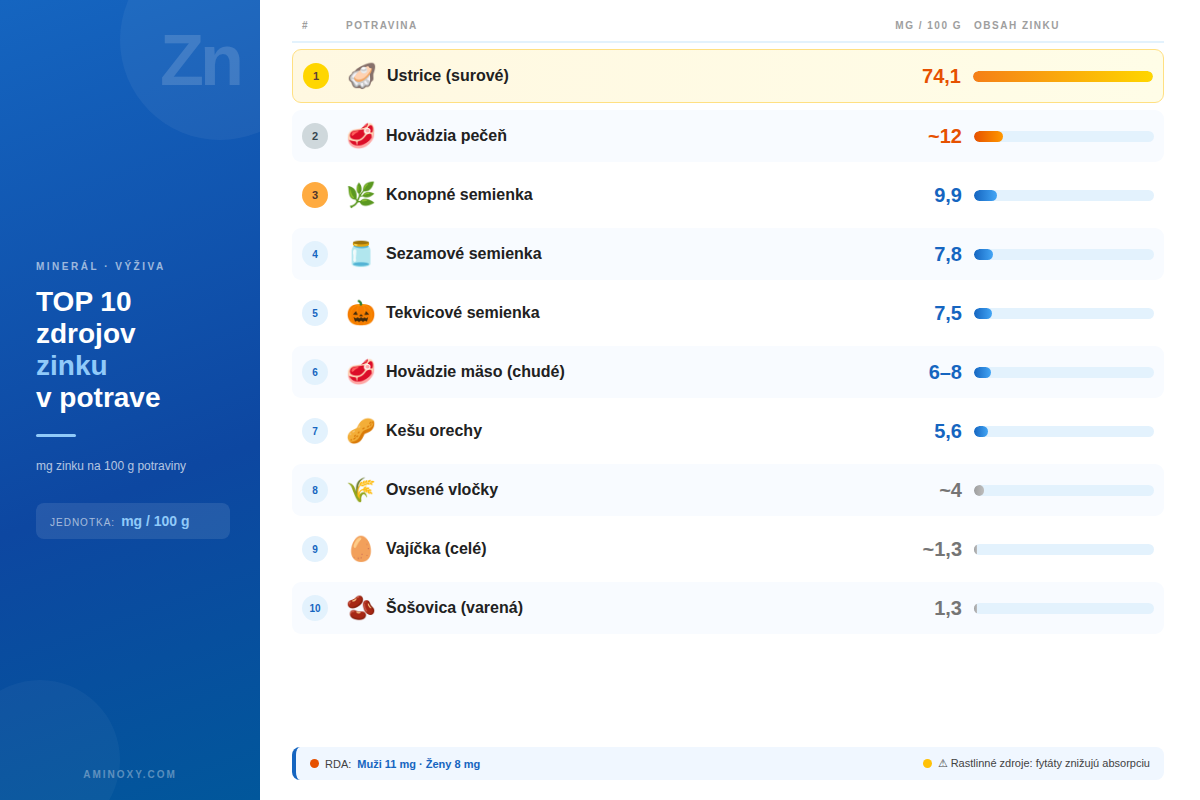
The richest sources of zinc are animal products – oysters, red meat, seafood, and organ meats. Among plant sources, pumpkin seeds, sesame seeds, and legumes stand out, but their disadvantage is phytates – substances that bind to zinc in the digestive tract and prevent its absorption.
Created using Claude AI (Anthropic)
Who is at Risk of Zinc Deficiency
Certain groups of people have a significantly higher risk of inadequate zinc intake:
Vegetarians and vegans – plant-based diets contain less zinc, and furthermore, phytates from grains and legumes further reduce its absorption. Vegetarians may need up to 50% more zinc than people on a mixed diet. The good news is that soaking, sprouting, and cooking legumes and grains significantly reduces phytates.
Active athletes – they lose zinc through sweat (0.5–1 mg/L).
Older people – zinc absorption decreases with age.
People with digestive issues – e.g., Crohn's disease, ulcerative colitis, or short bowel syndrome (conditions where the digestive tract does not absorb nutrients properly).
People who regularly consume alcohol – alcohol increases the excretion of zinc by the kidneys.
Summary
|
When to take zinc – morning or evening
The timing of zinc intake is not critical. However, taking it in the evening, 1–2 hours before bedtime on an empty stomach, is the most beneficial choice for active athletes:
Absorption is best on an empty stomach or between meals.
Evening administration combined with magnesium (the ZMA protocol, i.e., zinc + magnesium + B6) supports recovery during sleep.
The main proven benefit of ZMA in well-nourished athletes is improved sleep quality due to magnesium – which translates into better recovery and hormonal balance.
If zinc causes nausea – take it with a meal; bioavailability will decrease slightly, but tolerance will significantly improve.
Tip: If you are looking for a high-quality form of magnesium and B6 for a ZMA combination, an example is Magnesium Bisglycinate 1000 mg + B6 by Aminoxy.
💡 The synergy of vitamin D and zinc. Vitamin D and zinc support each other in both absorption and function. People with a vitamin D deficiency often simultaneously have lower zinc stores – and vice versa. If you are supplementing one, it makes sense to check the other as well. |
How much zinc daily?
Recommended daily dose: (according to the NIH - National Institutes of Health, USA)
11 mg (men)
8 mg (women)
With a proven deficiency: 25–30 mg/day
Upper safe limit:
25 mg/day according to EFSA (European Food Safety Authority); European recommendations are more conservative.
40 mg/day according to the NIH.
Forms of zinc – not all are created equal:
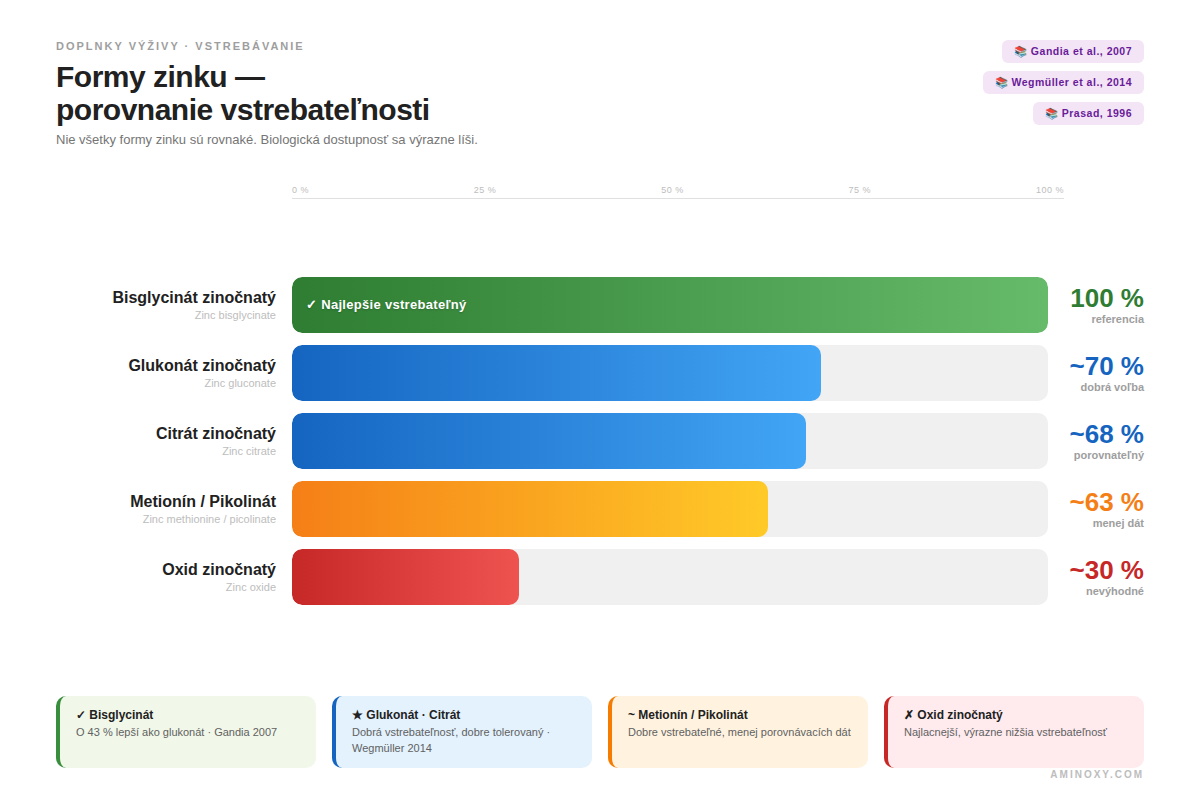
The form of zinc in a dietary supplement fundamentally affects how much of it the body actually absorbs. Zinc bisglycinate has the best absorption rate, up to 43% better than gluconate (Gandia et al., 2007). More affordable options with good absorption are the zinc gluconate and zinc citrate variants.
Created using Claude AI (Anthropic)
Summary
|
Side Effects and Interactions
Zinc is safe at recommended doses. However, with long-term higher intake or when combined with other substances, you should be aware of a few important relationships:
Zinc vs. Copper: The most important interaction. Zinc and copper compete for the same transporters in the small intestine. Long-term intake of more than 40–50 mg of zinc daily can gradually deplete copper reserves in the body. This manifests as fatigue, anemia, and a weakened immune system. With doses around 50 mg of zinc, it is standard practice to supplement 2–3 mg of copper.
Zinc vs. Iron: Supplements with a high iron content reduce zinc absorption. Ideally, you should separate their intake by 1–2 hours.
Zinc vs. Calcium: Calcium supplements taken simultaneously with zinc can reduce its absorption.
Antibiotics: Zinc can reduce the absorption of certain antibiotics (tetracyclines, fluoroquinolones). The recommended interval between taking them is at least 2 hours.
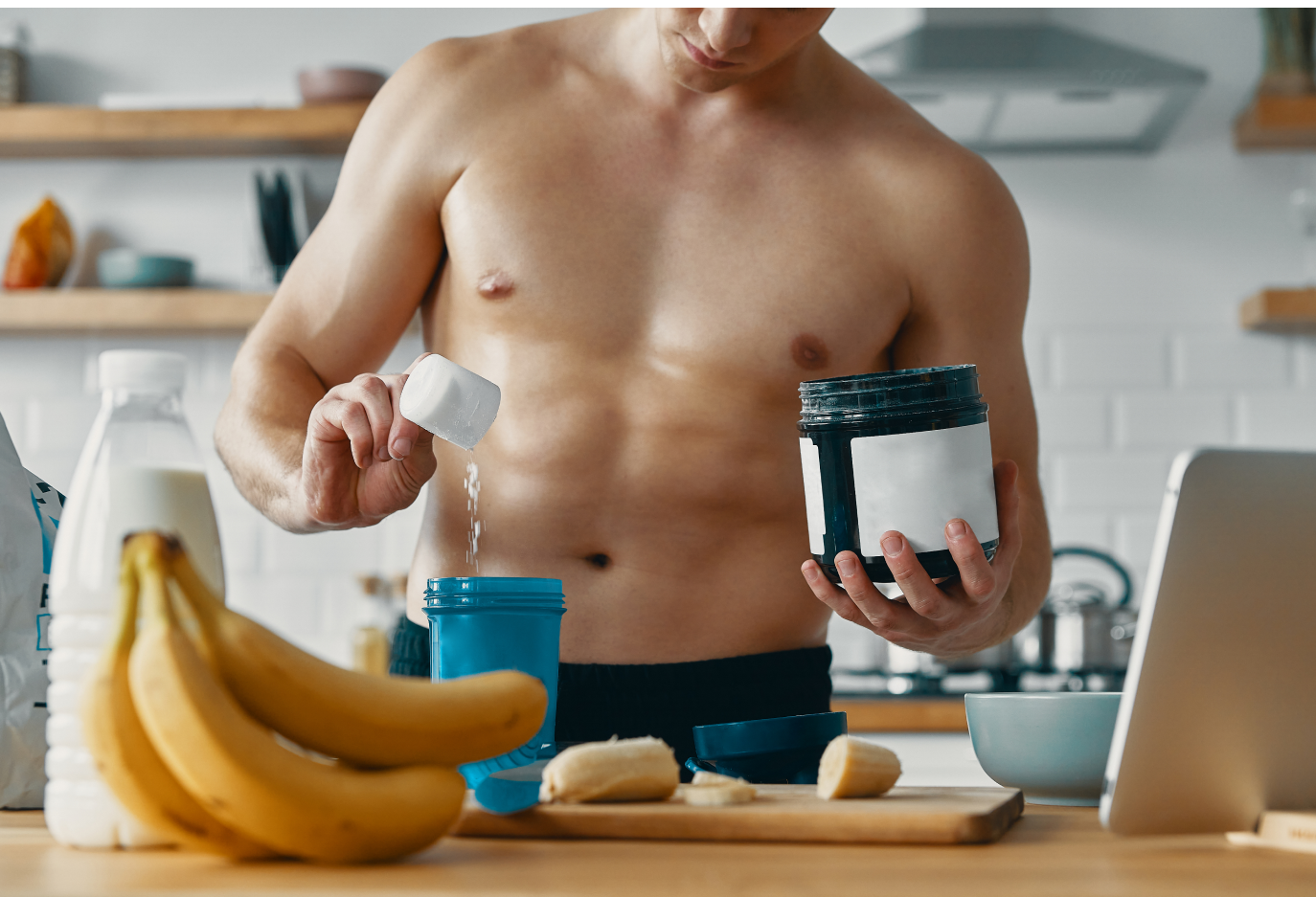
5 most common mistakes in zinc supplementation:
Choosing zinc oxide – the cheapest form, but with significantly lower absorption; found in many cheap multivitamins.
Taking it simultaneously with calcium or iron – they reduce zinc absorption; the ideal interval is 1–2 hours.
Ignoring the zinc-copper interaction at long-term higher doses – this can lead to a copper deficiency.
Unrealistic expectations – zinc is not a substance that increases testosterone for everyone; this effect only occurs if there is a zinc deficiency.
Discontinuing due to nausea – the solution is to lower the dose or take zinc with a meal, not to stop completely.
Tip: An example of a product with highly absorbable zinc gluconate is Zinc Forte by Aminoxy.
When NOT to supplement zinc?
If your dietary intake consistently covers the RDA and you do not belong to a risk group (vegetarians, intensely training athletes, the elderly, those with GI diseases), supplementation will likely not provide a measurable benefit. Furthermore, it can unnecessarily disrupt your zinc-copper balance.
Summary
|
Conclusion
Zinc is no "testosterone miracle." It is a cofactor – a mineral without which hundreds of processes in the body simply cannot operate at full capacity. For active athletes, vegetarians, and people under high physical stress, supplementation has a clear justification. The right form, the right timing, and realistic expectations – these are the three things that make a real difference.
Important Notice: The information in this series of articles is intended exclusively for educational purposes. It does not constitute medical advice or a recommendation for specific substances. Before taking any dietary supplements, especially if you have health complications or are taking medication, consult your physician or pharmacist. Long-term zinc supplementation in doses exceeding 25 mg per day can interfere with copper absorption — with long-term use, it is advisable to monitor the levels of both minerals.
Read more articles in this series:
Plant-Based Substances and Performance: Facts Instead of Marketing — The introductory article of the series: what phytochemicals are, how extracts differ from isolated substances, and why these compounds are used in sports at all.
Tribulus terrestris: Effects, Myths, and Scientific Facts - The plant with the longest reputation in this field, and simultaneously one of the best researched. What is its real impact on testosterone? The result may be surprising.
Peruvian Maca: Effects, Uses, and Potential Risks - A Peruvian superfood with real support for libido and fertility, but zero effect on testosterone. What is the takeaway, and who does maca make sense for?
Ecdysterone: Effects, Research, and Regulation in Sports - Ecdysteroids are among the most promising plant-based substances in current research: strong data from human studies, open questions, and an interesting regulatory context in sports.
Sources
Prasad AS, Mantzoros CS, Beck FW, Hess JW, Brewer GJ. Zinc status and serum testosterone levels of healthy adults. Nutrition. 1996;12(5):344–348. DOI: 10.1016/s0899-9007(96)80058-x | PubMed
Haase H, Rink L. Zinc signals and immune function. Biofactors. 2014;40(1):27–40. DOI: 10.1002/biof.1114 | PubMed
Gandia P, et al. A bioavailability study comparing two oral formulations containing zinc (Zn bis-glycinate vs. Zn gluconate). Int J Vitam Nutr Res. 2007;77(4):243–248. DOI: 10.1024/0300-9831.77.4.243
Wegmüller R, et al. Zinc absorption by young adults from supplemental zinc citrate is comparable with that from zinc gluconate and higher than from zinc oxide. J Nutr. 2014;144(2):132–136. DOI: 10.3945/jn.113.181487 | PubMed
Green NR, Haymes EM. Zinc loss in sweat of athletes exercising in hot and neutral temperatures. Int J Sport Nutr Exerc Metab. 1993;3(3):261–271. PubMed
DeRuisseau KC, et al. Sweat iron and zinc losses during prolonged exercise. Int J Sport Nutr Exerc Metab. 2002;12(4):428–437. PubMed
Cordova A, Alvarez-Mon M. Zinc status in athletes: relation to diet and exercise. Sports Med. 2001;31(8):577–582. DOI: 10.2165/00007256-200131080-00002 | PubMed
Hemilä H. Zinc lozenges and the common cold: a meta-analysis comparing zinc acetate and zinc gluconate, and the role of zinc dosage. JRSM Open. 2017;8(5):2054270417694291. DOI: 10.1177/2054270417694291 | PubMed
National Institutes of Health – Office of Dietary Supplements. Zinc: Fact Sheet for Health Professionals. ods.od.nih.gov
European Food Safety Authority (EFSA). Dietary Reference Values for zinc. EFSA Journal. 2014;12(10):3844. DOI: 10.2903/j.efsa.2014.3844
Brainum J. Think Zinc. Applied Metabolics Newsletter. December 2025. appliedmetabolics.com
Brainum J. Testosterone and Nutrition. Applied Metabolics Newsletter. May 2022. appliedmetabolics.com