


Mental Health and Weight Loss: Self-Esteem, Stress and Body Image
According to research, people who are obese are more likely to have lower self-esteem and a poorer self-image than people of normal weight. The main risk factors are the degree of excess weight, being female and binge eating. And yet most content on weight loss focuses solely on calories, macronutrients and training plans. But mental health is also a very important factor.
In this final instalment of our series on weight loss, we’ll look at the relationship between mental health and body weight. We’ll explore how stress, via cortisol, affects appetite and why sleep is an underestimated factor in weight loss. We’ll also show how to view the body in a different way than simply through the number on the scales.
Mental health, self-confidence and weight loss
The relationship between being overweight and self-esteem
Self-esteem and body image arenot the same thing. The former is an overall assessment of one’s own worth as a person; the latter is specifically how you perceive your own body. These two things are closely related, but they are not interchangeable – a person can feel good about themselves on the inside, yet still be dissatisfied with their appearance, or vice versa.
A review study by Schwartz and Brownell confirmed a clear link between obesity and a poorer body image. At the same time, however, it emphasised that not every person with obesity suffers from this problem – it depends on the degree of excess weight, gender and the presence of binge eating (Schwartz & Brownell, Body Image, 2004, PMID: 18089140). Internalised stigma also plays an important role here – when a person adopts negative societal attitudes towards their own weight and begins to perceive them as the truth about themselves. Social media also contributes to this, as people routinely compare their bodies with edited photos of others; this comparison often reduces satisfaction with one’s own appearance.
Mental health issues associated with obesity
The relationship between obesity and depression is bidirectional. A comprehensive meta-analysis of long-term studies has shown that obesity increases the risk of developing depression – and conversely, depression increases the likelihood of subsequently developing obesity by 58 per cent (Luppino et al., Arch Gen Psychiatry, 2010, PMID: 20194822). It is therefore a mutually reinforcing link, rather than a one-way cause-and-effect relationship. The same applies to anxiety disorders.
Eating disorders are also more common in people with obesity, particularly:
binge eating disorder (BED) – binge eating or compulsive overeating, the most common eating disorder associated with obesity,
bulimia – alternating episodes of binge eating with compensatory behaviour,
atypical anorexia – restrictive behaviour and significant weight loss in a person who previously weighed more, even though their current weight may not be classified as ‘underweight’ according to their BMI.
If you recognise yourself in these descriptions, please know that you are not alone. This is not a failure of willpower, but a medical condition that warrants professional help. You can contact the Nezábudka Helpline (116 123) or seek out a psychologist or psychiatrist specialising in eating disorders.

How to boost your self-confidence whilst losing weight
Focus on the process, not the result – process-oriented goals (“I’ll exercise three times a week”) work better than result-oriented goals (“I’ll lose 10 kg”), because they’re under your direct control. The outcome (how much weight you lose and how quickly) is also influenced by a number of factors beyond your control, such as genetics, hormones and your current life situation. The process (whether you exercise today or get a good night’s sleep) is always in your hands, and is therefore a more reliable source of a sense of achievement.
Train for function, not just for appearance – goals such as ‘I’ll lift more’ or ‘I’ll run a longer distance’ build self-confidence regardless of how you feel when you look in the mirror.
Body neutrality vs. body positivity – whilst body positivity requires you to love your body, with body neutrality it’s enough simply to accept it and live with it without constantly judging it.
Avoid comparing yourself on social media – comparing your own body with others’ edited photos is a sure-fire way to feel dissatisfied.
Self-compassion – research shows that it protects against the harmful effects of self-criticism (e.g. feelings of failure or giving up) more effectively than simply trying to boost one’s self-esteem. According to Neff’s definition, it consists of three components:
kindness towards oneself rather than self-criticism,
viewing one’s own difficulties as part of the normal human experience (rather than as something that isolates you),
a balanced way of experiencing painful emotions – that is, neither suppressing them nor indulging in excessive self-pity.
Summary
|
Stress, cortisol and overeating
Cortisol is an adrenal hormone released by the body in response to stress. By raising blood glucose levels and mobilising energy reserves, it prepares the body for stress. In the short term, this is a useful and essential mechanism. The problem arises with chronic stress, when cortisol levels remain elevated over the long term (Brainum J., Cortisol: The Jekyll and Hyde hormone, Applied Metabolics Newsletter, November 2016).
The mechanism behind this type of emotional eating works as follows: chronically elevated cortisol increases cravings for calorie-dense, sweet and fatty foods. This is not merely a matter of weak willpower; it is a direct biochemical effect on the brain’s hunger centres. Eating such foods also temporarily triggers the release of dopamine, which provides short-term relief from stress. And this is how an addictive cycle develops (Brainum J., Stress and Health: The True Effects, Applied Metabolics Newsletter, June 2022).
How to distinguish emotional hunger from physical hunger
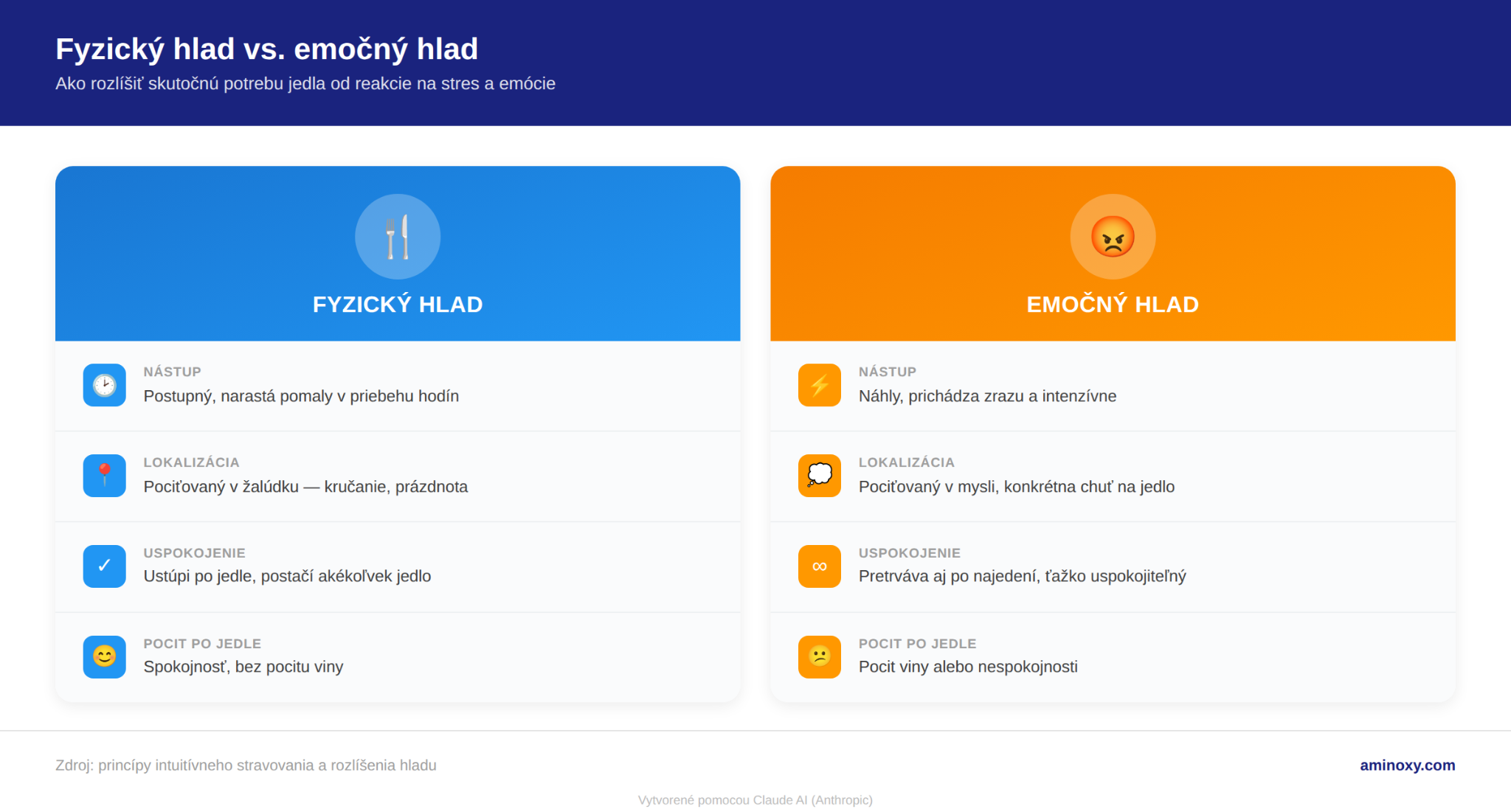
Physical hunger sets in gradually; you feel it in your stomach and it is satisfied by virtually any food – followed by a feeling of fullness and calm. Emotional hunger comes on suddenly, ‘in your head’, and is accompanied by a craving for a specific, usually sweet or fatty ‘comfort’ food. This too is temporarily soothed by food, but as it was caused by an emotion rather than an empty stomach, the problem isn’t actually solved – which is why it’s often followed by a feeling of guilt.
Created using Claude AI (Anthropic).
Mindful eating is a term referring to eating without being distracted by other stimuli, whilst paying attention to signals of fullness. It is an effective tool that helps to practise this distinction. Exercise is just as effective as a stress reliever, as it reduces stress hormone levels regardless of whether it is strength or aerobic training.
Ashwagandha is one of the most extensively studied adaptogens (plant substances that help the body adapt better to stress) in relation to cortisol – see below.
Summary
|
Natural support for stress: what Aminoxy offers
💊 Liposomal KSM-66® Ashwagandha
Ashwagandha (Withania somnifera) is one of the most extensively studied adaptogens in relation to stress. A randomised, double-blind study (the gold standard of research) involving 64 adults with chronic stress demonstrated that 300 mg of highly concentrated root extract taken twice daily for 60 days led to a statistically significant reduction in stress scale scores and a reduction in serum cortisol levels compared with placebo (Chandrasekhar K. et al., Indian J Psychol Med, 2012, PMID: 23439798). A similar anxiolytic effect was also confirmed by a 60-day RCT using a lower dose of 240 mg daily (Lopresti AL. et al., Medicine (Baltimore), 2019, PMID: 31517876).
This product combines an organic extract with the clinically tested KSM-66® extract, standardised for withanolides. These are the active compounds to which most of ashwagandha’s effects are attributed.
Sleep and weight loss
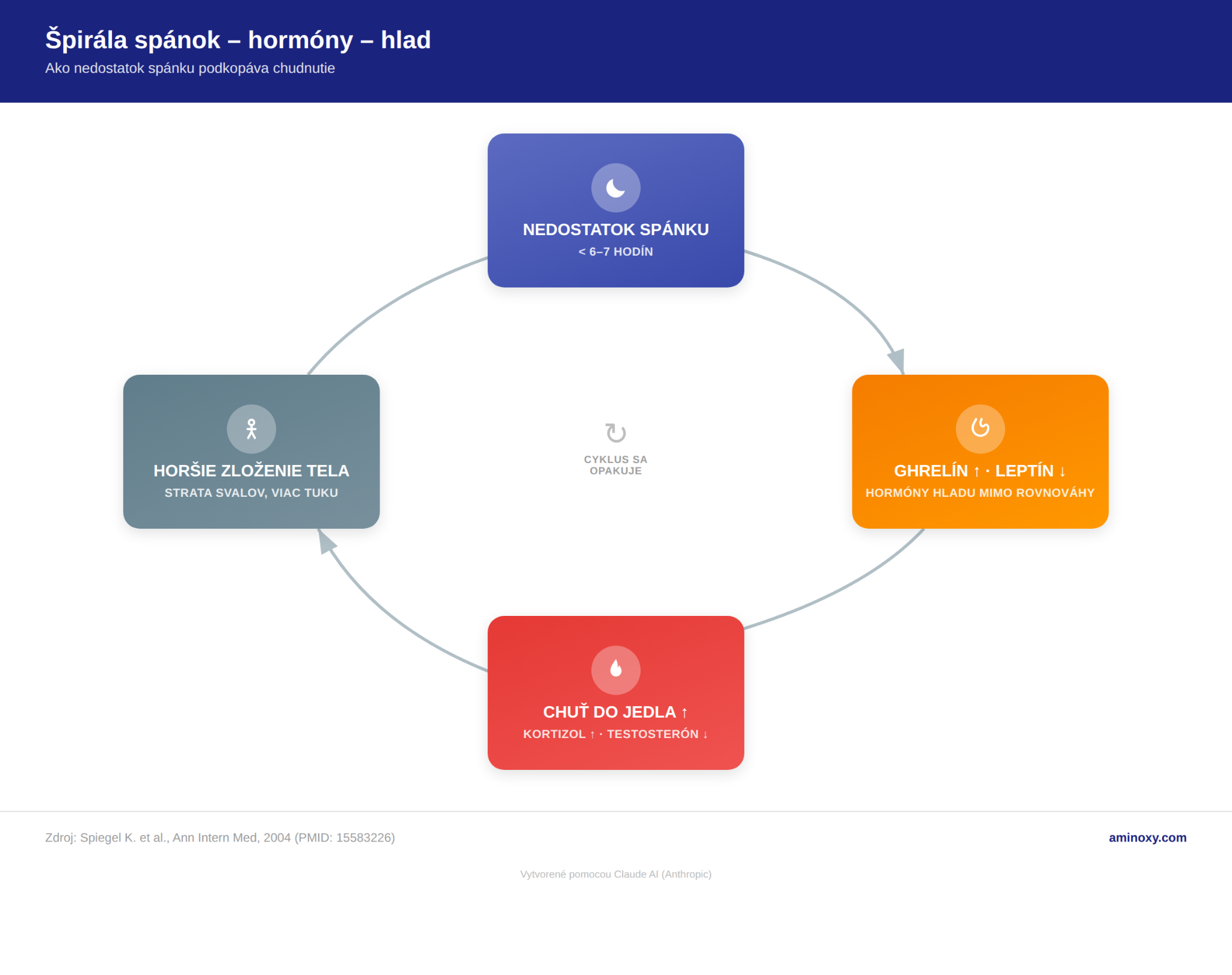
Sleep is probably the most underestimated factor in weight loss. A lack of sleep directly alters the levels of two hormones that regulate hunger and satiety:
ghrelin (the hunger hormone, produced in the digestive tract) – levels rise when sleep is lacking ,
leptin (the satiety hormone, produced by fat cells) – levels of which fall when sleep is lacking .
A controlled crossover study involving 12 healthy young men showed that just two days of reduced sleep led to an average 18% decrease in leptin (p = 0.04) and an increase in ghrelin, which together resulted in a significantly greater feeling of hunger and appetite (Spiegel K. et al., Ann Intern Med, 2004, PMID: 15583226). This is also confirmed by Brainum: sleep deprivation causes the brain centres associated with the desire to eat (the amygdala and insula) to become more active, whilst sufficient sleep does not dampen this effect (Brainum J., This is What Happens When You Don’t Get Enough Sleep, Applied Metabolics Newsletter, January 2022).
Furthermore, a lack of sleep increases cortisol and reduces both testosterone and growth hormone – a combination that makes it harder to maintain muscle mass whilst dieting and promotes the breakdown of muscle tissue rather than fat (Brainum J., How Does Nutrition and Exercise Affect Sleep?, Applied Metabolics Newsletter, January 2022).
Generated using Claude AI (Anthropic).
How much sleep is optimal
For most adults, the optimal range is 7–9 hours. The principle of hormesis applies here (something is beneficial up to a certain point, but beyond a certain limit the effect is reversed) – even excessive sleep of more than 10 hours is associated with poorer health outcomes, not just a lack of sleep (Brainum J., Common Sleep Myths, Applied Metabolics Newsletter, January 2022).
Sleep hygiene – what really works
A regular bedtime and wake-up time, even at weekends.
Limit exposure to blue light (mobile phones, computers, TV) for at least an hour before bedtime.
A cool, dark and quiet bedroom.
Avoid caffeine in the afternoon and alcohol just before bedtime.
No intense exercise just before bed (it raises body temperature and stimulates hormones).
💡 Sleep isn’t just important for weight loss; it also has a significant impact on sporting performance, recovery and overall health. We explore this topic in more detail in a separate article Sleep and recovery: why performance and health don’t work without them. |
Summary
|
Support for sleep and the nervous system: what Aminoxy offers
💊 Magnesium Bisglycinate 1000 mg + B6
Magnesium bisglycinate is a chelated form of magnesium (bound to the amino acid glycine) with high bioavailability and gentle on the digestive tract. Within the Aminoxy range, this form is specifically recommended for cramps, insomnia and nervousness.
Body recomposition vs. weight fixation
The number on the scales is a misleading indicator, as it does not distinguish between muscle mass, fat and water. Someone who is simultaneously losing fat and gaining muscle – a process known as body recomposition – may see their weight remain unchanged for a long time, yet their body composition is improving significantly.
Alternative measures of progress
Waist circumference (better reflects changes in visceral (intra-abdominal) fat than total weight).
Photographs taken at regular intervals, under the same lighting conditions.
Strength in key exercises (e.g. squats, deadlifts).
How your favourite clothes fit.
For most people, a combination of strength training and adequate protein intake is the most reliable way to improve body composition, not just to lose weight. The pace of this improvement is highly individual and depends on several factors – training experience, initial body fat percentage and hormonal status.
Conclusion
The number on the scales, self-confidence, stress and sleep all ultimately lead to one common point: weight loss isn’t just about calories, but about how you feel in your body and in your life throughout the entire process. Without mental health and a positive mindset, losing weight will be very difficult.
This article concludes our series on healthy weight loss – from the biology of obesity through hormones to the psychological aspects that accompany the whole process. If you’re interested in this topic in more depth, do read the other instalments as well.
Important notice: The information in this article is intended solely for educational purposes. It does not constitute medical advice or a recommendation of specific substances. Before taking any supplements — particularly if you have health problems or are taking medication — consult your doctor or pharmacist. If you are experiencing symptoms of depression, anxiety or an eating disorder, please contact a specialist or the Nezábudka Helpline (116 123).
In our series ‘How to Lose Weight Healthily’, you’ll alsofind the following articles:
How to Lose Weight Healthily: Obesity, Hormones and Long-Term Solutions
How much weight is healthy to lose in a month, and why rapid weight loss fails
What to eat when you want to lose weight: the basics of weight-loss nutrition
Hormones and weight loss: testosterone, IGF-1 and their impact on metabolism
List of sources
Schwartz MB, Brownell KD. Obesity and body image. Body Image. 2004;1(1):43-56. DOI: 10.1016/S1740-1445(03)00007-X | PubMed
Luppino FS, de Wit LM, Bouvy PF, et al. Overweight, obesity, and depression: a systematic review and meta-analysis of longitudinal studies. Arch Gen Psychiatry. 2010;67(3):220–229. DOI: 10.1001/archgenpsychiatry.2010.2 | PubMed
Spiegel K, Tasali E, Penev P, Van Cauter E. Brief communication: Sleep curtailment in healthy young men is associated with decreased leptin levels, elevated ghrelin levels, and increased hunger and appetite. Ann Intern Med. 2004;141(11):846–850. DOI: 10.7326/0003-4819-141-11-200412070-00008 | PubMed
Neff KD. Self-compassion: An alternative conceptualisation of a healthy attitude towards oneself. Self and Identity. 2003;2(2):85-101. DOI: 10.1080/15298860309032 | DOI link(this paper is not indexed in PubMed – it is a psychology journal, not a medical one)
Chandrasekhar K, Kapoor J, Anishetty S. A prospective, randomised, double-blind, placebo-controlled study of the safety and efficacy of a high-concentration, full-spectrum extract of ashwagandha root in reducing stress and anxiety in adults. Indian J Psychol Med. 2012;34(3):255–262. DOI: 10.4103/0253-7176.106022 | PubMed
Lopresti AL, Smith SJ, Malvi H, Kodgule R. An investigation into the stress-relieving and pharmacological actions of an ashwagandha (Withania somnifera) extract: A randomised, double-blind, placebo-controlled study. Medicine (Baltimore). 2019;98(37):e17186. DOI: 10.1097/MD.0000000000017186 | PubMed
Brainum J. Cortisol: The Jekyll and Hyde hormone. Applied Metabolics Newsletter. November 2016. | appliedmetabolics.com
Brainum J. Stress and Health: The True Effects. Applied Metabolics Newsletter. June 2022. | appliedmetabolics.com
Brainum J. This is What Happens When You Don’t Get Enough Sleep. Applied Metabolics Newsletter. January 2022. | appliedmetabolics.com
Brainum J. How Do Nutrition and Exercise Affect Sleep? Applied Metabolics Newsletter. January 2022. | appliedmetabolics.com
Brainum J. Common Sleep Myths. Applied Metabolics Newsletter. January 2022. | appliedmetabolics.com