


Obesity as a disease: stages, causes and health risks
Obesity is a disease, not an aesthetic problem or a matter of willpower. The World Health Organisation classified it as a disease more than seventy years ago, and today it even has its own diagnostic code, just like diabetes or high blood pressure. Despite this, most people — and sometimes even the patients themselves — still perceive it as a personal failure.
The figures speak for themselves: Slovakia is among the countries with the fastest-rising obesity rates in Europe, and the number of people diagnosed with the condition here has been rising sharply in recent years. Worse still, this also affects children.
This article explains the different degrees of obesity, why obesity develops, and what health risks it carries.
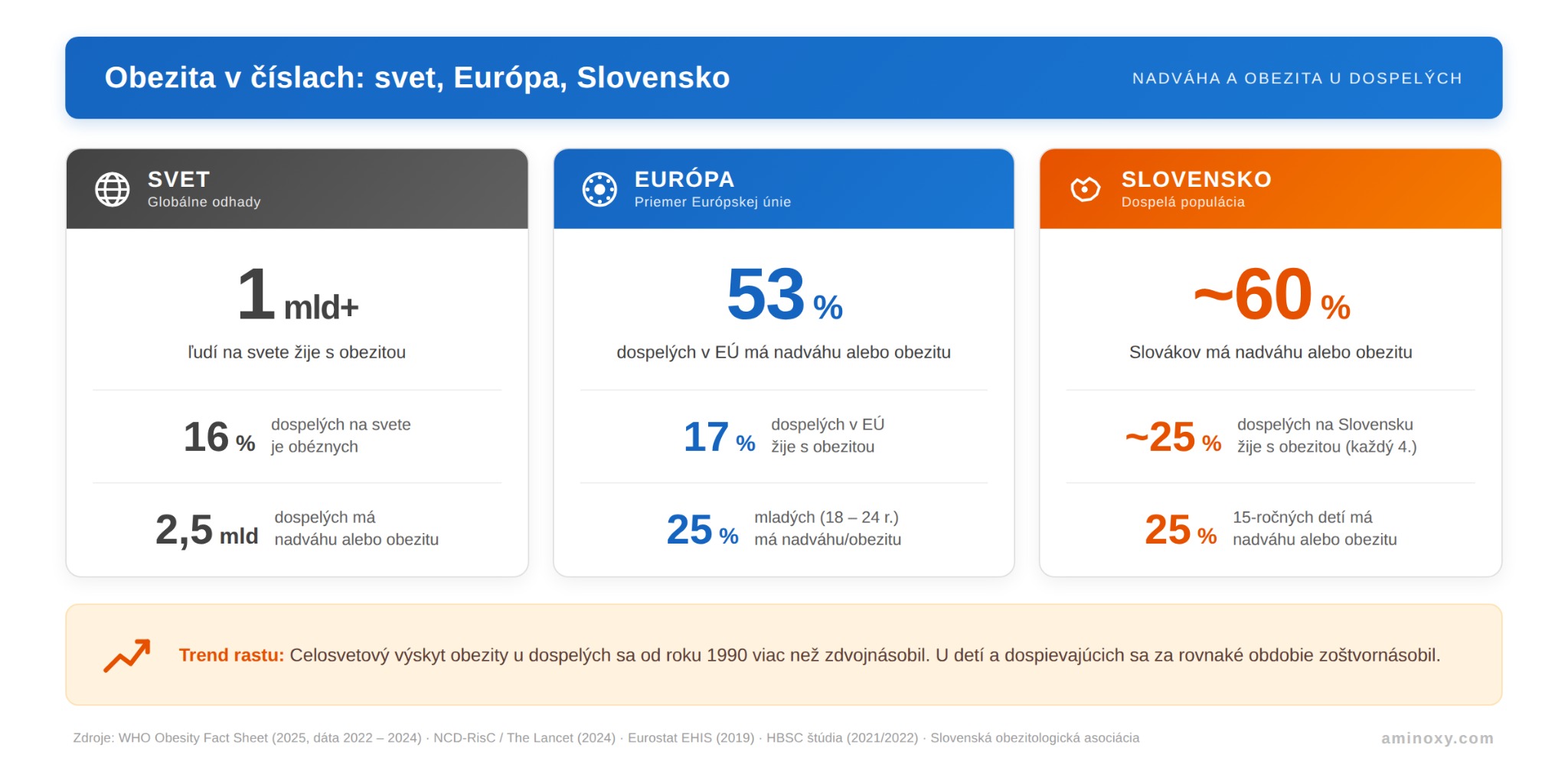
Created using Claude AI (Anthropic). Data: WHO Obesity Fact Sheet (2025), WHO European Regional Obesity Report (2022), NCD-RisC / The Lancet (2024), HBSC study (2021/2022).
Obesity is a disease
Obesity meets all the criteria for a disease because it has:
definable symptoms (excessive accumulation of adipose tissue),
identifiable mechanisms within the body that cause the disease — impaired hormonal control of appetite and energy balance, and impaired hormonal function of adipose tissue,
serious complications and increased mortality.
Why it is not ‘just a matter of willpower’
A key shift in the medical understanding of obesity came with the discovery that adipose tissue is not a passive storage site. It is an endocrine organ that actively produces more than 100 different signalling substances called adipokines. These are proteins that adipose tissue ‘sends’ via the bloodstream throughout the body — something like an internal postal service through which fat cells communicate with the brain, muscles and organs. Many of these signalling molecules are pro-inflammatory and contribute to the development of systemic inflammation. This silent, background inflammation slowly damages blood vessels, the liver, the brain and the joints over the course of many years (Brainum, The Science of Body Fat, Applied Metabolics, 11/2021).
Summary
|
This means that obesity alters the body’s internal environment — hormonally, inflammatorily and metabolically. And these changes persist long after a person has managed to lose weight — sometimes for years. The body ‘remembers’ its original weight and actively tries to return to it: altered levels of leptin ( the satiety hormone, which functioned whilst weight was stable) and ghrelin ( the hunger hormone) remain ‘out of balance’ for months or even years after the target weight has been reached. This is why obesity is referred to as a relapsing condition — relapses are not a failure on the part of the patient, but a predictable biological reaction.
💡 Important: The Slovak Obesity Association (SOA) is a professional body that treats obesity as a chronic condition, in much the same way that diabetology treats diabetes. The free obesity helpline allows you to speak to a specialist doctor. |
Degrees of obesity and their significance
Clinically, obesity is classified into three stages based on BMI, which differ not only in numerical terms but, above all, in the level of health risk.
Grade 1 obesity (BMI 30.0–34.9) represents an increased risk — there is a higher likelihood of type 2 diabetes, high blood pressure and abnormal blood lipid levels (cholesterol and triglycerides).
💡 Class 1 obesity is the most common — it is also the easiest to manage if addressed in good time. With each subsequent class, not only does body weight increase, but so does the health risk. |
Class 2 obesity (BMI 35.0–39.9) already poses a high risk — it significantly increases the likelihood of heart and vascular diseases, fatty liver and sleep apnoea.
Class 3 obesity, also known as severe obesity (BMI over 40), poses a very high risk — it significantly reduces life expectancy and, as a rule, surgical intervention (gastric surgery).
According to data from the World Obesity Federation, more than 1 per cent of the adult population in Slovakia has grade 3 obesity — that is, morbid obesity with a BMI over 40. And this figure is still rising.
💡 The degrees of obesity are not merely administrative categories. They also serve as a clinical tool — they determine what treatment options a patient requires (lifestyle changes, medication, bariatric surgery — stomach-reducing surgery). The pace of weight loss and how to realistically reach your target weight are covered in Part 3 of the series on the rate of weight loss. |
The limitations of BMI itself
BMI categories do not capture fat distribution or the quality of adipose tissue. A person with a BMI of 32 and primarily subcutaneous fat may be metabolically healthier than a person with a BMI of 28 and a high proportion of visceral (intra-abdominal) fat.
For this reason, modern obesity medicine uses the expanded ABCD diagnostic framework ( from the English ‘Adiposity-Based Chronic Disease’ — chronic disease based on excess adipose tissue). With this approach, the doctor does not assess the patient solely on the basis of their BMI, but takes three factors into account simultaneously:
the causes of obesity (genetics, lifestyle, medication),
how much fat is present in the body and where it is stored,
what specific health risks the patient already has. (Frühbeck et al., Obesity Facts, 2019).
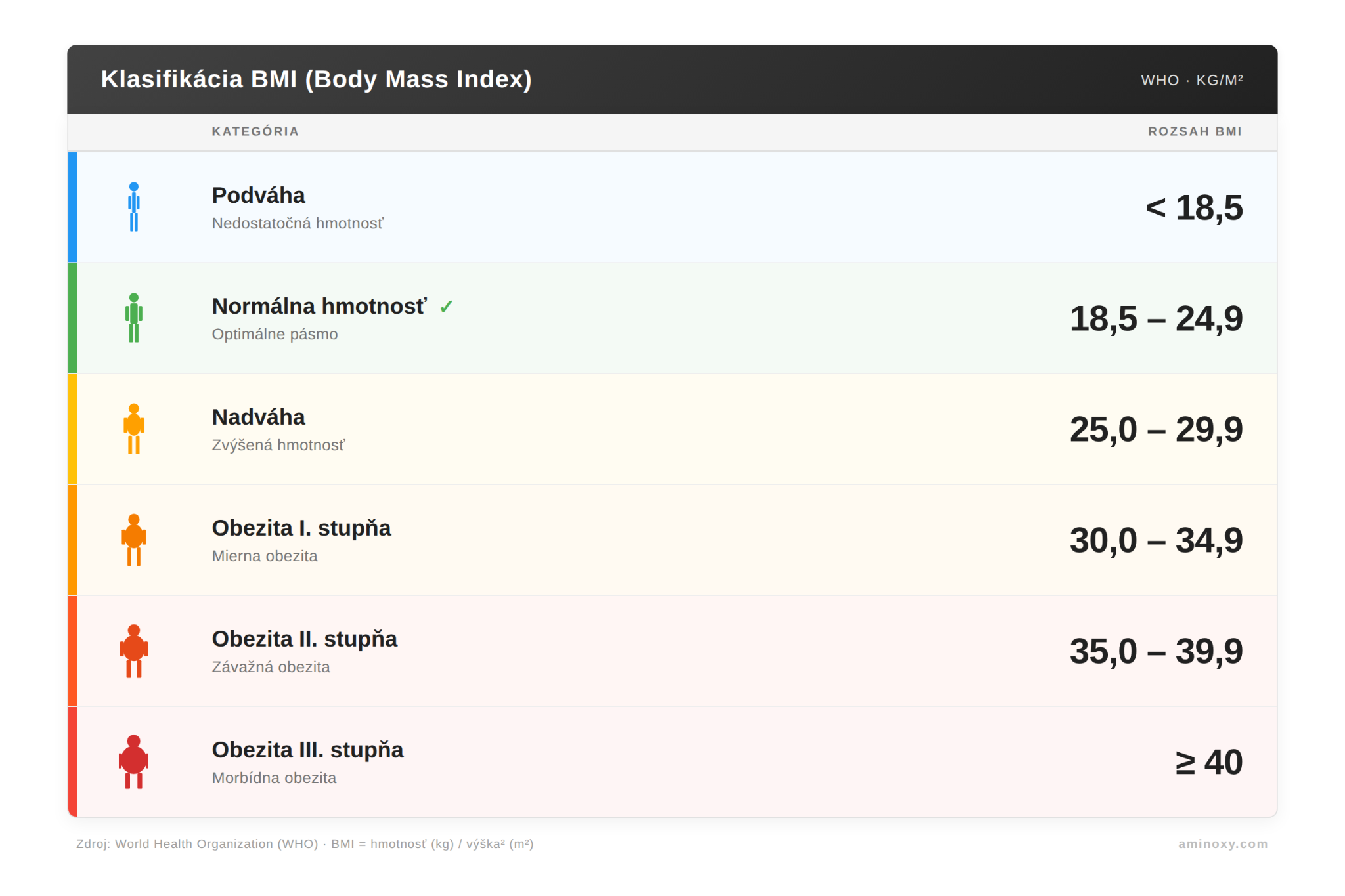
Generated using Claude AI (Anthropic)
Why obesity develops
Obesity is multifactorial. Whilst the classic ‘calories in minus calories out’ equation holds true at a physical level, it does not explain why two people with the same diet and activity levels end up with completely different weights. The true aetiology (the origin of the condition, i.e. where obesity comes from) involves genetic predisposition, hormonal regulation of appetite, the microbiome, lifestyle and ever-new, surprising factors.
Energy balance and lifestyle
The most common cause of obesity is a long-term calorie surplus combined with a sedentary lifestyle. The modern environment is conducive to this: processed and high-calorie foods, constant access to food, and a reduced need for physical exertion both at work and at home.
Three less obvious factors that contribute to weight gain:
Insulin resistance. Insulin is a hormone that helps the body ‘clear’ sugar from the blood into the cells. However, when fat stores are high, the cells begin to respond less and less effectively to insulin — as if they’ve stopped listening to it. The pancreas deals with this in the only way it knows how: by producing even more insulin. But insulin is also a storage hormone — it tells the body to ‘store fat’ and, at the same time, ‘don’t release it’. A vicious circle ensues: more fat → reduced insulin sensitivity → more insulin → even easier fat storage (Brainum, 11/2021).
Lack of sleep. When you get less than 7 hours’ sleep a night, leptin levels (the satiety hormone) fall and ghrelin levels (the hunger hormone) rise. The result is an increased appetite, even though the body does not actually need more energy.
Gut microbiome. The species composition of bacteria in the large intestine influences how much energy is actually absorbed from food. Two people on an identical diet may ‘extract’ different amounts of calories from their food. You can read more about this phenomenon in the article Boost Your Immunity: The Secrets of the Gut Microbiome.

Exogenous obesity and genetic obesity
We distinguish between two basic types of obesity based on their origin.
Exogenous obesity is by far the most common. It arises from external factors — excessive energy intake, lack of exercise, a poor-quality diet, stress and lack of sleep. The good news is that this type can be reversed through lifestyle changes. However, this is not a matter of weeks, but of long-term and sustained change.
Genetic obesity is less common, but it does exist. Sometimes it is caused by a defect in a specific gene — for example, in congenital leptin deficiency or Prader-Willi syndrome. Many of these rare forms are inherited in a so-called recessive manner (which is why you may also come across the term ‘recessive obesity’) — this means that they only manifest when a child inherits the defective gene from both parents at the same time.
Far more often, however, genetics works differently — not through a single gene, but through hundreds of small genetic influences, each of which contributes a tiny bit. Imagine a family recipe: the final flavour is not determined by a single ingredient, but by a combination of dozens of small decisions. This is precisely why some people are more prone to gaining weight than others (Riveros-McKay et al., PLOS Genetics, 2019, PMID: 30677029).
💡 Important: Even a strong genetic predisposition does not mean that genes determine one’s fate. Studies have shown that people with a high ‘obesity’ genetic score who lead an active lifestyle can have a similar weight to people with a low genetic risk who are physically inactive. Genetics determines susceptibility; lifestyle determines the outcome. |
Genetic testing is recommended in specific cases: severe obesity with onset in childhood, a family history of extreme obesity, or an unusual clinical presentation. In everyday practice, it is more useful to focus on lifestyle.
Obesity in children and adolescents
Childhood obesity is an extremely pressing issue in the Slovak context. According to the World Obesity Federation (WOF) , the prevalence of childhood overweight and obesity in Slovakia was 27 per cent in 2020 . The forecast for 2035 suggests a figure of almost 50 per cent (VšZP, 2024).
There are several specific considerations for children and adolescents:
BMI is not compared against fixed values in children, as it is in adults, where, for example, a BMI of 30 indicates obesity for everyone. Instead, so-called percentile curves are used — reference tables that compare a child’s weight with that of peers of the same age and sex. Imagine a list of 100 children of the same age, ranked from lowest to highest weight: if a child is above the 97th percentile (i.e. among the heaviest 3 per cent of their peers), they are classified as obese.
During certain developmental periods ( the final trimester of pregnancy, the first years of life, and adolescence), the number of fat cells is established. Fat cells formed during this period remain in the body for life — they may increase or decrease in size, but their number does not change significantly (Brainum, 11/2021). A higher number of fat cells acquired in childhood therefore remains a lifelong challenge.
As many as 4 out of 5 children with obesity carry this condition into adulthood — with a significantly higher risk of developing associated health conditions at an early age.

It is important to discuss a child’s weight sensitively and without judgement. Bullying, ridicule and public comments about weight or appearance — whether from peers, teachers or even the family themselves — have been shown to worsen a child’s physical and mental health outcomes. It often leads to eating disorders such as anorexia, bulimia and binge eating, as well as to depression and a lifelong troubled relationship with food and their own bodies. Paradoxically, children whose parents monitor every bite they take and comment on their figure often gain more weight, not less.
The topic of stigma and one’s relationship with one’s own body is explored in greater depth in Part 6 of the series on mental health and weight loss.
Summary
|
Obesity and health risks
Obesity increases the risk of dozens of associated conditions. Many of these are not merely ‘complications’, but are the result of biological mechanisms triggered by obesity. It is therefore important to understand these links.
How type 2 diabetes (type 2 diabetes mellitus) develops
Type 2 diabetes (T2D) is probably the best-known complication of obesity today. It does not develop overnight; it is a slow process that can take years:
Fat accumulates in the abdomen. With a long-term energy surplus, fat is not only stored under the skin but also deep within the abdomen, around the organs – this is known as visceral fat. It is not ‘quiet’ fat: it behaves like a bustling factory that is constantly releasing substances into the body.
Fat cells send out inflammatory signals. Visceral fat produces inflammatory substances that travel directly to the liver and gradually disrupt the metabolism.
The cells stop responding to insulin. Insulin is the ‘key’ that unlocks the cells’ doors so that sugar from the blood can enter them. However, due to inflammation, the lock on the cells becomes dulled — the key no longer opens them so easily. The sugar then remains in the blood. This is called insulin resistance.
The pancreas works overtime. The body tries to force open the dulled lock: the pancreas produces ever more insulin. Meanwhile, blood sugar levels remain within the normal range, so the person feels no symptoms. This ‘silent’ state can last for years.
The pancreas becomes exhausted. After years of being overworked, the pancreatic cells that produce insulin simply wear out — it’s a bit like an engine that’s constantly running at full throttle. Suddenly, there is not enough insulin, blood sugar levels rise above the healthy limit, and type 2 diabetes develops.
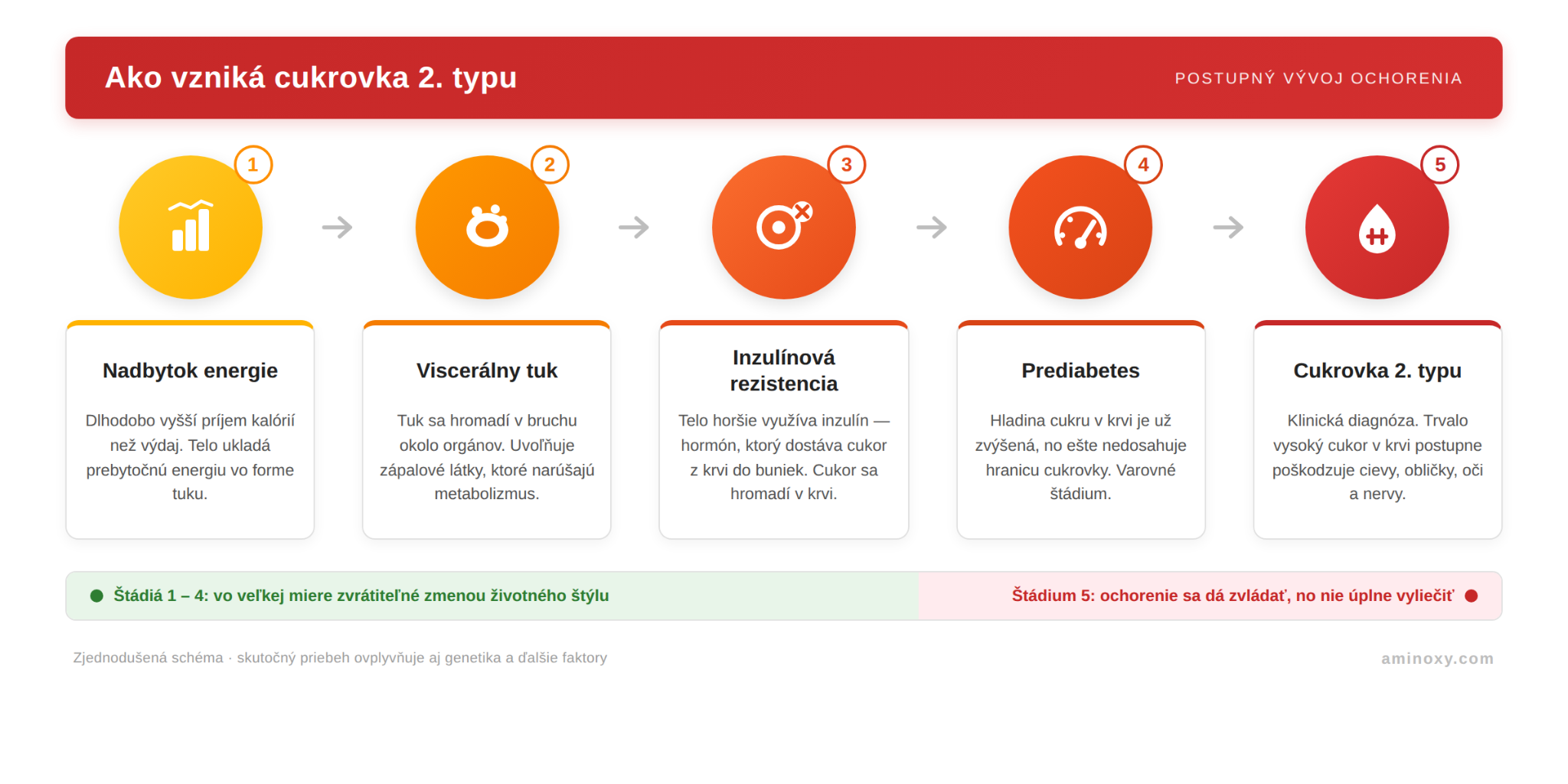
Created using Claude AI (Anthropic). A simplified diagram based on specialist literature on the pathogenesis of type 2 diabetes.
💡 Important: The higher your weight, the more sharply the risk of diabetes increases — with class 2 obesity, it is several times higher than for a healthy weight. The good news, however, is that you don’t have to lose all that weight. Losing just 5–10% of your body weight (so roughly 5–9 kg if you weigh 90 kg) can significantly slow down the whole process and, if caught in time, even reverse it. |
You can find out more about how to regulate your blood sugar levels properly in the blog The Glucose Revolution: Keep your blood sugar levels in balance.
Obesity and high blood pressure
High blood pressure (hypertension) is estimated to affect 60–70 per cent of people with obesity. There are several reasons for this:
Increased blood volume. A larger body needs more blood to supply its tissues. The heart therefore has to work against greater resistance, much like a pump pushing water through a larger network.
The kidneys increase blood pressure. In obesity, the kidneys’ hormonal system (known as the RAAS) is constantly active, retaining salt and water in the body and raising blood pressure.
Blood vessels lose their elasticity. Inflammatory signals from adipose tissue impair the ability of blood vessels to dilate. Imagine a garden hose that has gone stiff — water flows through it with greater pressure.
The body is in a constant state of alert. Obesity ‘triggers’ the sympathetic nervous system, the part of the nervous system that controls the fight-or-flight response. The heart then beats faster and blood pressure rises, even though the body is not actually in danger.
High blood pressure rarely causes acute symptoms until complications develop. This is why it is also known as the ‘silent killer’. In cases of obesity, blood pressure should be measured regularly, and readings above 140/90 mmHg are an indication that medical intervention is required.
Metabolic and hormonal consequences of obesity
Obesity affects almost every hormonal system in the body. The most significant consequences are:
Metabolic syndrome
Metabolic syndrome is a cluster of symptoms which, taken together, dramatically increase the risk of cardiovascular disease and diabetes. The diagnosis is made when 3 out of 5 criteria are met:
Criterion | Value |
Waist circumference | > 102 cm (men) / > 88 cm (women) |
Blood triglycerides | ≥ 1.7 mmol/l |
HDL cholesterol | < 1.0 mmol/l (men) / < 1.3 mmol/l (women) |
Blood pressure | ≥ 130/85 mmHg |
Fasting glucose | ≥ 5.6 mmol/l |
Metabolic syndrome is estimated to affect more than a third of adults with obesity.
Non-alcoholic fatty liver disease (NAFLD)
In obesity, fat also accumulates in the liver — leading to non-alcoholic fatty liver disease( NAFLD ). The term ‘non-alcoholic’ is important; whilst a fatty liver was originally associated almost exclusively with excessive alcohol consumption, we now know that being overweight and obesity can also cause similar damage, albeit through a different mechanism.
NAFLD is estimated to affect 60–90 per cent of people with obesity. Slovakia has one of the highest mortality rates from liver disease in Europe, and obesity is one of the main causes, alongside alcohol. The good news is that in the first two stages (steatosis, NASH — fat accumulation and liver inflammation), it is still possible to reverse the condition through weight loss.
Sleep apnoea
Obstructive sleep apnoea (repeated pauses in breathing during sleep) is very common in people with obesity. This is caused by a build-up of fat around the neck, which constricts the airways during sleep. The consequences include chronic fatigue, impaired concentration and memory, and an increased risk of high blood pressure and heart disease.
Hormonal changes
Adipose tissue actively produces and metabolises hormones:
In men: adipose tissue, particularly abdominal fat, contains the enzyme aromatase, which converts testosterone into oestrogen (the female sex hormone). The equation is clear: the more fat, the more testosterone is converted into oestrogen. The result is a vicious circle — less testosterone leads to further accumulation of fat around the waist, a loss of muscle mass and a reduced sex drive.
In women: obesity disrupts ovarian function and hormonal balance. It can contribute to polycystic ovary syndrome (PCOS) — the most common hormonal disorder in women of childbearing age, which manifests as irregular periods, difficulties conceiving and problems with weight loss.
We explore the relationship between obesity, testosterone, IGF-1 and metabolism in depth in Part 5 of our series on hormones and weight loss.
‘Skinny fat’
Not all obesity is visible. Some people with a normal BMI have a high percentage of body fat and low muscle mass. This condition is known as ‘skinny fat’ – metabolically obese but of normal weight (referred to as ‘normal weight obesity’ in the English-language literature). In terms of metabolic risks, such a person is on a par with someone who is visibly obese — they have higher levels of visceral fat, insulin resistance and cardiovascular risk, even though this isn’t obvious when looking in the mirror.
This is the main reason why neither BMI nor weight alone is sufficient: a comprehensive assessment includes body fat percentage and waist circumference.
Summary
|
Conclusion
Obesity is a chronic disease with defined mechanisms, stages and complications. The good news is that it is treatable, but it requires a comprehensive approach: dietary changes, exercise, stress and sleep management, and sometimes pharmacological treatment or surgery. Even a small step counts — losing a few kilos can significantly relieve the strain on the heart, blood vessels and liver.
Natural support for obesity and metabolic health: what Aminoxy offers
If you’re looking for dietary supplements that can support a healthy metabolism and lifestyle whilst losing weight, take a look at our online shop. Aminoxy offers high-quality weight-loss supplements with transparent ingredients. As we’ve already mentioned, no supplement on its own can cure obesity, but it can be a useful aid alongside lifestyle changes.
View weight-loss supplements >
Important notice: The information in this article is intended solely for educational purposes. It does not constitute medical advice or a diagnosis. If you suspect you may have obesity, metabolic syndrome or related conditions, you should always consult a doctor. Before taking any dietary supplements — particularly if you have health problems or are taking medication — consult your doctor or pharmacist.
📚 This article is the second in a 6-part series on How to Lose Weight Healthily. Continue reading the other articles:
Part 3: How much weight is healthy to lose in a month, and why rapid weight loss fails
Part 4: What to eat when you want to lose weight: the basics of a weight-loss diet
Part 5: Hormones and weight loss: testosterone, IGF-1 and their effect on metabolism
Part 6: Mental health and weight loss: self-confidence, stress and your relationship with your own body
References
Rubino F, Cummings DE, Eckel RH, et al. Definition and diagnostic criteria of clinical obesity. Lancet Diabetes Endocrinol. 2025;13(3):221–262. DOI: 10.1016/S2213-8587(24)00316-4 | PubMed
NCD Risk Factor Collaboration (NCD-RisC). Worldwide trends in underweight and obesity from 1990 to 2022: a pooled analysis of 3,663 population-representative studies involving 222 million children, adolescents and adults. The Lancet. 2024;403(10431):1027–1050. DOI: 10.1016/S0140-6736(23)02750-2 | PubMed
World Health Organisation. Obesity and overweight – Fact sheet. WHO; 2025. Available from: who.int
WHO Regional Office for Europe. WHO European Regional Obesity Report 2022. Copenhagen: WHO; 2022. Available from: who.int
Frühbeck G, Busetto L, Dicker D, et al. The ABCD of Obesity: An EASO Position Statement on a Diagnostic Term with Clinical and Scientific Implications. Obes Facts. 2019;12(2):131–136. DOI: 10.1159/000497124 | PubMed: 30844811
Riveros-McKay F, Mistry V, Bounds R, et al. Genetic architecture of human thinness compared to severe obesity. PLoS Genet. 2019;15(1):e1007603. DOI: 10.1371/journal.pgen.1007603 | PubMed
Brainum J. The Science of Body Fat. Applied Metabolics Newsletter. November 2021. appliedmetabolics.com
World Federation for the Study of Obesity / General Health Insurance Company. By 2035, half of Slovak children will be overweight or obese. VšZP; 2024. Available from: vszp.sk
EASO. European Commission Classifies Obesity as a Chronic Disease. EASO; 2021. Available from: easo.org
Health Behaviour in School-aged Children (HBSC). Slovakia – National Report 2021/2022. WHO/HBSC; 2023.